

Young adult fiction and later-in-life queer awakenings
By: DA Russell
Advertisement
I was in my late teens the first time I came out to myself and my closest friends. There was a flourishing of sexual ambiguity and fluidity in my friend group then, and I embraced it. Outside the safety of that circle, however, any divergence from heteronormativity was closely guarded.
I turned 18 in 1996.
I knew I was some flavour of queer, but the idea of coming out to my family, colleagues or anyone outside of that friend group was unimaginable. I watched Philadelphia with my socially conservative father that year, and he’d grudgingly started to change his mind on the tolerability of queer people’s existence thanks to Bruce Springsteen’s soundtrack song and Tom Hanks’ mainstream likeability. But I’d also been pelted with bottles on the hill at The Gabba stadium when me and a queer platonic friend made the mistake of wanting to watch cricket.
I’d been called a dyke enough times from the windows of cars to know there was safety in hiding. I hadn’t even realised my queerness was visible. My short hair and second-hand clothing were read by those boys on the hill before I had formed my own understanding of what queerness might look like. I didn’t have the cultural landmarks to know myself yet: I’d never seen myself on screen or in the pages of a book.
The ambiguous and unfixed nature of my sexuality was another factor in keeping this secret: what would I come out as anyway? And it’s not like I really dated.
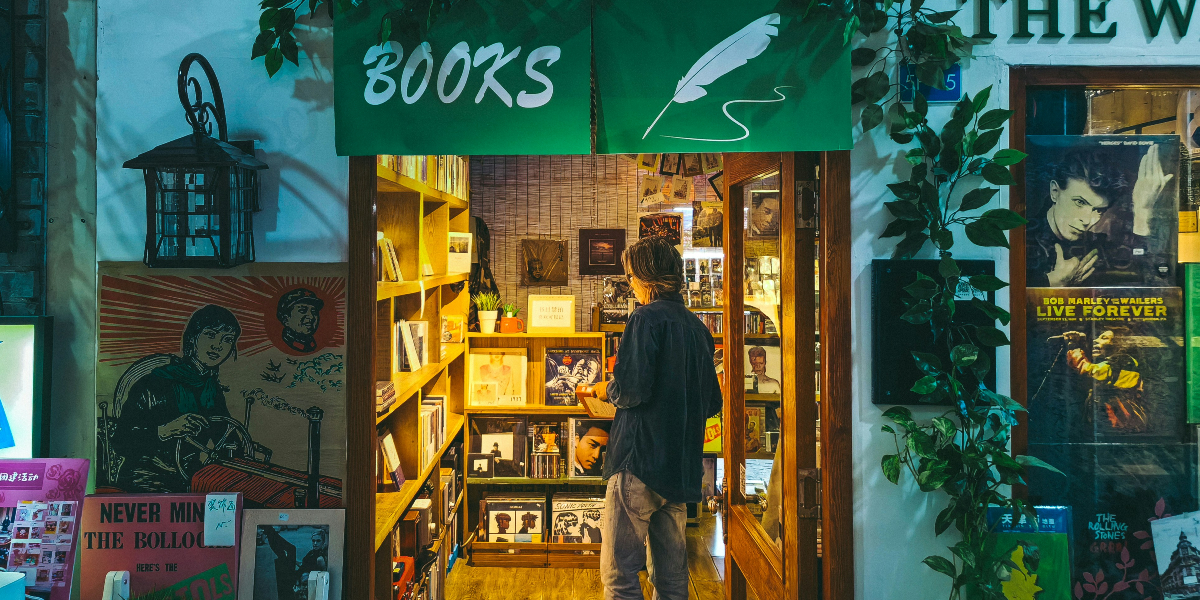
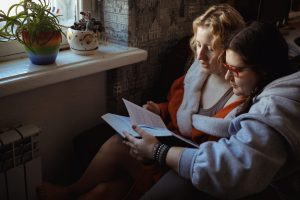
Image by: Wu Yi
When I was 17, I went alone to see the film Go Fish at a cinema in Brisbane, telling no one. I’ve never felt a stronger desire to be invisible than I did as I walked into that cinema. It was the first time I saw queer women on screen as anything more than a punchline.
At 18, I went to see the pre-Heartstopper love story Beautiful Thing with a friend. I returned to the cinema five times in the following weeks, alone, to watch it again and again, seeking myself in the story. But books were where I went most often to lose and find myself, and in Brisbane in the mid-90s, the local library didn’t stock queer Young Adult (YA) fiction.
I never stumbled across a copy of What Are Ya?, the first Australian young adult novel with a gay main character. The first truly queer story I read was about adults; by then, I myself was an adult.
In my early forties, I came out for the second time.
Again, it was queer stories that gave me respite as I excavated this version of myself. The difference was that now I could find and devour a multitude of stories – books, films, shows, songs – about the person I was now, but also the person I had been 20 and 30 years ago, told in a way that captured the intensity and joy of being queer and young.
At 43, I started reading and watching queer YA.
It seems I’m not alone in this experience. Search the r/latebloomerlesbians subreddit and you’ll find multiple threads searching for and recommending YA and New Adult books as a gateway into identity.
The YA book market as a whole has expanded rapidly in recent decades. Alongside that growth, there’s been a significant increase in the number of queer YA stories from mainstream publishers. For a period of time, Malinda Lo – author of National Book Award winner Last Night at the Telegraph Club (one of the first queer YA books I bought after I came out in my forties) – tracked the number of queer YA stories published by mainstream publishers in the USA. She found the number of LGBTQ+ YA books had doubled in the 10 years from 2006 to 2016.
The queer book market as a whole has expanded further in recent years, with NBC reporting: “In the 12-month period ending in October 2023, LGBTQ fiction sales reached 4.4 million units, up 7% from the prior 12-month period and 200% from the 12-month period ending in October 2019.”
In 2024, the Sydney Morning Herald ran a story on the booming queer YA scene. Even the fact that the annual StoryGraph ‘Queer Your Year’ reading challenge includes the hyper-specific prompt to read “a YA graphic novel featuring witches or ghosts”, with over 30 different books added by readers, hints at the genre’s expansion.
What was once in the margins has become, at least for now, mainstream. For queer “late bloomers” and those embracing long-dormant parts of ourselves, this is a gift that was unimaginable in our youth.
There’s a kind of hunger in discovering – or rediscovering – things about yourself later than expected and at a point when you are supposed to be fixed and finite. The poignancy of having access to these stories decades after they might have been our own can feel liberating and devastating all at once. For some, the catalyst for self-discovery can be watching and reading about young people – who seem so like our younger ourselves – as they live out a fantasy version of what life might have been.
The existence of the r/heartstoppersyndrome subreddit, where people share the melancholy they experienced after watching the sweet coming-of-age TV show based on the graphic novels by Alice Oseman, is one example. The group is full of people experiencing moments of self-discovery but also re-discovery: the realisation of why a teenage friendship meant so much, decades after it ended; the acceptance of the impossibility of teen years living up to fantasy.
Books and other media about selfhood can be powerful tools to help us unearth things we’ve kept hidden even from ourselves. A straight friend told me a few years ago that her copy of Untamed by Glennon Doyle is unread. The memoir charts Doyle’s own journey of self-discovery in midlife, falling in love with a woman, coming out and committing to stay true to herself.
“I don’t want to blow up my life,” my friend said matter-of-factly of leaving the book unread.
It wasn’t about sexuality, this avoidance: she’s happily married to a man, albeit willing to admit a few exceptions for specific celebrities. Instead, her hesitation was nested in an awareness of the potential for self-awareness – and with it, her life – to change quickly and drastically.
For me, her words captured the power of books to shape and support us as we live. Another “straight” friend later told me she was listening to the Untamed audiobook when she realised she was already in love with her (straight) best friend.
The very nature of YA books, with their focus on becoming and relationships – be they romantic, familial or friendship – aligns with the psychological process of embracing identity at any life stage.
One Christmas break early in my queer re-emergence, I bought a stack of books to read, almost entirely queer YA. I spent those weeks consuming stories of people in their late teens or early twenties falling in love: Aristotle and Dante Discover the Secrets of the Universe by Benjamin Alire Sáenz; Late to the Party by Kelly Quindlen; Fifteen Hundred Miles From the Sun by Jonny Garza Villa; The Lesbiana’s Guide to Catholic School by Sonora Reyes; Imogen, Obviously by Becky Albertalli; Anything but Fine by Tobias Madden; Six Times We Almost Kissed (And One Time We Did) by Tess Sharpe.
The books were, for the most part, easy reads well-suited to a few weeks off work. But it was the sense of belonging they gave me – despite my radically different life stage to the protagonists – that kept me reading these stories one after another.
Later, I moved on to other queer stories. My favourite book had always been Tipping the Velvet by Sarah Waters. Now, I started consuming more queer New Adult books that bridged the market between YA and adult romance, many of them popular with straight audiences.
I had always been a literary fiction reader, but I embraced ‘trash’ – romance, longing, the inevitable happily-ever-after ending – in this new era as much as books woven with interiority, loss and emergence.
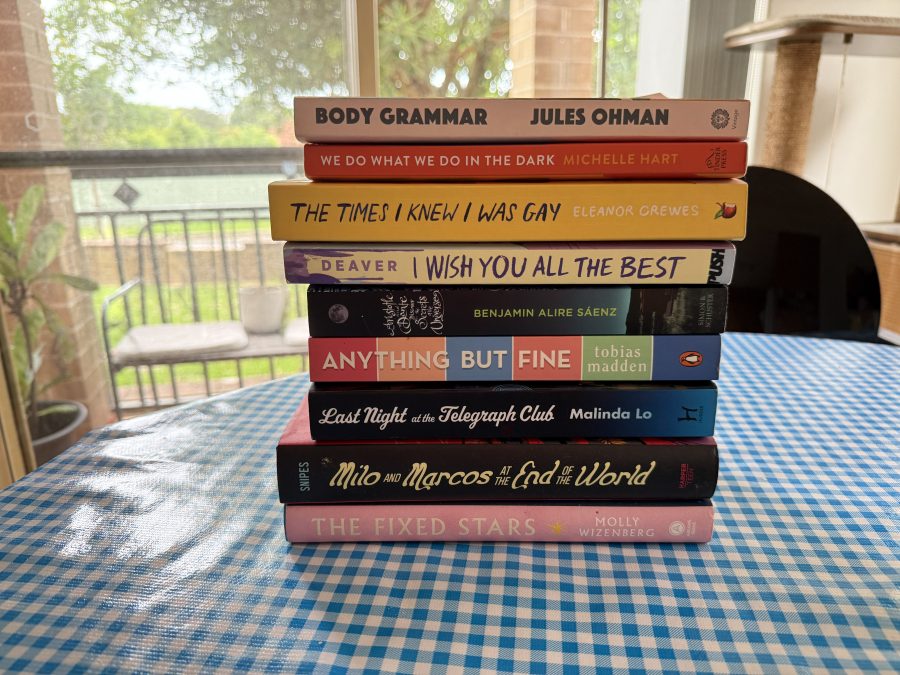
For a brief period, I read book after book about women like me: who had lived a somewhat heteronormative life before emerging into queer identity in mid-life. All About Sarah by Pauline Delabroy-Allard; Hidden Nature by Alys Fowler; The Swift Dark Tide by Katia Ariel; The Fixed Stars by Molly Wizenberg; the revelatory books of Constance Debré: all aligned with my own experience in different ways.
Books of mid-life queer chaos – All Fours by Miranda July, Big Swiss by Jen Beagin – spoke more directly to my own experience than any of my friends perhaps realised.
Today, several years on from that first YA-filled Christmas, I still read mostly queer books.
I don’t read as much YA these days. Instead, my favourite books tend to be novellas focused on a single person and their descent into, and emergence from, a relationship. A different coming of age, I suppose.
There are more queer books available now than one person could ever read. With the creep of conservative culture and the political situation in the USA, where many of these books are published, perhaps this golden age will fade.
But for now, I am grateful for the writers and publishers who make the books – and especially the YA content – that, in turn, helps many of us travel this road.




Hey, thanks. Good to know that What Are Ya? is still remembered.
I’m currently trying to figure out how to write Old Adult queer fic.