

Archer Asks: Karma Dance’s Govind Pillai on sensual divinity and dance-worship
By: Dhriti Gandham

Advertisement
Govind Pillai is a dancer, choreographer and teacher trained in the classical Indian movement art of Bharatanatyam, and the Director of Karma Dance Inc. Deeply in love with classical Indian music and dance, yet constantly challenging its boundaries, Govind’s work is critically acclaimed and celebrated for its ability to chart new directions through beauty and provocation. Recognised through nominations for the Australian Dance Awards, Green Room Awards and Melbourne Fringe Awards, Govind’s work is known for being subversive and for reckoning with themes such as colonisation, gender diversity, prejudice, sexuality and identity. Govind is deeply passionate about the transformative power of dance, and how it can help people feel seen and connected: not only with one another, but also with themselves.
Ahead of Karma Dance’s upcoming season of Temple of Desire at the Sydney Opera House, I chatted to Govind about how the production reclaims the spiritual and sensual roots of Bharatanatyam.
Dhriti Gandham: Hi, Govind! Thank you for taking the time to chat with us today. I’m going to ask you my first question. So, what was it that first drew you to dance? And when did it shift from being something you learned to something that began shaping who you are?
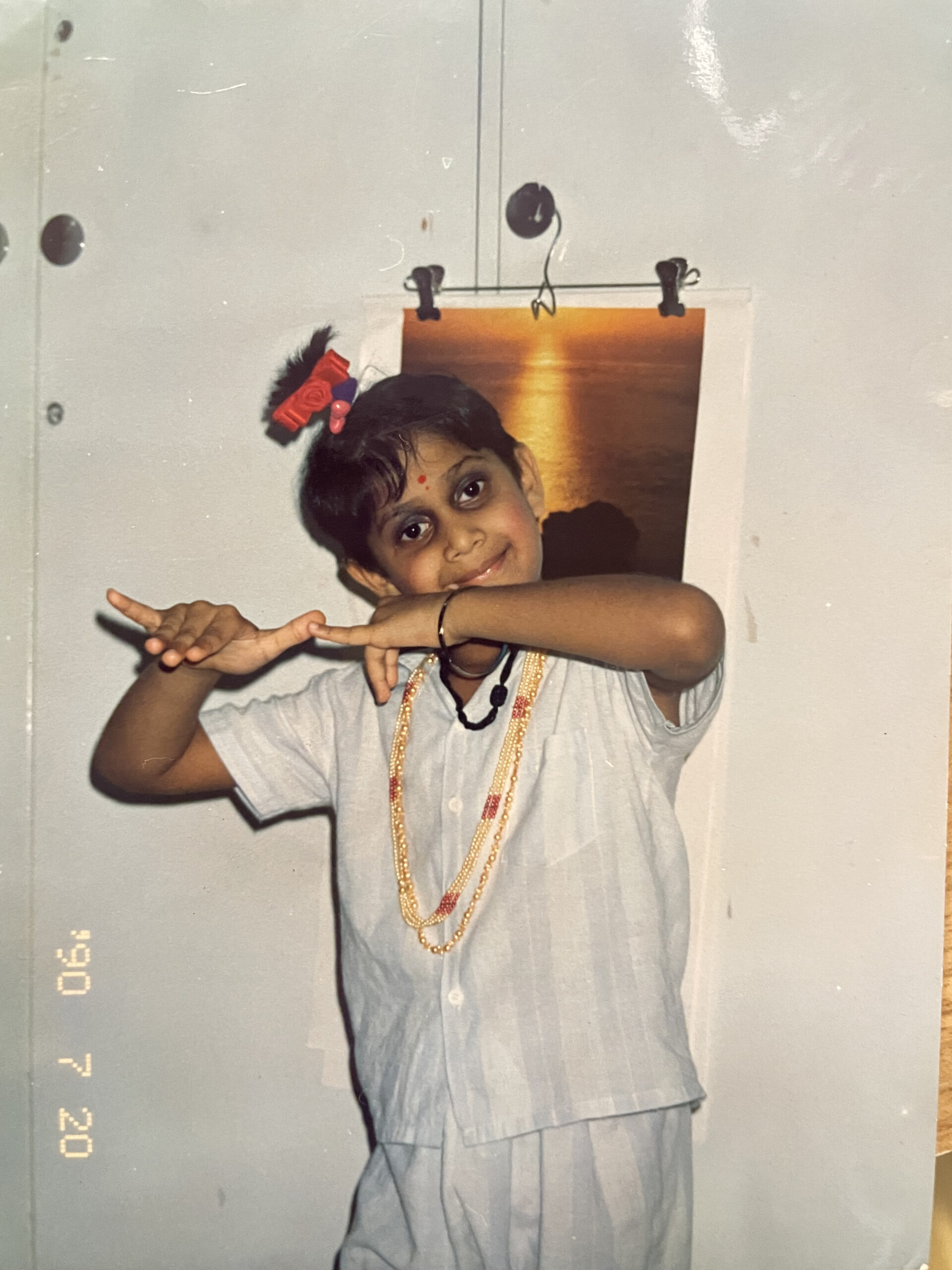
Govind Pillai: I fell in love with dance by watching my sister learn Bharatanatyam, and seeing beautiful old photos of my mum. In a South Indian family, it was normal for girls to learn dance, but not boys. I would secretly ask my sister to teach me, and we did that for years before my mother eventually discovered us and asked, “Would you actually like to go to classes?”
Dance immediately felt like freedom to me. It was the first place where I could stop performing who I was supposed to be.
Later, I realised dance had also become the place where I discovered my relationship to gender, parts of my queerness, but I also encountered stories deeply entrenched with misogyny and gendered oppression. Although classical Indian dance gave me access to parts of myself I didn’t yet have language for, it also grated against me in ways that brought out the activist.
I had discovered freedom and discomfort in one place.
For me, dance wasn’t just self-expression. It was self-recognition.
DG: Wow, that is incredible. How does teaching and performing classical dance in a multicultural city like Melbourne shape the way you think about tradition and audience connection?
GP: Diaspora artists are constantly asked by the systems and structures around us to choose between preservation and assimilation. I refuse that binary. To progress, we must sit deeply with that duality and complexity.
Living in Naarm, amongst an incredible community of intersectional artists, and on land that is horrifically scarred by settlement, yet continually shaped by migration, has asked me to sit deeply with duality and complexity every day.
Revelation, through sitting with contradiction and plural-vision, is the genuine superpower of marginal lives that live at the intersection. This is why we need to listen to them more closely.
I think people who live at intersections are often pressured to simplify themselves for other people’s comfort. But the future of culture belongs to artists who can hold contradiction without flattening themselves.
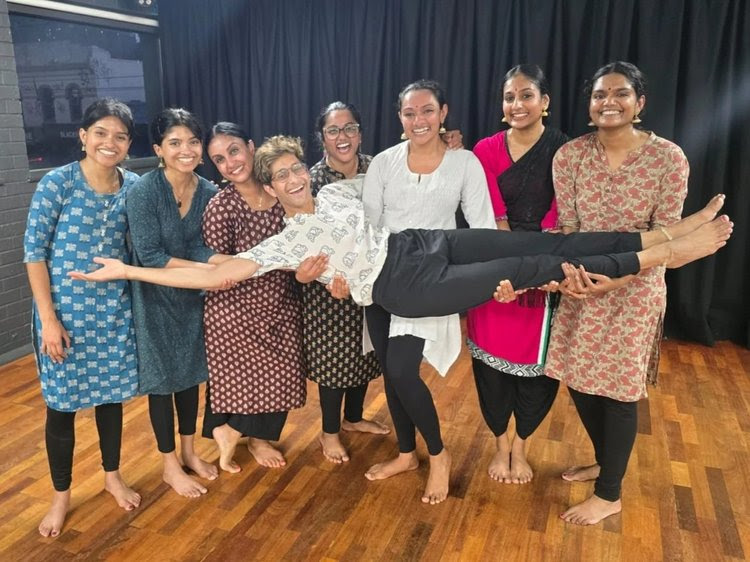
Our company is made up of people with radically different lived experiences and that multiplicity is our strength. Intersectionality is not small or minority in nature. It’s expansive, and when we take over the Sydney Opera House stage at scale with 21 queer, trans and women dancers of colour, that’s part of what we are saying.
DG: Yeah. I actually had a question about that. Could you tell us a little more about how you might have seen dance becoming a space where students discover parts of themselves – not just culturally but emotionally and personally?
GP: Art can reconnect people to agency – this is core to my belief.
Through our work, I’ve seen our female-identifying dancers become more confident asserting themselves within oppressive environments, far beyond the studio (including in their own homes where silence, devastatingly, had become a survival strategy). I’ve seen queer dancers deepen their sense of pride through this work. That kind of reclamation is not abstract. It is so real that it alters the course of life.
The body remembers things the mind hasn’t fully processed yet. Sometimes, dance reveals truths before language catches up. Part of our process is recognising how much conditioning lives physically inside us. We inherit ideas about gender, hierarchy and behaviour through the body itself. So sometimes the work is about gently asking: who were we before we learned shame?
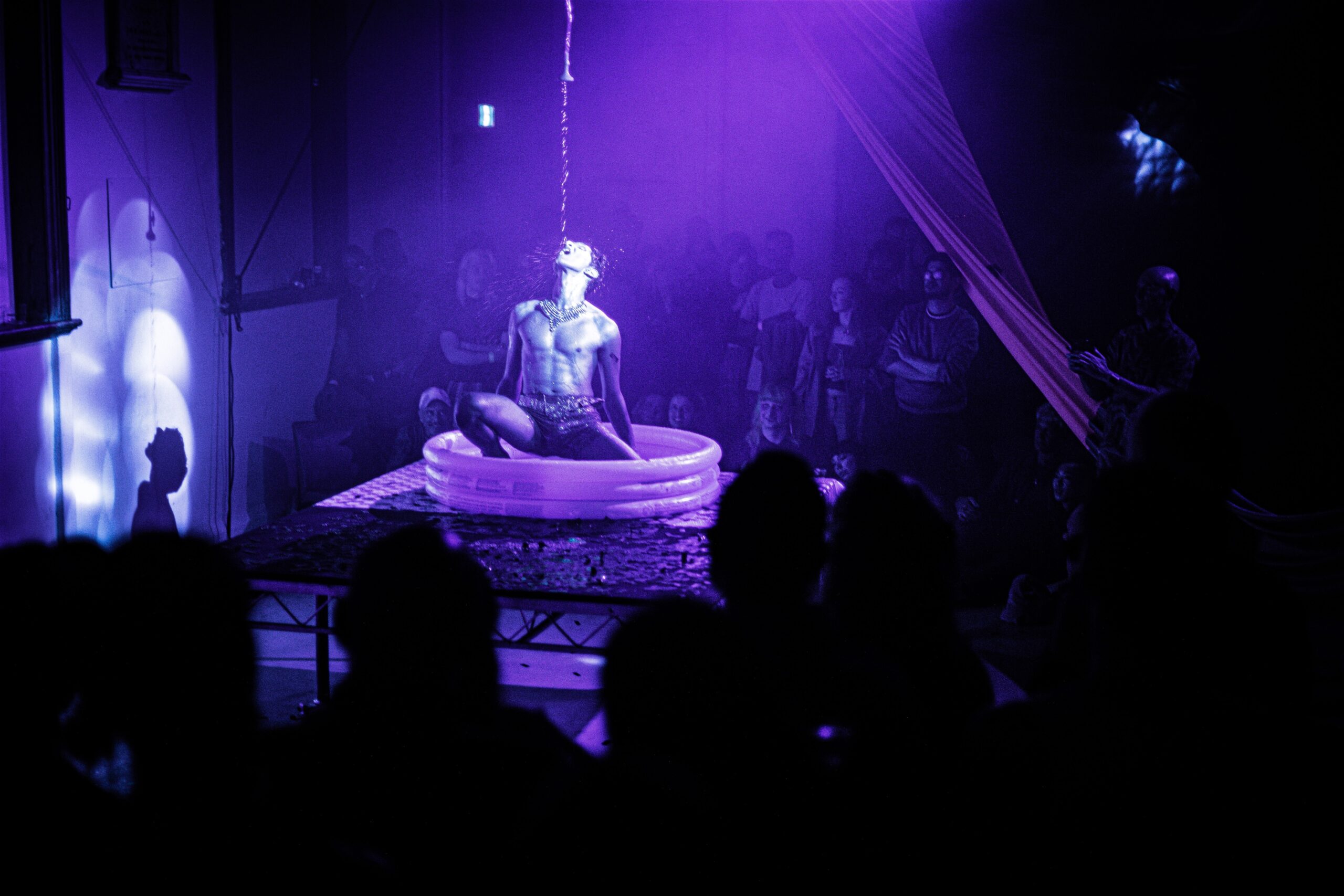
…sometimes the work is about gently asking: who were we before we learned shame?
DG: When performing, especially mythological roles, what role does, let’s say, devotion or storytelling play in shaping yourself on stage? So, does embodying these figures feel like an expansion of the self for a moment, or stepping beyond the self entirely?
GP: For me, it’s a stepping beyond the self and a contraction of the self as it stands and looks in awe at the grandness it is a part of. It reminds me that I’m part of something much larger than my own internal world.
Here’s something beautiful: historically, classical Indian dance wasn’t originally created for audiences in the way we understand performance now. They were devotional art forms, performed facing the deity rather than the audience.
The moment you stop asking to be watched, something more honest can emerge.
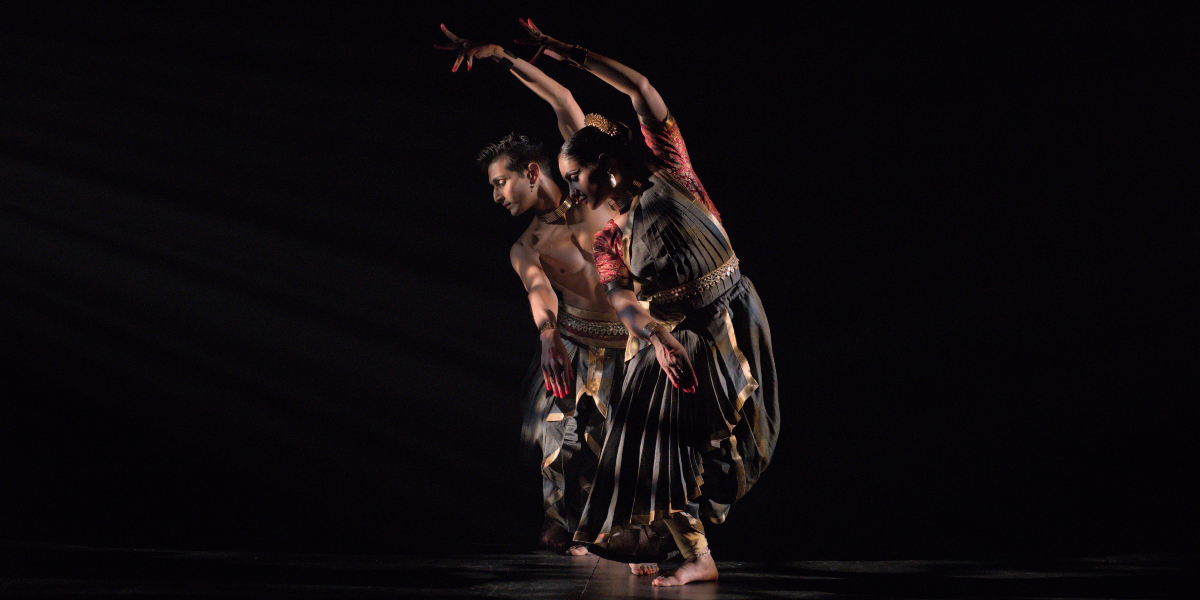
In Temple of Desire, we begin the show with an entire sequence performed with our backs to the audience as a way of reclaiming that lineage. Interestingly, the dancers often describe that opening in opposite ways. Some feel deeply grounded in themselves and their ancestry, while others feel completely outside themselves. I love that tension.
I think transformative performance lets you disappear for a moment, whilst still existing.
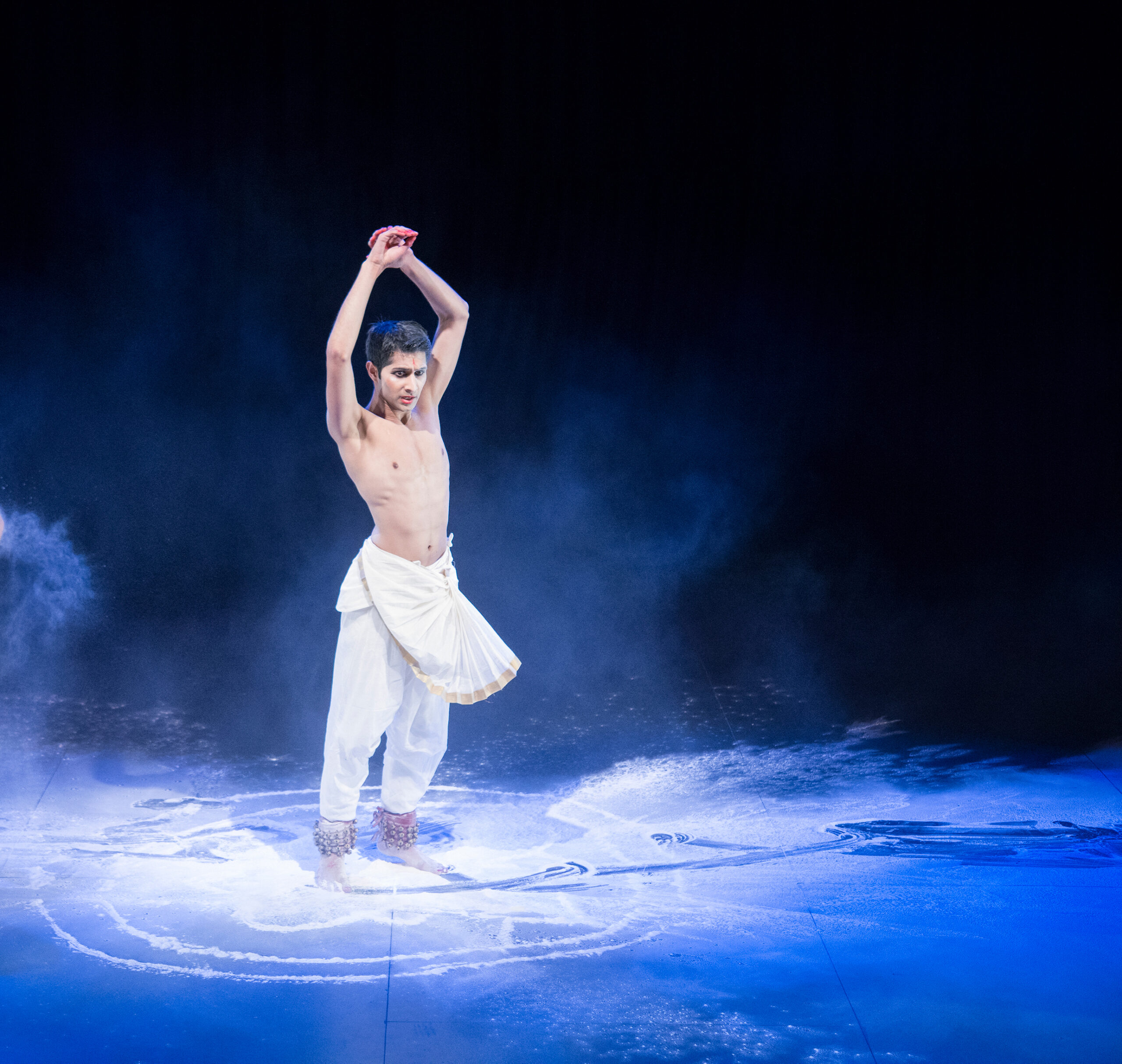
Image: Hayden Golder
DG: As you were speaking, I was thinking about the idea that some dances were ideally for God and not for an audience.
I’m not in any way too educated on traditional art forms, but in whatever little knowledge I have, I know that there are compositions where you’re being intimate with a specific God. So, things that you might do with your friend or your spouse or even your enemy, you’re doing that with the God. To me, that might feel a little confronting, like, you know, I’m scolding God or something like that.
But for a performer, I’m just curious to ask: how does that space really work for you and work with expansion, as you were saying?
GP: What I love about classical Indian dance is that it allows you to be completely honest with the divine. You can rage at God. You can say, “I cannot believe you abandoned me when I needed you most. Where were you, you fool!?” Divinity becomes approachable, questionable, fallible, confrontable… real, visceral and, therefore, deeply lovable.
At the same time, you can be utterly consumed by desire for the sensual form of Lord Krishna or the dominating beauty of Goddess Durga and want to make love to her (there were ancient BDSM practices that spawned from this). Devotion and sensuality were intrinsically linked in these traditions.
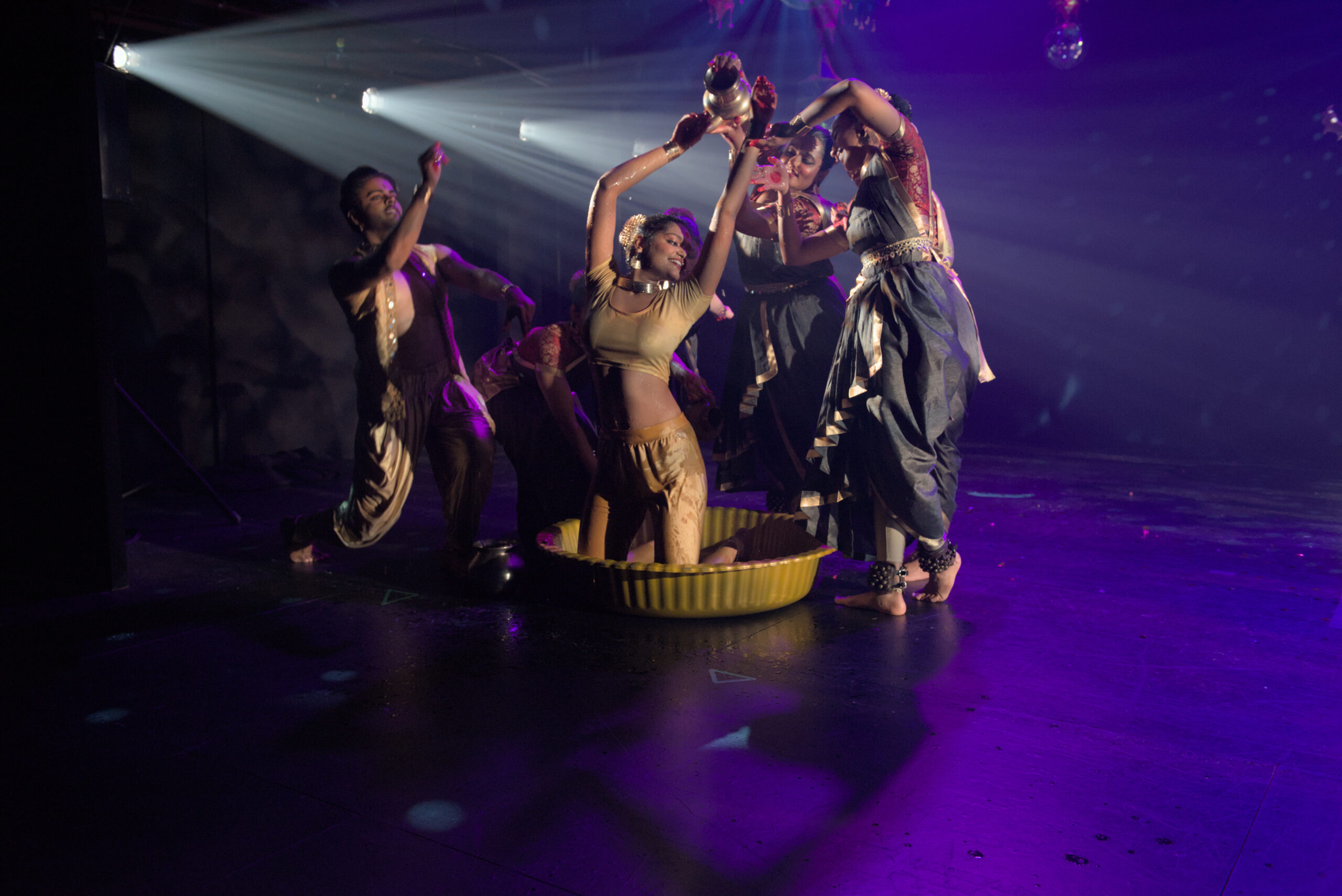
Dance-worship used to be intensely physical and intimate. Dancers would caress the deity’s lips, smell the Goddess’s hair, bathe the idol, and wear their wet drapery afterwards. Can you imagine the emotional and spiritual potency of that experience?
Colonisation sanitised many of these practices and artforms. We lost not only ritual, but entire ways of relating to the body, desire and the sacred.
DG: There were no rules, nothing to abide by.
GP: Rules. This is where it’s hard (but transformative) for us in the studio. We have to un-learn new rules that were imposed on our practice, if we are to reclaim our past.
There’s one scene in Temple of Desire where we ritualistically disrobe the Goddess because, you know, Goddess Kali often used to perform her massacres in the nude, and that’s what our beautiful imagery used to have. Many of those kinds of paintings were destroyed, and idols repainted with clothes on.
Dance-worship used to be intensely physical and intimate. Dancers would caress the deity’s lips, smell the Goddess’s hair, bathe the idol, and wear their wet drapery afterwards. Can you imagine the emotional and spiritual potency of that experience?
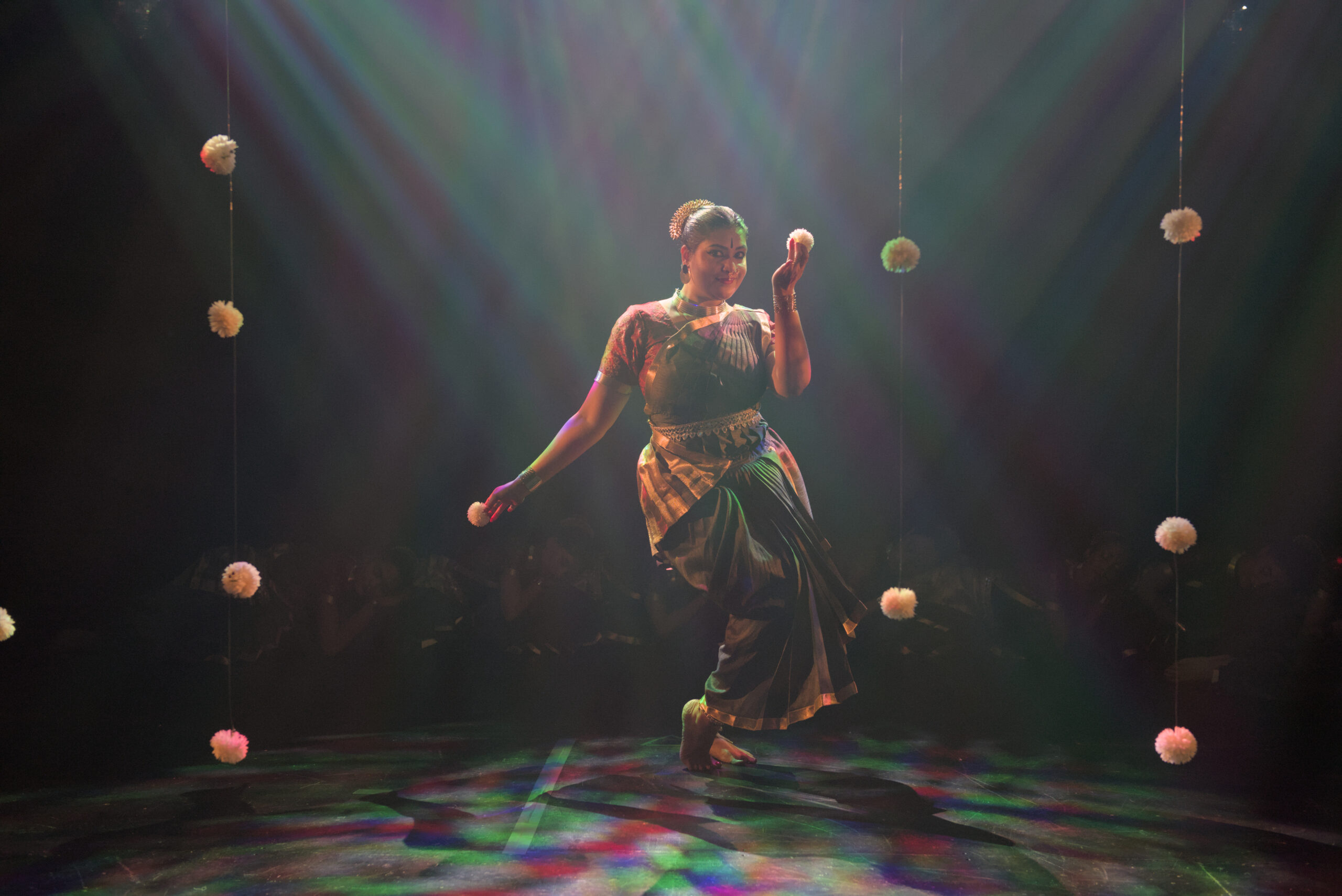
DG: I was watching the Shiva Kirtan performance, and I noticed how the rhythm was rooted in the classical or traditional form, but the phrasing felt personal and interpretive.
So, I wanted to ask you, when you add your own ideas to compositions that have been performed for generations, how do you play with the pace of the expression without breaking the structure of the original work? What is the space where innovation can live inside of tradition?
GP: I think tradition only survives if it continues to evolve.
A lot of what people call ‘tradition’ is actually relatively recent, shaped by colonisation, caste politics and social reform.
Bharatanatyam itself was heavily reconstructed during colonial rule. The form was sanitised, appropriated by upper-caste folks and institutions and reshaped to fit Victorian morality and nationalist ideas of respectability. A huge amount of sensuality, complexity and hereditary knowledge was stripped away in that process.
When people question contemporary artists for ‘changing tradition’, I sometimes think: tradition has already been changed, repeatedly. No? I tend to think of this differently: the question is not whether tradition evolves. The question we must ask is: who gets to shape that evolution, and with what purpose?
I’m not interested in preserving elements of culture and practice (I deliberately have not said ‘tradition’) that no longer serve us, such as misogyny and gendered oppression. I don’t think questioning tradition is disrespectful. I think refusing to question it is far more dangerous.
For me, innovation isn’t about abandoning the classical framework. It’s about asking what within it still serves us, what no longer does and how contemporary wisdom can exist alongside inherited knowledge.
Every generation inherits culture. But it also leaves fingerprints on it.
Classical forms will survive if artists keep risking themselves inside them.
…the question is not whether tradition evolves. The question we must ask is: who gets to shape that evolution, and with what purpose?
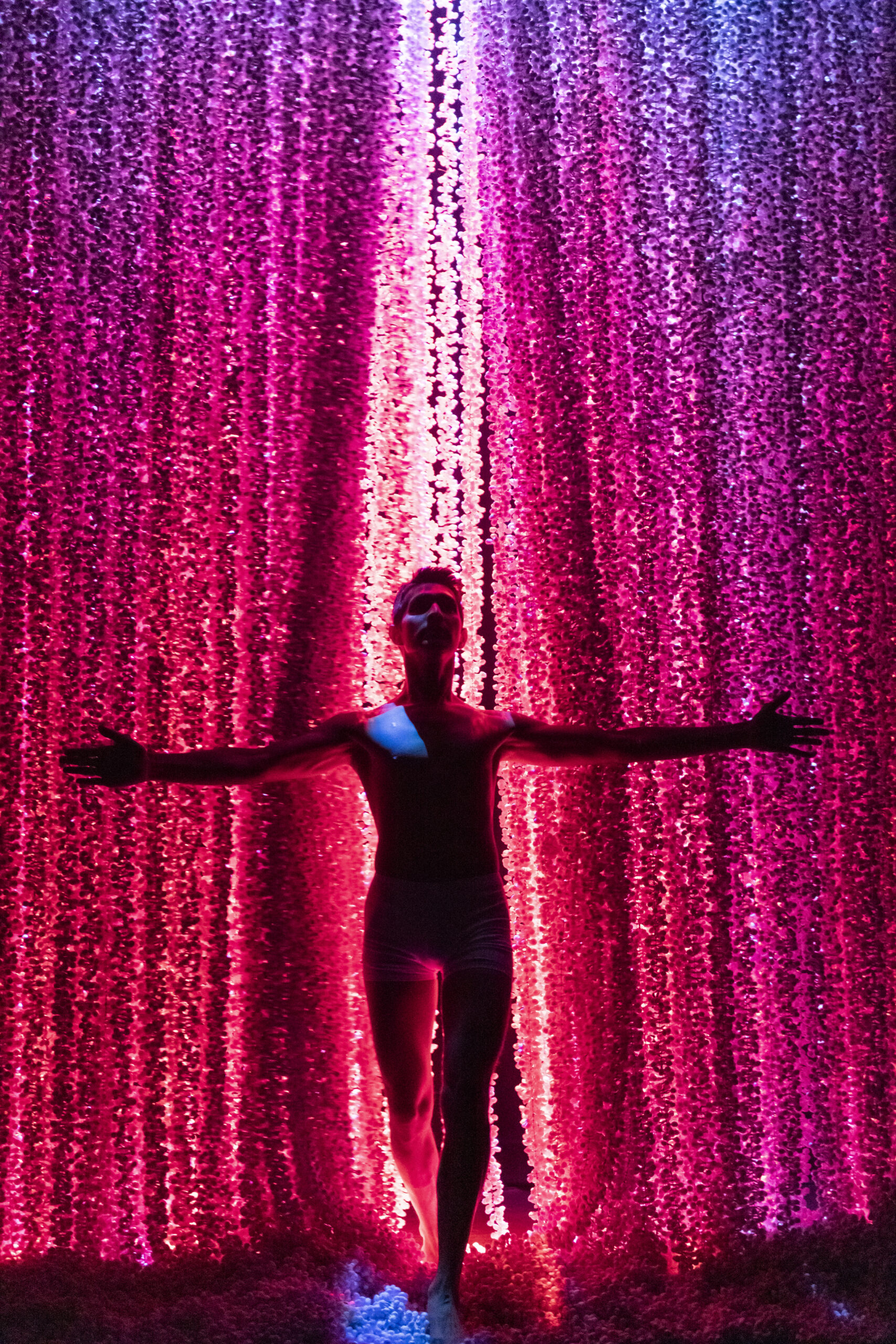
Image: Hayden Golder
DG: In your performances, there seems to be a constant shift between acting, emotional embodiment and highly disciplined movement – sometimes a moment of expression is followed immediately by fast rhythmic choreography, even a Western drumbeat. How do you navigate that transition internally, and what kind of intentionality do you hope the audience recognises in those shifts? What kind of emotional resonance do you hope they leave with?
GP: I care a lot about creating contrasts and conversations that continue long after the performance ends. I’m perhaps less captivated by ideas that resolve immediately. I hope for audiences to leave with emotional residue: questions, tension and ambiguity. Sometimes an understanding that may arrive years later. This kind of art perhaps doesn’t hand you answers but might change the way you sit with uncertainty.
I think a lot about resonance in the studio. How much do we explain? How much do we leave open? The audience completes the work through their own experiences.
Physically, I’m also interested in contrast. Exhaustion, stillness, intimacy and rhythm all transform each other. Sometimes the body can express something more honestly than language can and if we are working with contradictions and intersections, perhaps that dynamism flows through the physicality of our work.
I think audiences can sense when a body is telling its own truth, not the truth of another.
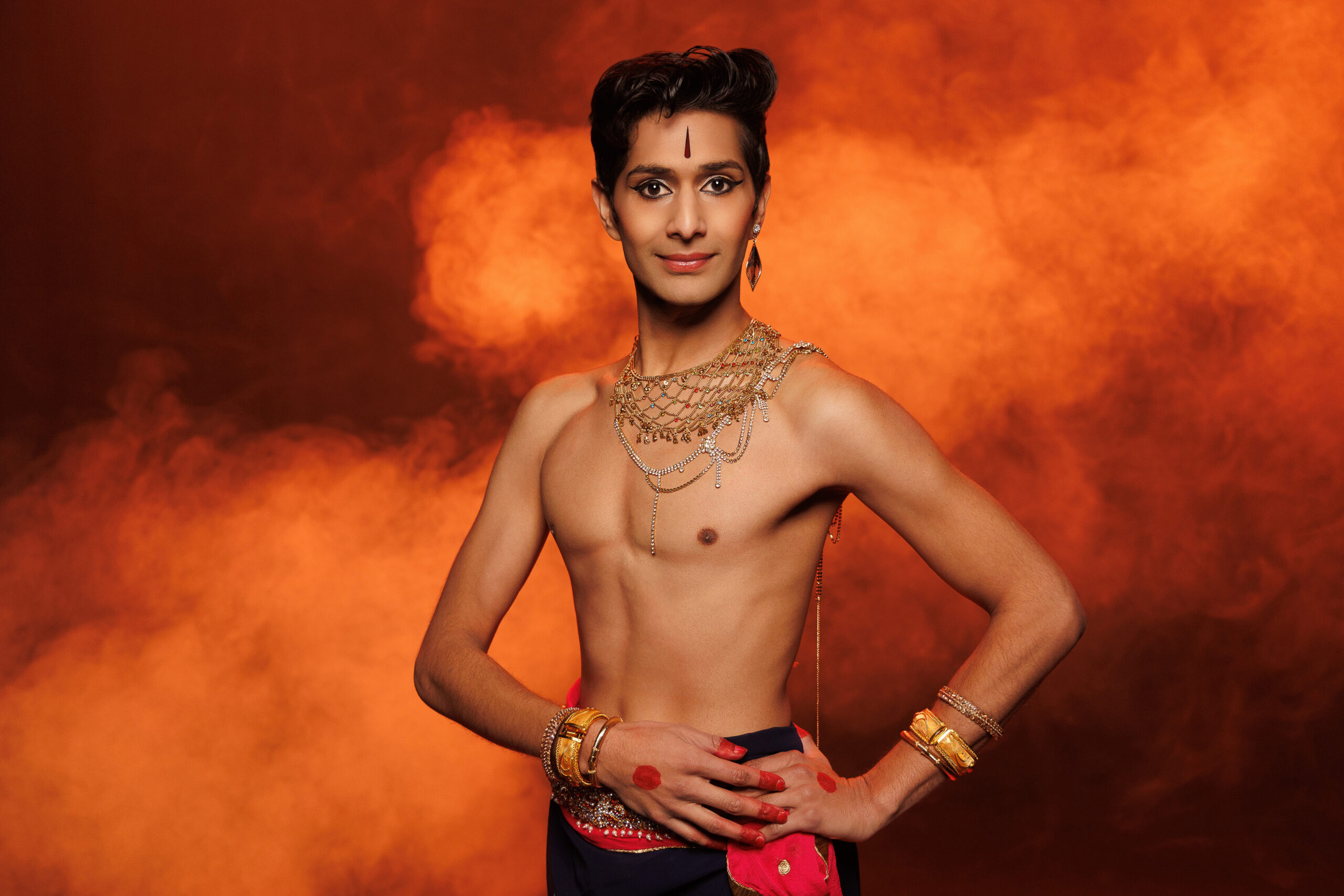
Image: James Henry and Karma Dance
DG: Amazing. That’s the end of my questions. It was lovely hearing all your answers. Is there anything else that we haven’t talked about that you would maybe want audiences and readers to know?
GP: I think every generation has to decide whether it wants culture to be alive or merely preserved.
Living culture is messy. It changes shape. It argues with itself. It risks things. Dead culture is perfectly behaved. I am so deeply interested in the first kind.
What excites me most through Temple of Desire and Karma Dance is that, when we make work like this, we encounter incredible folks (dancers, musicians, audiences and collaborators) that are so deeply excited by this too. The togetherness is what keeps us going.
Temple of Desire by Karma Dance Inc is at the Sydney Opera House on 4 and 5 June 2026.