

Archer Asks: Courtney Barnett on searching for signs and being a Scorpio
By: Dani Leever

Advertisement
Advertisement

Advertisement
In the hands of Courtney Barnett, fragments of everyday life become rich and riveting. A deft lyricist and virtuosic guitarist with inimitable musicianship, Barnett first found critical acclaim with 2013’s The Double EP: A Sea of Split Peas and broke into the mainstream in 2015 with her debut album, Sometimes I Sit and Think, and Sometimes I Just Sit. Garnering a coveted Best New Artist Grammy nomination and numerous other accolades including appearing on Saturday Night Live, the album stands as a generational classic.
Courtney Barnett followed her debut with 2017’s Lotta Sea Lice, an acclaimed collaborative record with Kurt Vile, and eschewed the vignettes of her early records on 2018’s Tell Me How You Really Feel, her humid, political sophomore record.
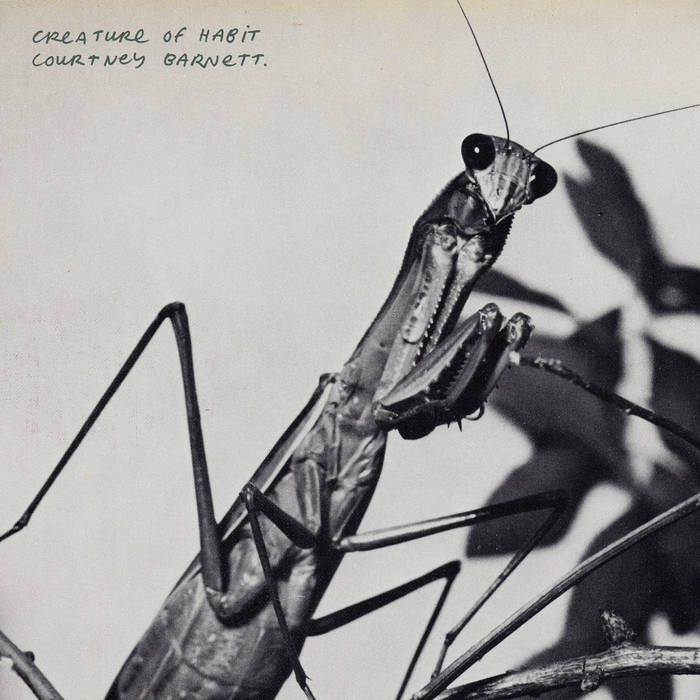
Courtney Barnett’s latest album Creature Of Habit is officially out now. Plus, she just announced she’s heading to Melbourne, Sydney and Brisbane in November 2026. Learn more about the tour here.
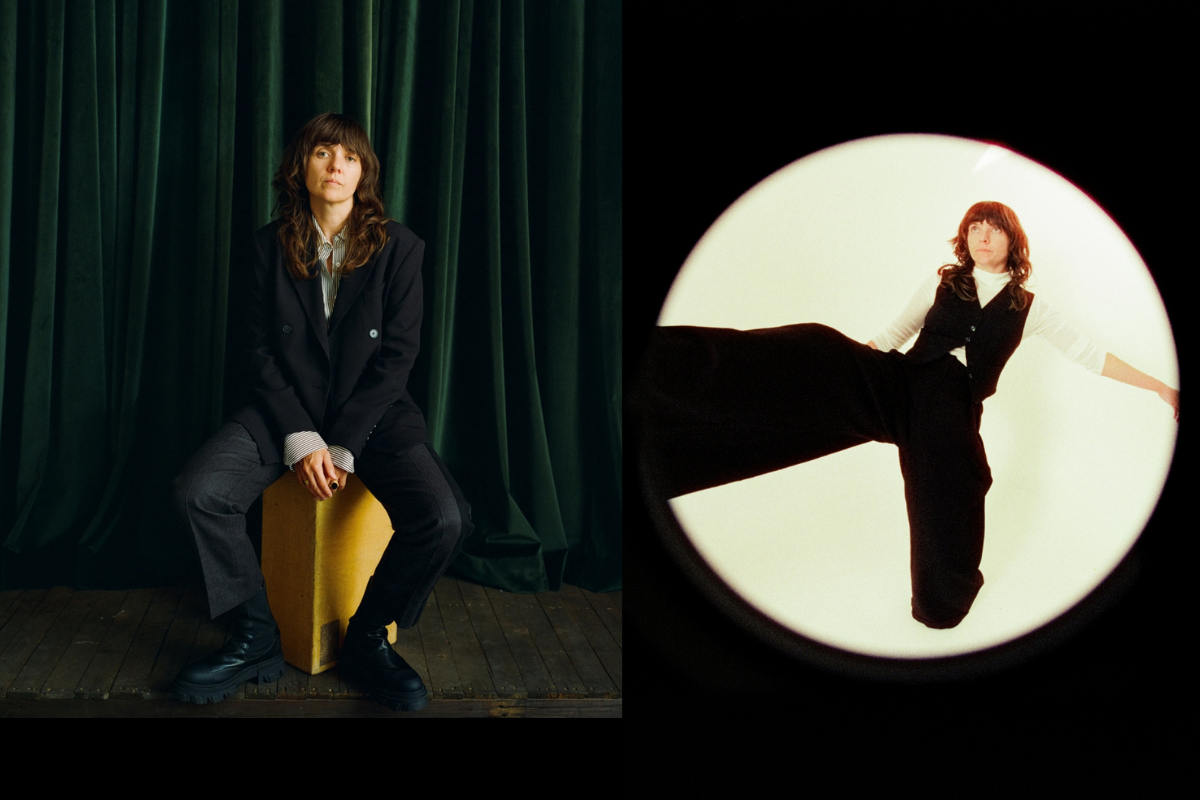
I met up with Courtney Barnett in Carlton, Naarm, to chat about the new album. We spoke about astrology, how nature seeps into each song, Shark Tank, and the gut-punching wittiness of a Courtney Barnett lyric.
Images by: Pooneh Ghana
Dani Leever: Hey Courtney! It’s so lovely to be chatting. Firstly, I’m so excited about your new album Creature of Habit. I’ve been given a pre-listen and it’s so fantastic.
The title of the album appears within lyrics where you’re talking about feeling alien, but also feeling like your feet are on the ground at the same time. Can you tell me a bit about choosing that title and what it evokes about the album for you?
Courtney Barnett: Hey Dani, thank you! So the title was in the song first; it’s in ‘Mantis’. When trying to come up with an album title, normally what I do is make, like, pages and pages of different album names, just to see what comes up or what feels good. When brainstorming for this album, nothing felt good.
But when I put the words “Creature of Habit” on the page as a potential album title, it suddenly made the whole album make sense. Like, it suddenly felt like the glue that attached each song or something. And I don’t know if I can completely explain why.
Even within the song ‘Mantis’, I guess I was thinking about how I am quite routine-based, and it’s this push-pull between that, and wanting to be free and spontaneous. But I’m quite stressed when I’m not structured. So it’s kind of like, recognising that within myself and learning it.
After all these years, I’m learning that I maybe do actually like structure and routine and discipline – it helps me to be focused and feel some level of control.
DL: That makes total sense; were there any particular habits or structures that helped make this album? I know that nature is a huge part of the album; there’s cloud references, praying mantises, and the ocean makes a huge appearance.
Was being among nature one of the things that helped put the album together?
CB: Yeah! I was living in Joshua Tree for a lot of the time when I was writing. The environment of where I am [while creating an album], I feel always plays a huge role in the writing.
Just generally, I was trying to get into a writing routine, which my whole life… it’s never been one way or another. I go through little bits of being really focused or writing for a few hours every day or whatever it is, but it’s never really been consistent. And maybe that’s fine; I’ve managed to finish songs so far in whatever my routine has been. I was messing around with trying to figure out what my routine was.
When I put the words “Creature of Habit” on the page as a potential album title, it suddenly made the whole album make sense.
So always coffee, first thing. When I started properly writing for this album, I would have a coffee and then sit at the kitchen table and try to write for a period of time. I was living in this place called Tujunga [in California], which is above Glendale, kind of up in the mountains. We were subletting this house for a couple of months.
It was up in the hills and there was always this kind of, like, microclimate, so there’d be this layer of fog – I don’t know what it’s called, but that’s where all the cloud references came from, because we kept saying how it felt like we were living above the clouds.
We were in the moutains, and some mornings you’d look out and you couldn’t even see the valley; it was all just white clouds. So things like that worked their way into the songs because every morning I’d be looking at it and reflecting on it. I think the environment always creeps in; nature was definitely a big part of this album.
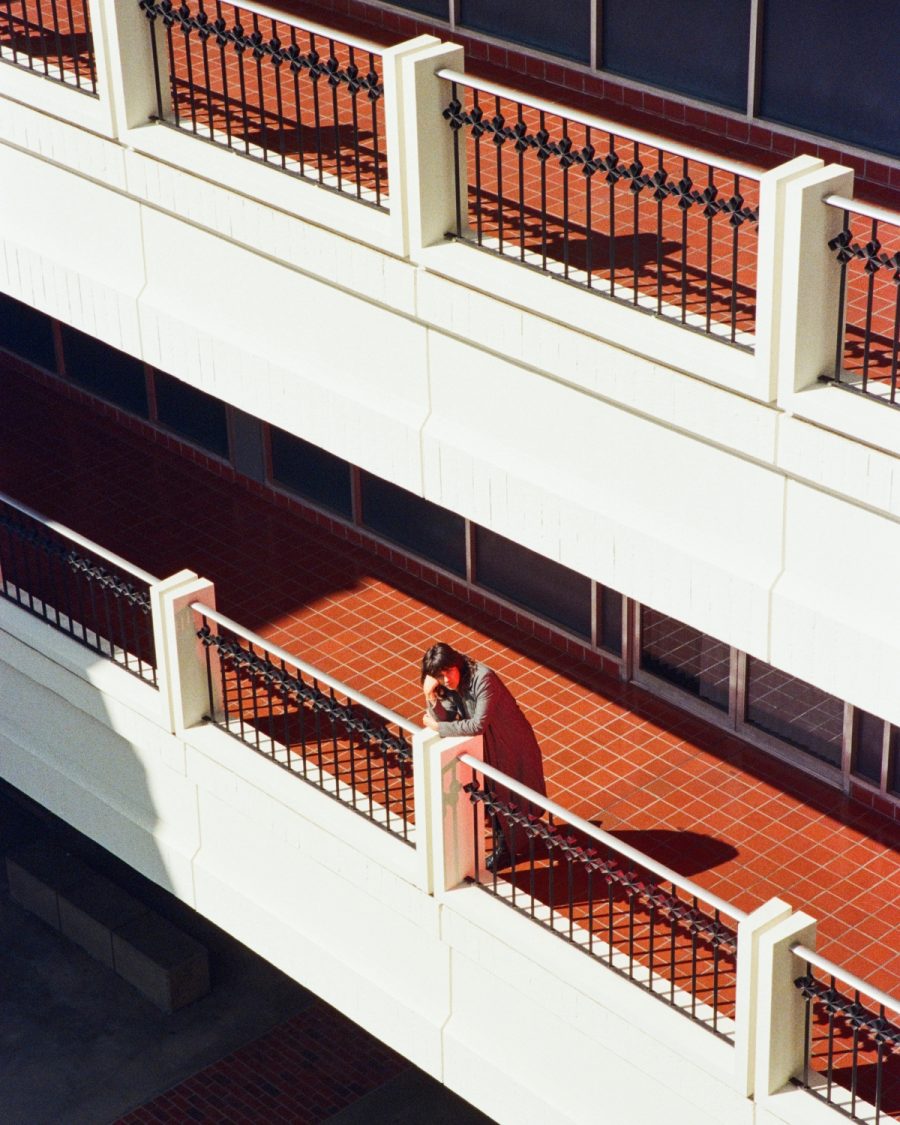
Image: Pooneh Ghana
DL: Yeah absolutely, I can see that. Obviously Melbourne and our local references are a huge part of your albums Sometimes I Sit and Think, and Sometimes I Just Sit and Things Take Time, Take Time, so I can see how places like Joshua Tree and the nature around where you were writing have found their way into this album.
CB: Yeah, the place always reflects so much. Things Take Time was written during COVID lockdowns, you can kind of hear it: it’s a smaller album. I wrote it in the lounge room during lockdown and it sounds like that to me. There aren’t many external references from memory; it’s very insular and in my head, so I find it really interesting what seeps in.
DL: For sure! Well something I really wanted to ask (and nerd out about) is how the opening lyric of each of your albums does a really good job of setting up the emotional tone of the album. So in Things Take Time, the first lyric is, “In the morning I’m slow / I drag a chair over to the window.” For Tell Me How You Really Feel, the first lyric is “No one’s born to hate / We learn it along the way.”
On this album, the song ‘Stay in Your Lane’ kicks things off with,”I know you’re trying to help me” over and over again. I think the sentiment of that lyric also really appears in the song ‘Great Advice’. What does that opening lyric mean to you, and how do you feel it speaks to the rest of the album?
CB: Yeah! So ‘Great Advice’ is a good partner song [to ‘Stay in Your Lane’]; it’s a song about constructive criticism, absolutely. I feel like the songwriting and the recording process behind making this album has been like this battle with myself: learning how to accept people’s help and get out of my own way.
Those two songs kind of match in that way, because it’s like, Yeah I want your help, but stay away from me.
DL: Absolutely, so it talks to this idea that you’re reaching out, but then retreating straight back in, which is something that comes up a lot through the album.
An early favourite lyric of mine from the album – I’m sure it’ll change a million times – is, “You’re either drowning in the deepest sea, or drowning in the kitchen sink / Either way it all feels like drowning.” That’s such a Courtney Barnett lyric to me: it’s got this witty, almost hyperspecific imagery, but then it’s such a gut punch because it’s talking about something quite profound.
How does a lyric like that speak to the rest of the album?
CB: I’m so glad you said that, because I think that’s one of my favourite lyrics. [laughs]
DL: Oh, hell yeah! [laughs]
I feel like the songwriting and the recording process behind making this album has been like this battle with myself: learning how to accept people’s help and get out of my own way.
CB: When I was writing it, I was like, is this second bit [drowning in the kitchen sink] too silly, does it take you out it? But to me, it says perfectly what I want to say, because a lot of the time, thinking about general anxiety and mental health over the years – and going through these kind of moments of depression or whatever it is – alongside that is this feeling of guilt for feeling that way.
I think lots of people probably go through that same thing, and I guess part of that lyric is kind of saying that it’s all relative: someone’s pain is not worth more or worth less.
I remember reading [American musician] Jeff Tweedy, from Wilco… maybe his biography, and he touched on this and it was like… I understood the concept, but this book was the first time it kind of came through to me. I think he was talking about being in rehab in a sharing circle and everyone was talking about their troubles, and in that moment it was him realising that everyone had bigger problems than him, and it made him feel kind of bad – like he didn’t deserve to be there.
Someone said to him something along those lines [of the lyric]: the idea of suffering being relative. It’s not a competition of who is struggling more, it’s still relative to the person. So I guess that’s kind of what I was touching on.
DL: For sure, like the idea that your window of tolerance is going to change whatever you’re going through, so drowning in the sea or the kitchen sink is still drowning or suffering. It’s got that location-based lyricism that you’re so good at, and talking to the idea of being guilty and overwhelmed, like if someone’s going through things that are so much worse, why does it still feel so sucky?
CB: Yeah! Well I’m glad you liked that one. [laughs]
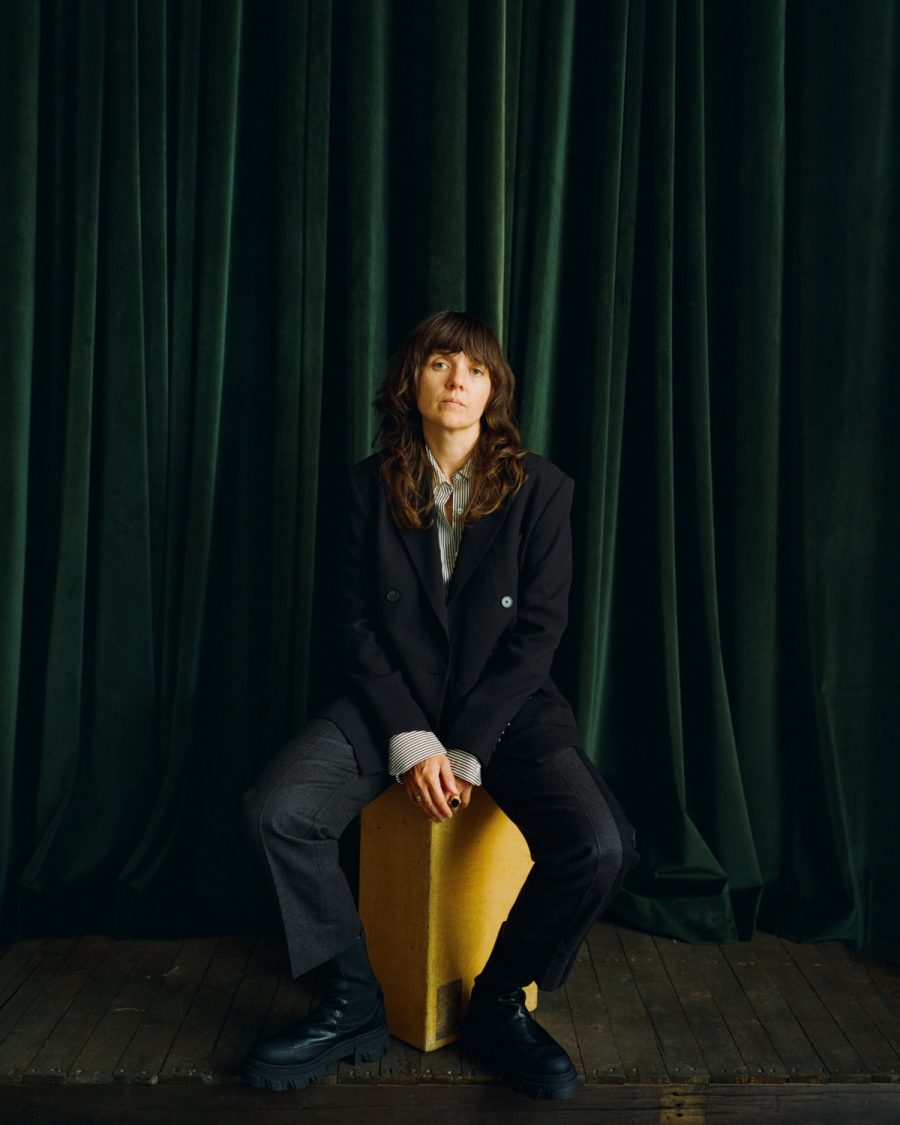
Image: Pooneh Ghana
DL: Absolutely! I listened to it over and over again and I was like, There’s something about this lyric that really speaks to me.
My next question is about dreams and sign-searching; there are lyrics on the album about overanalysing your dreams, then in ‘Mantis’ there’s the lyric, “Praying mantis on my door / Looking for meaning or just any sign at all”. There’s a lot of symbol-searching on the album, can you speak to that? And did you have any recurring dreams while writing the album?
CB: I don’t think I’ve had many recurring dreams, but I do write down all of my dreams whenever I wake up. Even at 3am or whatever time it is, I always try to write them down as soon as possible because I know I’ll forget it if I leave it ’til the morning.
Nothing’s really been recurring, but I think dreams are such a fascinating little peek into our brains. I feel like it’s a very honest version of something that we probably wouldn’t get to see or understand otherwise.
I think dreams are such a fascinating little peek into our brains.
In terms of symbol searching, I feel like that’s just kind of my constant state of searching for meaning and asking, What am I doing? What am I doing in this life? Where am I going and why? I think a lot of my songwriting seems to revolve around that, whether I state it or not. I remember that particular day: where that lyric [in ‘Mantis’] comes from was me feeling particularly lost in that moment in my life with certain things going on.
I was like literally asking the universe to show me which way to go. And then I went to the kitchen – this is in Joshua Tree – and there was a little praying mantis on the door frame. I’ve never seen one out there, or been so close to one, and it just felt like an important moment. But then, I find it funny because when you’re looking, you’ll find meaning in anything – kind of like when we read our horoscopes or tarot or whatever, we look for the things that jump out at us.
But I like that it was there, and then I looked up what it meant and learned that seeing a praying mantis means that you’re on the right path or something. I was like, Oh my god, it’s a sign. And then that same night I saw a shooting star and I was like, Whoa, this day is magical.
I was like, literally asking the universe to show me which way to go. And then I went to the kitchen and there was a little praying mantis on the door frame.
But yeah, I think it’s just a little bit playful, but it’s also just that as a songwriter I’m always trying to figure out what I’m doing and why. And, you know, what my purpose is and my purpose in life – I think everyone does that. Everyone should be doing that. It’s good to know where to put your energy.
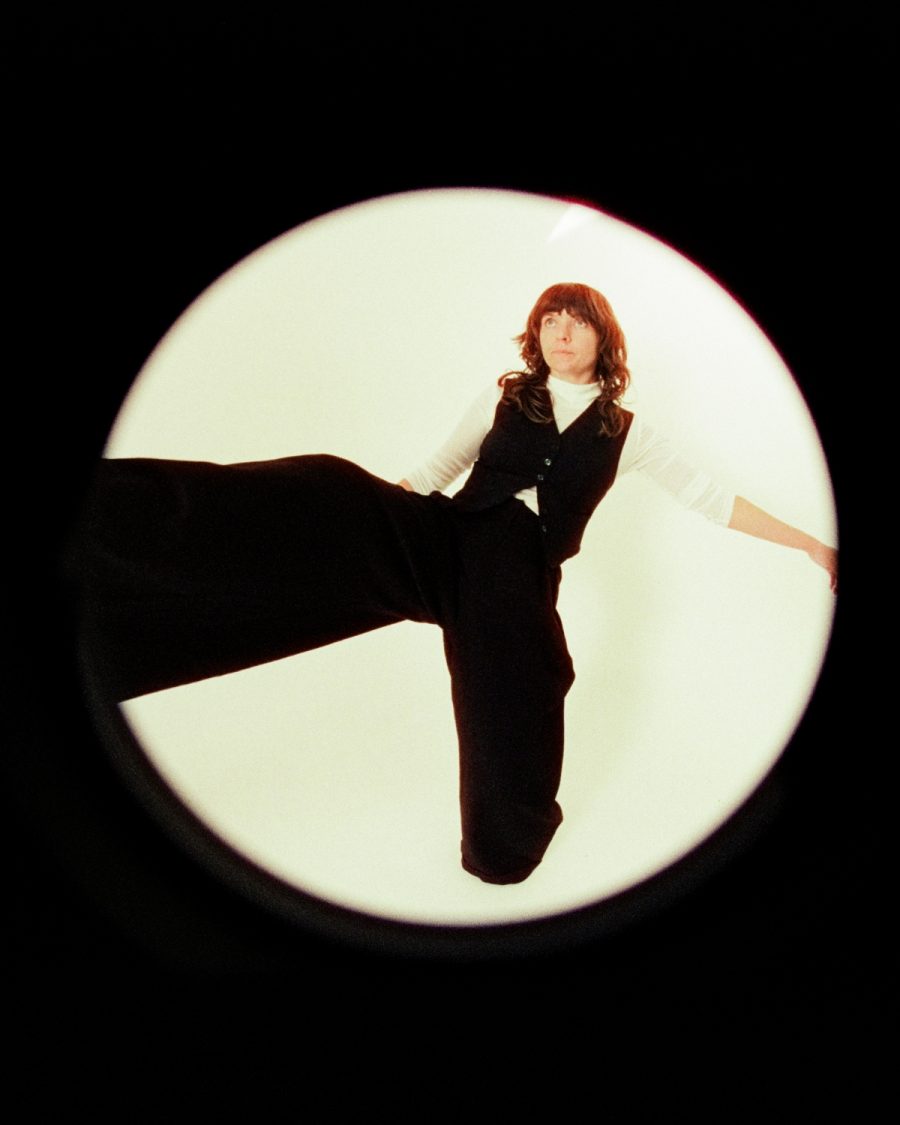
Image: Pooneh Ghana
DL: That sounds like an extremely magical day. Speaking of horoscopes… as Archer’s resident astroqueer, I feel obliged to ask. Obviously you’re a Scorpio, that’s very well-documented. Do you know what the rest of your big three are?
CB: I always forget my other ones. My girlfriend has the app thing.
DL: Co-Star?
CB: Yes! So she has my other ones saved – but I forget. I’m just a Scorpio, that’s all that matters to me. Even though I’m sure the other ones are important! [laughs]
DL: I understand. I think when it starts getting to the planets and like, Yes, that’s extremely like Mars in Scorpio of you, I’m like, Fuck, I haven’t gone that deep. [laughs]
CB: I love it when someone can read me all that stuff and explain what it means. I love it. I really love it.
DL: I think it’s our right as queer people to be like, What’s out there?
CB: [laughs] Yes. Actually, you know Zoë Coombs Marr?
DL: Yes! I love Zoë!
CB: Did you see her show Queerstralia? It was so good, and I just watched it recently. I fucking loved it. Everyone should watch it. There was a great bit where her and Magda [Szubanski] are talking about horoscopes. I loved it.
DL: Yes! I loved it too. It’s so embedded for us, I think there’s something about the cosmic stuff that helps queer people be like, There’s something weird or off about me… Maybe I’m made of stardust? Then you realise other queers are doing that too, and it’s so bonding. I also read you were doing tarot on the Kurt Vile tour? Are you still doing that?
CB: Yes, I love it. Yeah, with tarot – I haven’t done tarot in a little while. I think there’s still a deck on the bookshelf but I haven’t done it properly for a while, but maybe it’s time.
DL: Well it’s interesting, because you can pull a card and be like, Yes, exactly! Just like when you saw the praying mantis. But then if it doesn’t resonate you’re like, This is all fake anyway. [laughs]
CB: Yes! There was definitely… I reckon with my last album Things Take Time, I think I was pulling a tarot card every day as I sat down at my writing desk, kind of looking for an intention – or setting an intention – and that was fun. It gave me a bit of inspiration or something for the day.
I’m just a Scorpio, that’s all that matters to me.
For this album, I would pull – do you know Oblique Strategies? I would look at them every day, for something kind of obtuse that sets your mind off on a different path. But weirdly, I got the same card three days in a row and that did actually feel important to the process, because the card was something like, Building a brick, not making a wall.
That was important to me, because I kept getting overwhelmed by the whole album and doing everything at once, and needing like 10 songs to be finished and perfect, instead of focusing on finishing one song and doing it really well. So that did become a bit of a mantra, or an important lesson for me.
There’s a song on Creature of Habit called ‘One Thing At A Time’, which kind of touches on that: getting overwhelmed by too many things, which is… my life [laughs].
DL: Is that the song that has the lyric, “I’m in over my head”? Oh wait no, that’s another song [laughs].
CB: Yes, that’s another song! It’s a common theme [laughs].
DL: Oh totally. That kind of reminds me of the song from Things Take Time, ‘Write A List Of Things To Look Forward To’, because it’s all about going back to basics, focusing on one thing at a time. I love the idea of that card talking about building a house one tiny step at a time, instead of being like, This is the new Courtney Barnett era and here are my 10 perfect songs right off the bat. Instead it’s about doing things slowly.
CB: Yeah! And it’s hard to remember in the moment, but it’s an ongoing practice for me.
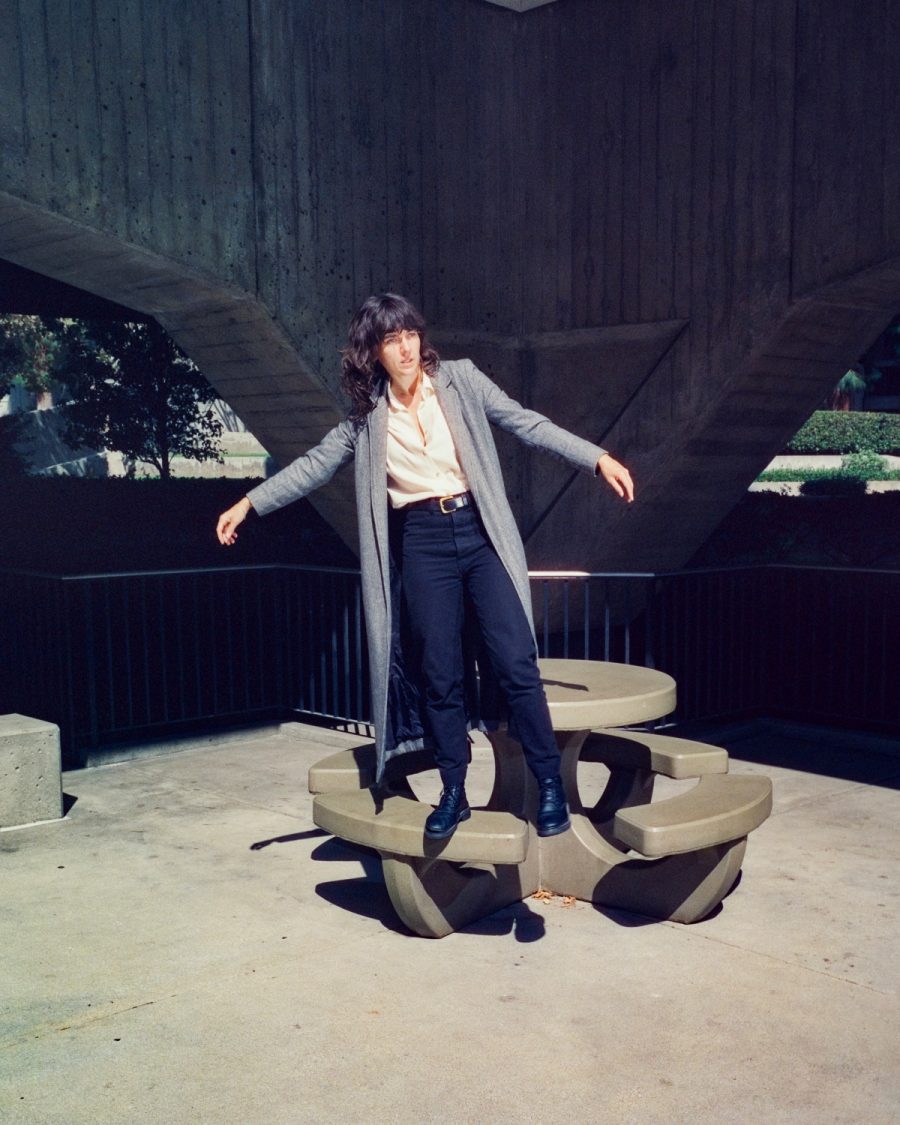
Image: Pooneh Ghana
DL: Absolutely. I wanted to ask about closing off your last era: you had the album End Of The Day. I saw the gig at the Recital Centre and it was so beautiful I was just weeping in my seat. That album was improvised and instrumental – more experimental. How did it feel closing that chapter and diving back into lyrics, back into the guitar and the vocals, your bread-and-butter?
CB: I think I needed – without realising it – that bit of space and time. It kind of came up at a good time, and again it was unintentional. That was supposed to be just the music for the film [the Anonymous Club documentary], it was never really supposed to be an album. But later on, I loved it so much that I decided I wanted it to be heard as an album. I don’t think I was even writing much during that period, so maybe it was this unintentional moment of reflection and a breath of fresh air.
Maybe I didn’t know what I wanted to say, or I didn’t have anything to say then… I don’t know, but it is interesting that it came up at that time, and then when I was ready after that, I slowly started writing again. Like I was saying earlier, I was starting to investigate my routine, and like, my purpose for writing. I was re-examining what I was doing and why, and sometimes it’s nice to have a tiny break, or a tiny step back to see what you’re doing.
I don’t think I was even writing much during that period, so maybe it was this unintentional moment of reflection and a breath of fresh air.
DL: In your songs, you signal quite a lot that the lyrics themselves will be a process of excavating yourself. Like the lyric from ‘Sugar Plum’ that’s, “I know I’ve got a sensitive heart / I’m always picking apart when I throw it to the vultures”, or from ‘Hopefulessness’, “Take your broken heart / Turn it into art”. Or even in ‘Mostly Patient’, “What’s inside that cloudy little head / C’mon won’t you stretch it out”.
Anonymous Club was obviously a big moment of vulnerability, so it makes total sense that having an instrumental moment away from lyricism felt like a bit of an inhale-exhale.
CB: Yeah, totally! Definitely. The documentary was so… I loved it and hated it at the same time. [laughs] It was so emotional and so intense, and there’s this thing as well [with those specific lyrics], sometimes I get so frustrated with myself… in a lot of my songs, I might be talking about someone else, or directing it to someone else, but it always comes back to singing to myself, or talking to myself.
It’s confusing and sometimes it takes me a while to realise – it can takes me a year of performing the songs to realise, Oh, I thought this was like, a letter to someone, but turns out it’s to myself! It’s a real learning process.
DL: That’s super interesting and cool. Okay, I have one last question. You have that lyric in ‘Sugar Plum’ about watching too much TV, and I know you mentioned you recently watched Queerstralia, which is fantastic. Are you watching anything else? Particularly anything… gay?
CB: Ummm, oh gosh, it’s moments like this where my mind just goes blank.
DL: Oh yeah, and you’re like, I forgot everything I’ve ever seen.
CB: Yeah, like, I’ve never watched television in my life. [laughs] Okay, look, so I was making an effort to watch less; I deleted a lot of my streaming things and told myself I would read more books. And I did read more books! But the last thing I was watching was when I was on tour. I love being on tour, in a hotel room, watching Shark Tank and Below Deck. Two great shows.
DL: Oh my god, amazing. Did you watch the latest Queer Ultimatum?
CB: I can picture people from the first one… maybe I didn’t watch the second one. But I did love that show.
DL: It was great, I love when we see queer messiness on TV. We deserve it as much as the straights do. If they get The Bachelor and Love Island…
CB: Yes! [laughs] I did really love that show. Any other recommendations?
DL: Oh! Did you see Mae Martin’s latest show, Wayward? Toni Colette plays a cult leader, and Mae is trying to get to the bottom of the cult’s happenings. It’s chef’s kiss.
CB: Oh, I do like Mae Martin. And Toni… our Toni. Oh no I haven’t seen that! I just started the Clare Danes show, The Beast In Me. It seems good! I love a weird thriller; she’s like a writer, and there’s a murder mystery… I love it.
DL: That’s amazing. Okay, well thanks for your time. I really appreciate the chat, Courtney!
CB: Yeah, it was really nice, thank you! Thanks for coming down here.
DL: I don’t know if you can tell, but I’m a big fan. [laughs]
CB: Aw, thank you! [laughs]
Creature of Habit is out now. Plus, Courtney Barnett has just announced her East Coast tour!
Wednesday, 4 November 2026 – The Tivoli, Meanjin/Brisbane
Friday, 6 November, 2026 – Sydney Opera House, Gadigal/Sydney
Saturday, 7 November 2026 – Palais Theatre, Naarm/Melbourne
For tickets and all touring information, head here.