

Archer Asks: Alvin Quah on cultural storytelling, queer villainy and reality TV
By: Alex Creece
Advertisement
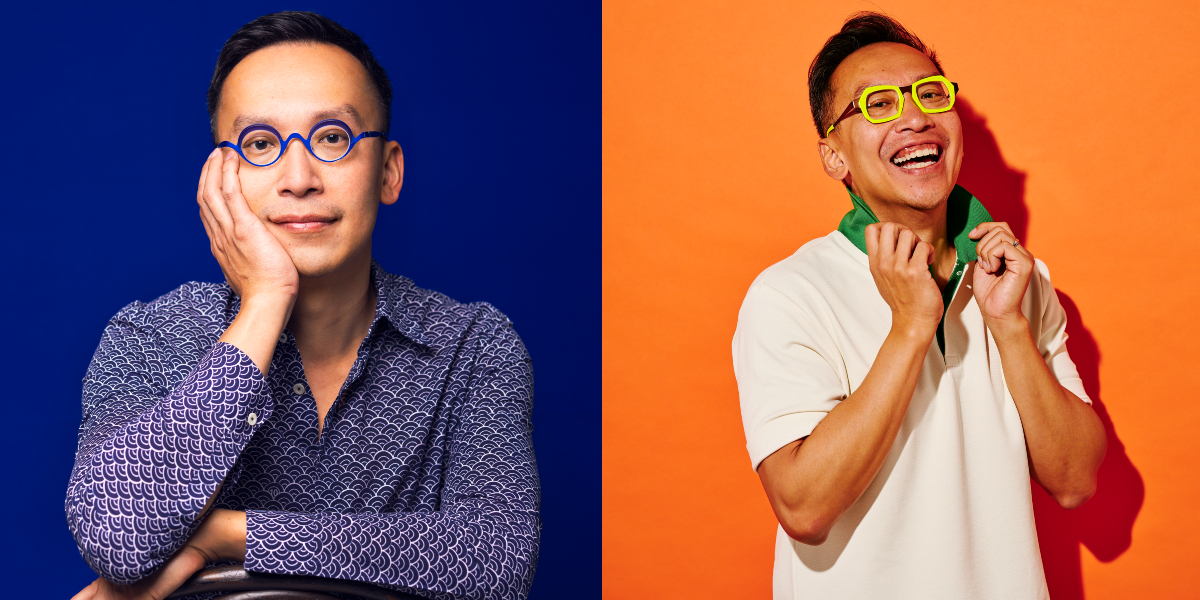
Alvin Quah is a two-time MasterChef Australia finalist and a cast member of the upcoming celebrity edition of The Traitors Australia. A Malaysian-born communications strategist based in Australia, he has spent more than two decades working in health care and pharmaceuticals. He holds a PhD from the University of Melbourne in biomedical science.
In this interview, I chatted to Alvin about his TV career and foray into The Traitors Australia, culture and food, and being a queer person of colour in the public eye.
Header image: Harvey House Photography / John Paul Urizar
Alex Creece: Hey Alvin! I’m a huge fan. My partner and I made your Nyonya egg curry from MasterChef: Back to Win a few years ago, and it was so good. And of course, your drunken chicken is iconic.
With these beautiful dishes in mind, can you tell me a bit about how your MasterChef experiences made way for meaningful cultural storytelling on an international platform?
Alvin Quah: Firstly, thank you for making the dish! I can’t believe you made the Nyonya curry, too!
Even back in 2010, when I was first on MasterChef, it’s always been my intention to inspire even one person to cook my dish, or know about Malaysian dishes. That’s my job done, right? I must be the only idiot on the show that didn’t go there to win. I went there to inspire people: that’s been a thread of my narrative since day one.
What MasterChef gave me – that I didn’t fully anticipate – was a platform where I didn’t have to edit myself. I could cook food that meant something to me – that held a memory, a history, people – and have that received as legitimate.
The Nyonya curry was my mother’s food, and drunken chicken carries a whole cultural occasion with it. I was putting those dishes up in a professional kitchen, on national television, and people were moved by it. That in itself is such a gift.
When you start cooking from truth, and not for approval, it elevates the experience entirely. The food and stories aren’t separate things; they’re the same. MasterChef didn’t make me a cultural storyteller, but it gave me the space to do it, without having to compromise who I am.
AC: That’s really beautiful. I have two things that I want to say in response to that. Firstly, I don’t think it’s foolish at all to go into MasterChef with like the goal of inspiring people because frankly, only one person can win, but everyone can inspire.
Secondly, with the Nyonya curry, the fact that it was your mother’s recipe was such a huge point of connection as a viewer. Those are the recipes we most want to try for ourselves – they’re super special, like being invited into someone’s home.
AQ: It’s so powerful, isn’t it? Even when I go to restaurants – and not all restaurants have this – every time there’s something in the menu that says grandma’s dish, you sort of think, Okay, I’m ordering that. You just know that it comes with so much story behind it that has been translated into this one dish. Amazing.
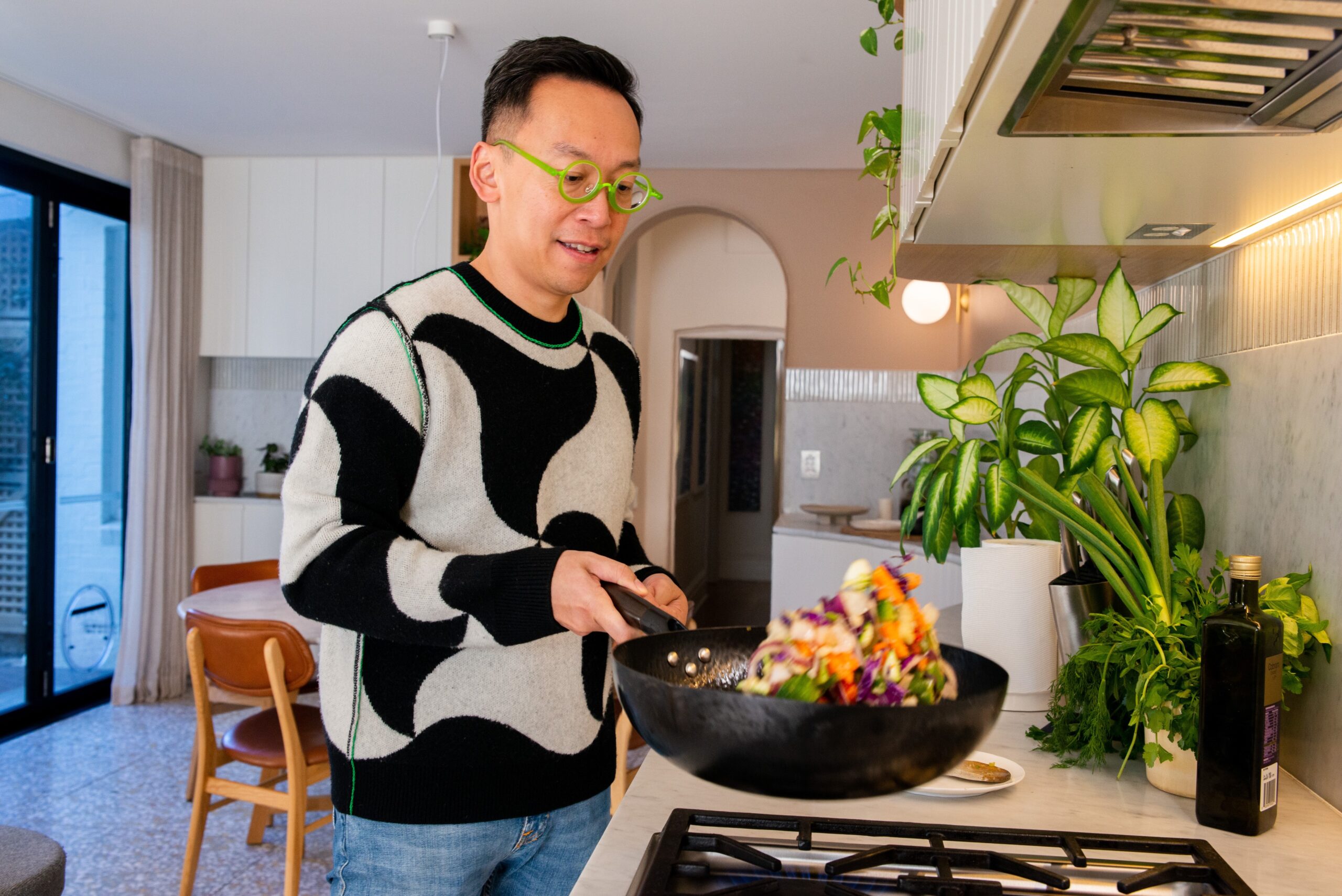
Image: Natasje Garbers
AC: You’ve been in the public eye as an LGBTQIA+ Chinese Malaysian person since 2010, over 15 years ago.
AQ: Yep, I’m old. [laughs]
AC: What do you notice has changed in that time, in terms of visibility and representation?
AQ: I think what’s changed is that we’re no longer the group that people benevolently include. There are more of us, and more kinds of stories. We no longer have to tell stories about being queer and Asian specifically. We’re no longer the sidekick, the punchline. We’re the protagonists in our stories, which matters enormously.
What hasn’t changed as much as I would like is the pressure to be legible: to be a version of queer that a mainstream audience can comfortably process.
Sometimes, we’re still expected to soften ourselves, or we’re required to educate, or our stories are expected to follow a particular arc to be considered worthy of the platform. It took a while, but I’ve gotten much better at refusing to pay that tax.
AC: That makes sense. Respectability politics are a big pressure for marginalised folks, as you said, in having to be “legible” to a particular audience, especially when that audience is closer to the mainstream.
AQ: Yeah, and that never sat comfortably with me. I think a lot of mainstream media – whether television or print or digital – still has that element of discouraging people from being “too much”.
AC: I agree, and thank you for that thoughtful response. My next question feeds into it somewhat. MasterChef’s LGBTQIA+ representation is going strong, with lots of queer contestants, including those from the Asian diaspora (such as Sarah Tiong and recent winner Nat Thaipun). What do you think draws queer diaspora folks to the culinary world (other than delicious food)?
AQ: I have a theory. It’s probably not the only answer, but I think it holds up.
Food is one of the most visceral, immediate ways to reclaim identity. So, for diaspora kids, queer or not, food is the thread that remains when the language erodes, when the community fractures, when you’re caught between cultures that don’t quite want all of you.
You can’t always talk about where you’re from, but what you can do is cook it, which is incredible. I think food traverses any language.
And then, there’s the fact that kitchens have historically been spaces for people who don’t ‘fit’ elsewhere. There is a long, complicated queer history in hospitality. It’s not entirely comfortable – professional kitchens can be brutal at times – but there’s something about the creativity, the feeding of people, the theatrics of the kitchen that actually draws us in.
For me, it was never just about the food. It was about saying, This is where I’m from. Eat it, love it, and understand me a bit better.
Image: Sam Venn
Food is one of the most visceral, immediate ways to reclaim identity. So, for diaspora kids, queer or not, food is the thread that remains when the language erodes, when the community fractures, when you’re caught between cultures that don’t quite want all of you.
AC: That’s really lovely. I do think there is something to your theory, and this idea of the kitchen as a space for outsiders. I feel like this comes across even just from watching reality TV and cooking competition shows like MasterChef and Top Chef. From the early ’00s, these shows have a higher portion of queer representation, and especially queer people of colour, than other programs.
AQ: And I think queer folk generally, we’re performative, right? Whether we’re typing a personality or not, we perform in one way. So it could be writing, it could be cooking, it could be theatre, but like, there’s something about that creativity that is just [gestures grandly] and I feel like the kitchen is the perfect outlet for it, you know?
AC: As a fellow queer with a passion for fashion (including expressive glasses), I admire how you’ve shown up on the screen as your full, bold self. How do you use your personal style as a form of pride and resilience within a mainstream media landscape that doesn’t often celebrate difference?
AQ: First of all, thank you! It’s good to be noticed in this way. And what I’ll say is, with the glasses and the fashion, they’re all deliberate. I think everything is deliberate.
When I walk into a space, whether it’s a kitchen or a boardroom, it’s a stage.
I think about what I’m wearing, not because I’m vain – although who doesn’t like a good outfit, right? – but because style is one of the few things that is entirely yours. No one can take that away from you mid-meeting.
Especially for queer people of colour, showing up visibly as your full self, and not the palatable version, is such a form of quiet insistence. Your style is basically saying, I am who I am, we are who we are.
The mainstream media has gotten great at celebrating difference in theory, but in practice, it still rewards people who are bold but not too bold, queer but still relatable to a straight audience. That’s not my brief. My brief is recognisably, specifically me.
AC: I love that so much. Now… let’s talk about The Traitors! Across its franchises, the show features a lot of queer folks. Particularly, queer villains! The cast of the upcoming season of The Traitors Australia includes Kween Kong and Rhys Nicholson, among others, and I can only assume y’all will bring the drama.
What excites you about playing in the Traitors space? Will you be leaning into some queer villainy?
AQ: Look, I’ll try not to reveal too much, but I can say that The Traitors is fundamentally a different beast to MasterChef. I mean, clearly, right?
MasterChef is generous; it rewards sincerity. You give your best, and you hope it lands. Whereas The Traitors is a game about reading people and being read by people. It requires a different set of skills. I love the phrase “queer villainy”, and I definitely think there’s something to that framing.
As queer people, we often spend much of our lives in a sort of social and strategic gameplay – reading people, being read, concealing and revealing things at the right times. That’s not manipulation; that’s survival. But yes, on a reality TV show, that makes for delicious viewing!
What I can tell you is that the whole experience has genuinely been thrilling – more thrilling than I expected. I cannot wait for you all to watch it. I binged the UK series, and Claudia Winkleman is my queen. But she might be superseded by Gretel Killeen, I dare say. If you love Claudia, wait till you watch Gretel. You’re gonna be screaming at the television!
Image: Sam Venn
The mainstream media has gotten great at celebrating difference in theory, but in practice, it still rewards people who are bold but not too bold, queer but still relatable to a straight audience. That’s not my brief. My brief is recognisably, specifically me.
AC: I love that The Traitors is so chaotic. And like you said, a very different beast to the supportive vibes of MasterChef. How did those experiences compare for you emotionally? What surprised you?
AQ: MasterChef is warm and collaborative, and you’re surrounded by people who support you and genuinely want you to do well, right? The Traitors is not that – I say this with full affection of the show and the experience. I was surprised by how much I had to recalibrate – not my values, but my instincts.
In MasterChef, trust is a virtue; in The Traitors, it’s a currency. You have to be careful how you dole it out. Walking into that environment, I had to consciously remind myself that the rules had changed.
However, there’s something unexpectedly joyful about the absurdity of the show, too, and the high-stakes psychological chaos among complete strangers. The Traitors is a show where you find out who people really are, and who you are as well. There’s something quite raw and humbling about that. It’s genuinely been one of the most unique experiences of my life.
AC: If you feel comfy sharing, is there anything you’ve learned about yourself from being on The Traitors?
AQ: The thread that’s been coming through a lot of it, including when I was filming The Traitors, is the belonging story. This is going to sound like a plug, but I’ve been writing a memoir for some years, and belonging is a thread that weaves it all together – my history, my queerness, my cultural background. I moved to Australia from a different country, so I’m used to code-switching. Everywhere I go, every room I’m in is like a roundtable where I’m finding my sense of belonging.
AC: Thank you, that’s awesome. And I look forward to reading your memoir when the time comes – plug away! Not to be corny, but I find it so brave to opt into The Traitors, where you’re essentially offering yourself up for judgement and questioning by people who don’t know you. I get stressed just watching it, sometimes!
AQ: I’m not going to lie, Alex, the first day on set I was like, What have I gotten myself into?!
The cast is so varied, but what they share is how dynamic they are. Coming from a background where I’ve had to constantly fight for a place to belong, I was worried about feeling, again, like the kid who gets picked last for sports.
Not to give myself a pat on the back, but it takes courage to put yourself out there like that. It’s easy for viewers to judge from the couch.
So, thank you for saying that.
Image: Harvey House Photography
AC: It’s true! To finish off this lovely conversation: what advice would you give to fellow LGBTQIA+ folks, particularly queer people of colour, who want to be in the entertainment industry, or in the mainstream media in some capacity?
AQ: This is such a good question, and I have three pieces of advice I’d like to give.
Firstly: your specificity is your asset. Not despite being queer, not despite being a person of colour, but because of it. I think the instinct to sand down edges, to make yourself more universally palatable is the easier thing to do. You want to lead with parts of yourself that are easier for the audience to understand – I get it, I’ve done it, but try not to, because it’ll cost you something.
Secondly: be strategic about what spaces you choose. Not every door is worth knocking on. Some environments will ask you to be visible in a very narrow, confined and convenient way. I call that diversity without disruption. You need to learn to tell the difference between a space that genuinely makes room for you, or a space that generally just wants the optics of you. No culture or community is homogenous – there are so many of us, and so many different stories to tell and celebrate.
And then, lastly, it’s going to sound simple, but stay in the community. The entertainment industry is isolating by design, so you need to find your people who truly see you. Stay close to them because they’ll remind you who you are when the industry tries to tell you who you should be.
Readers can follow Alvin’s latest adventures, television appearances, food, travel and lifestyle content via Instagram @alvinquah_ and stay up to date with upcoming projects, media appearances and collaborations.
The Traitors Australia premieres on 4 August on Channel 10.