


Catholicism, leather and BDSM: Histories of queer religious kink
By: Emma Cieslik

Advertisement

Advertisement
Content warning: This article briefly mentions queerphobic violence.
“Sexuality is one of the things that we humans enjoy and demonstrate, just like we demonstrate our taste for clothing, or our appetite for food, activities or hobbies,” Independent Catholic priest Father Albert Risdorfer, shared with me during a Zoom interview this past winter.
Fr Risdorfer is an independent Catholic priest and pastor at Our Lady Undoer of Knots Inclusive Catholic Community.
“It’s all of these things. It’s part of the gift that you’ve been given freely to exercise however you choose,” he told me.
“But in all these things, you exercise them with a sense of morality and a sense of ethics and a sense of legality and care for others.”
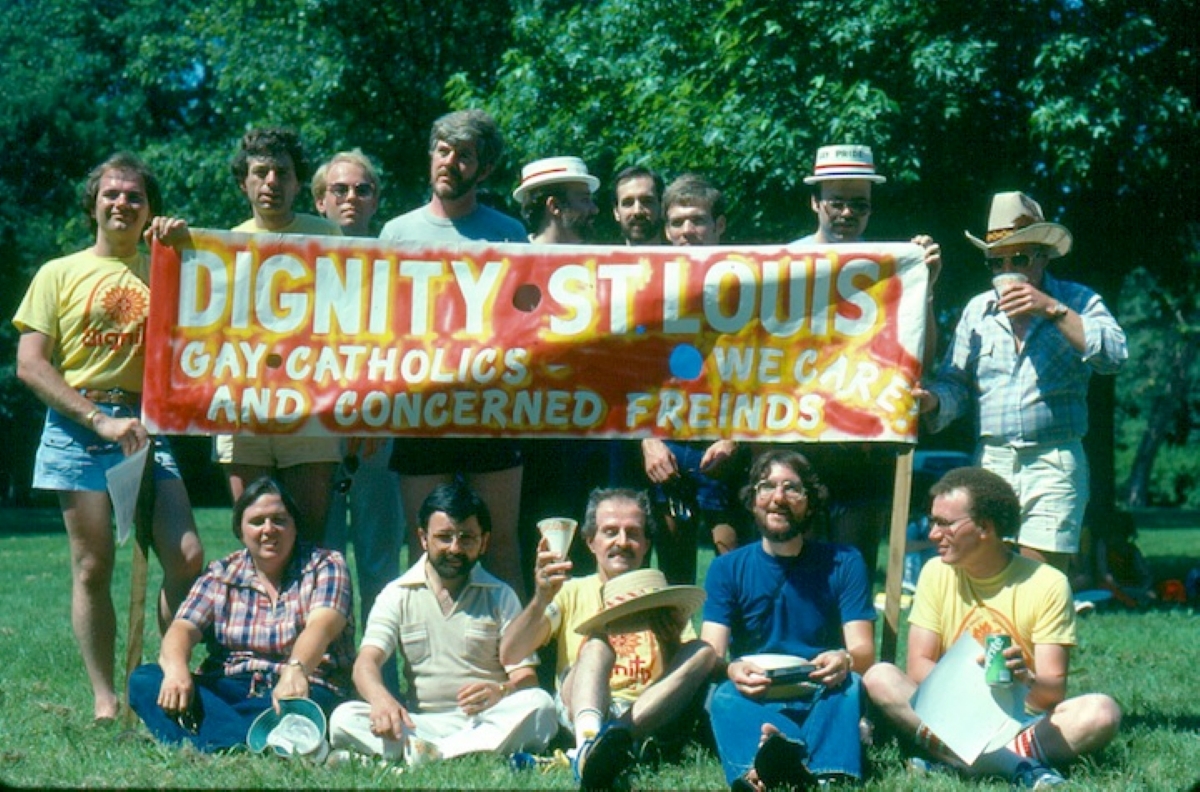
Image: Courtesy of the Defenders of Dignity
As someone raised within the Purity Culture Movement of the early 2000s, this feels incredibly contradictory to what I was taught: that my sexuality was not only secretive, but inherently shameful – only redeemable through acts of heterosexual conception and childbearing.
As I was interviewing Fr Risdorfer for the Queer and Catholic Oral History Project – which I founded to highlight how other people were navigating queerness inside and outside of the Church – I encountered something different to what I’d been taught.
I found a call for a new sexual ethic that not only affirmed sexual and gender diversity, but also embraced BDSM culture as both personally and spiritually gratifying.
As I explored in an earlier piece for Archer, there is something inherently erotic about Catholicism.
As opposed to a Protestant bodily ethic that views pleasure as sinful (to be fair, this also certainly exists within Catholicism), the Catholic faith I was raised in emphasised that suffering is not only morally good, but inherently holy.
Catholic traditions of fasting and self-flagellation are meant to be painful. They are intended to be uncomfortable for the sake of faith.
Perhaps it’s for this reason that many people who were raised Catholic – including LGBTQIA+ folks – explore or connect so deeply with kink culture, where spiritual masochism yields sexual gratification.
I didn’t know that there were actual Catholic spaces where queerness, Catholicism and kink not only coexisted, but came together. This is where my interview with Fr Risdorfer was transformative: it taught me about an unexpected queer group within the Catholic Church.
Perhaps it’s for this reason that many people who were raised Catholic – including LGBTQIA+ folks – explore or connect so deeply with kink culture, where spiritual masochism yields sexual gratification.
Ever since he was young, Fr Risdorfer noted that the concepts of kink and sexuality were closely connected in his mind.
This remained true – and became more explicit – while he was studying to be a priest at Saint Charles Borromeo Seminary. Before they ate, for example, one of the seminarians would read The Roman Martyrology.
“They’d be saying in Cappadocia, Saint Orestes was ripped to shreds by being dragged across the field by wild horses. It’s gory stuff, and if you’re into kink, some of it was actually pretty hot,” he explained.
While he ended up leaving the seminary – along with a number of other gay men studying to be priests – his fascination with the erotic within the Catholic faith remained.
Through the process of finding LGBTQIA+ Catholic communities, he discovered the Defenders of Dignity.
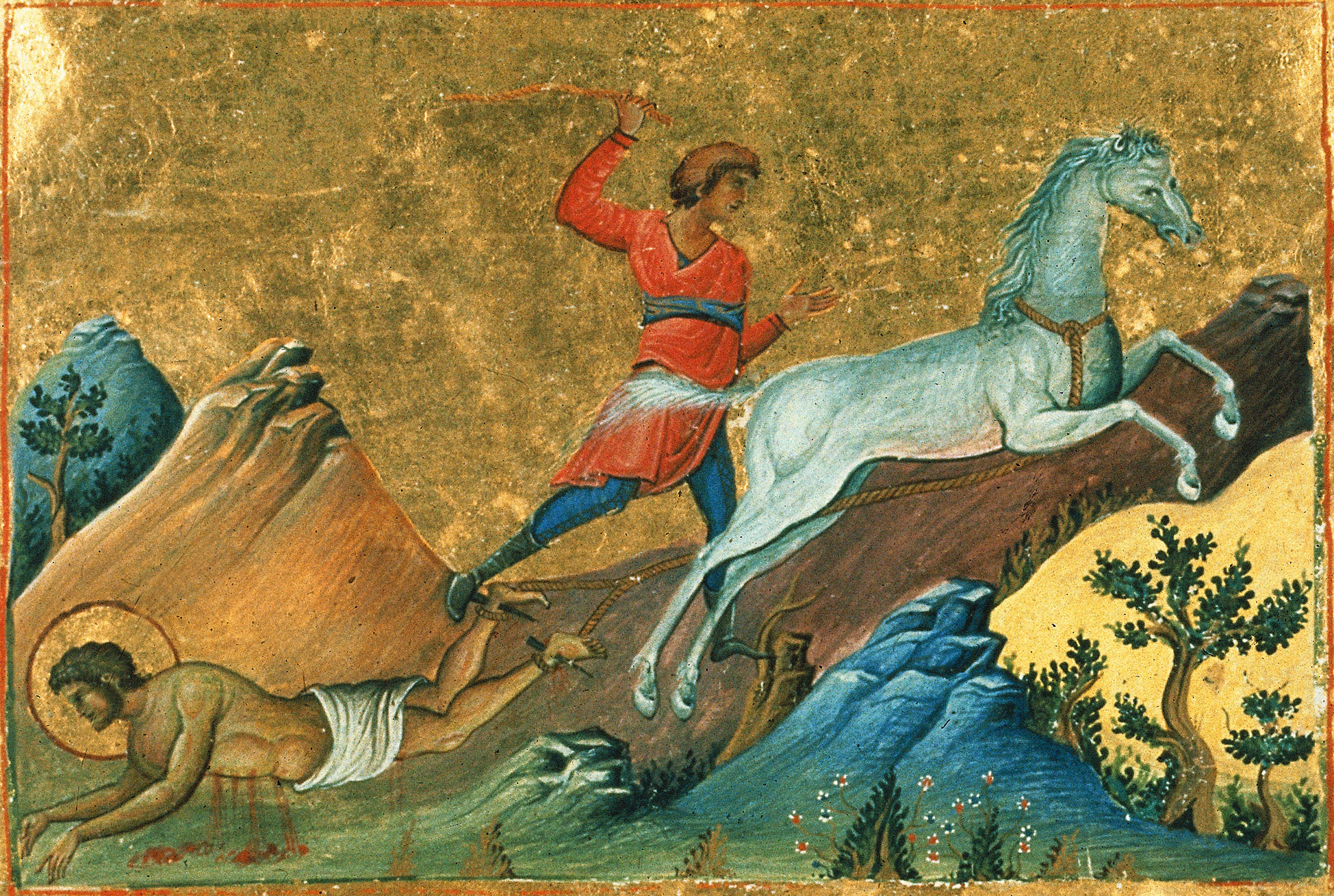
Authors of ‘Menologion of Basil II’, Orestes of Cappadocia, circa 985 CE, Constantinople
The Defenders of Dignity is a group dedicated to reconciling their leather and kink lifestyle with their Christian spirituality. They were founded in 1981 in New York City, as an affiliate of Dignity New York.
Dignity New York is a chapter of Dignity USA, the world’s oldest Catholic LGBTQIA+ organisation. It was founded by Augustinian priest Father Patrick Nidorf in 1969, and it is one of the oldest continuously operating LGBTQIA+ groups in the USA.
As an affinity group, the Defenders of Dignity aim to “provide fellowship with the leather community that fosters an individual and collective integration of our spirituality and our sexuality.”
Today, Defenders have a strong presence across the United States.
I didn’t know that there were actual Catholic spaces where queerness, Catholicism and kink not only coexisted, but came together.
“We all belong to the same human race, right? We all are God’s children. And we’re all expressing our life and our sexuality in our own particular ways,” Risdorfer continued in our interview.
“But back in the 1980s, when none of this was obvious or popular, this little group called the Defenders stood out and said, There is this kink community within Dignity, within this larger thing called the gay community. We have a place here too.”
The Defenders of Dignity also aimed to provide guidance on how to “integrate spirituality with sexuality, to encourage constructive relationships and to support the mission of Dignity itself. That was prophetic. That was bold,” Risdorfer said.
And as Risdorfer told me, parts of kink are deeply rooted in Catholicism: chastity is itself a kink, just as self-flagellation and fasting for repentance is a spiritual kink.
He means this not as a disrespect of Catholicism, but in full acknowledgement that this faith is rooted in the deepest understanding of bodily sacrifice.
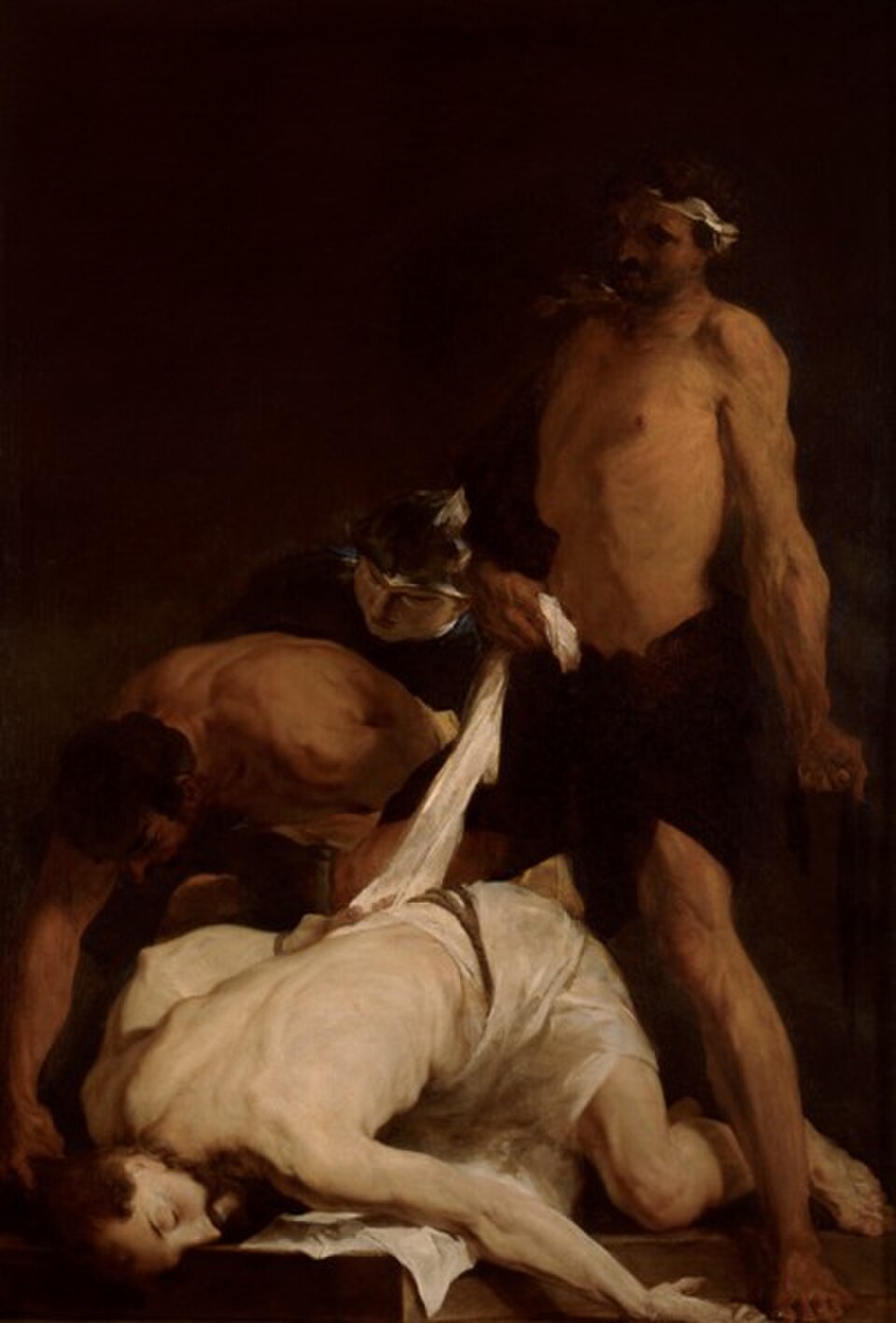
Louis Cretey, “Christ after the Flagellation”, 17th century.
The Catholic fascination and glorification of Jesus’s martyrdom – and that of the saints – consecrates bodily harm and bodily sensation as holy. It also sanctifies bodily mortification as a way to get closer to divinity and transcendence.
Unlike Gnosticism, which views the human body as an obstacle to overcome and shed towards spiritual enlightenment, Catholics view the body as inherently tethered to the soul.
Bodily sensation, including eroticism, is a vehicle through which spiritual experience occurs, and is often the only way it can be described. Pointedly erotic writings throughout history, such as by figures like Saint Teresa, best represent this phenomenon.
As a result, kink can be closely tied to Catholicism and its theology of the body.
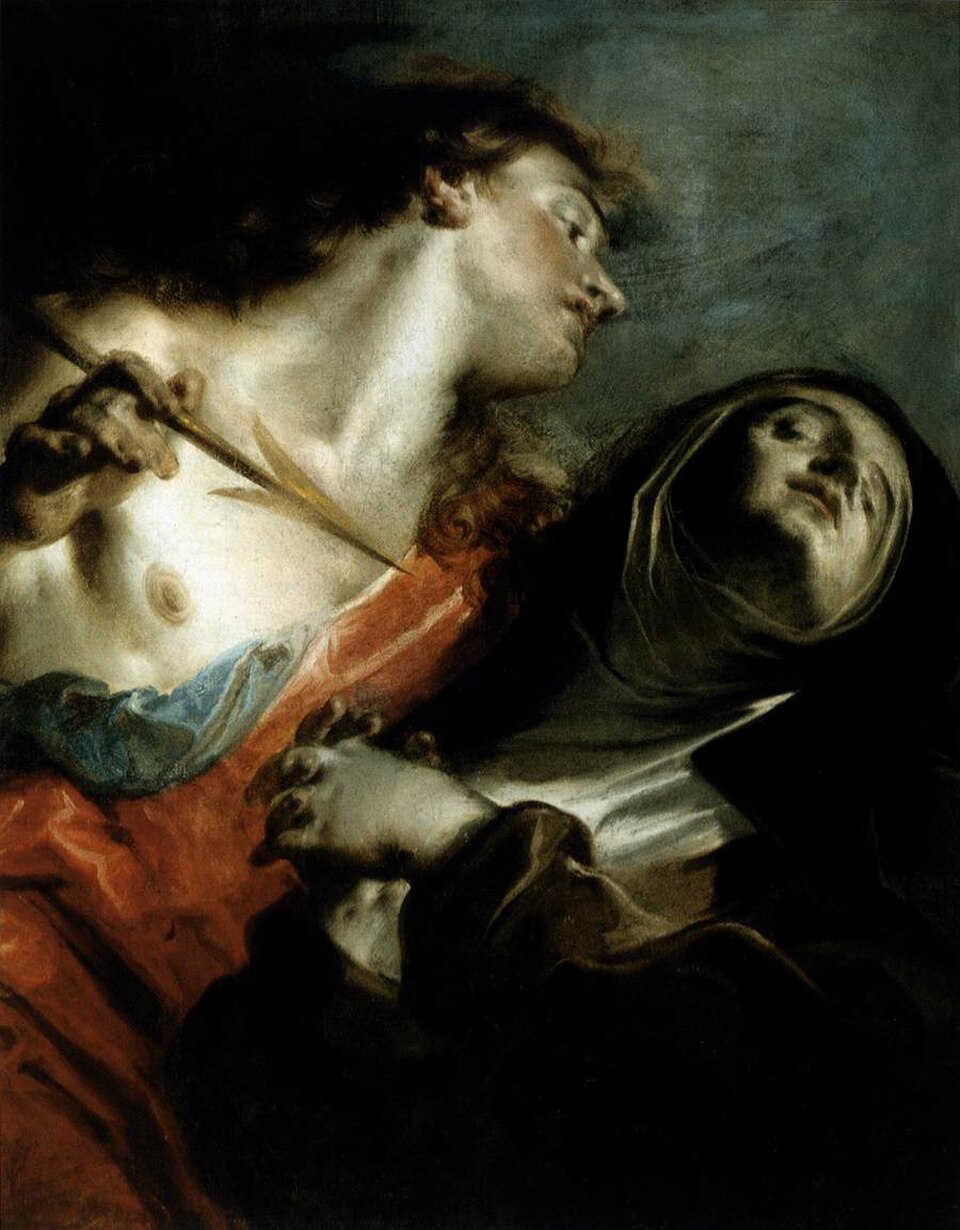
Giuseppe Bazzani, “The Ecstasy of Saint Therese”, between 1745 and 1750.
Along with creating a home for LGBTQIA+ people of faith within the BDSM community, the Defenders shed light on a topic that many community groups have shied away from since the 1980s.
In a time when queer and trans people still face legal discrimination, systemic violence and outright murder, there is often a mainstream instinct to assimilate queer and trans people: to argue they should have rights on the basis of their conformity to heterosexual, cisgender, patriarchal norms.
The Defenders reject this, explained Mark Matson, another Defenders member and former DignityUSA president that I spoke to.
“Defenders became a place where I could go even deeper spiritually, exploring other parts of myself that I considered dark,” Mark told me. “But there’s light in the darkness.”
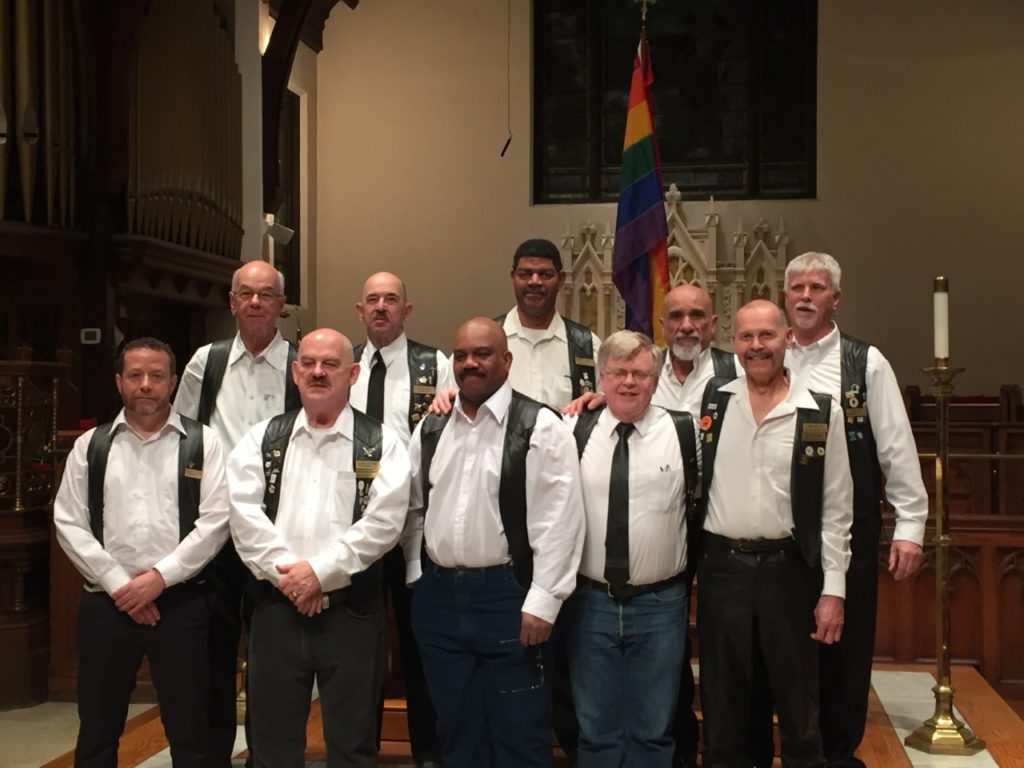
Images: The Dignity Washington Defenders LLC Leather/Levi Club, courtesy of the group.
Matson found a community that helped affirm that he was not alone in his interest of kink.
“I found that [alongside] my brothers and sisters who shared that expression as well, as I came to accept that part of myself and integrate it, I became spiritually and psychologically healthier.”
These days, Defender members wear leather vests with a red and gold eagle on the back.
“I eventually got brave enough to put my own ‘vestments’ on, if you will, in Mass,” Matson told me. “It was completely healing to me to bring these disparate worlds together.”
“It was completely congruent with what I had come to understand as the sacrament about God’s love,” he concluded.
The Catholic fascination and glorification of Jesus’s martyrdom – and that of the saints – consecrates bodily harm and bodily sensation as holy.
For both Matson and Risdorfer, the Defenders provided a standard of ethics that protected vulnerable groups from exploitation, folding sadomasochism into a faith that is deeply connected to protecting life.
For Risdorfer, it’s only by accepting and embracing the philosophies of the Defenders – not just affirming kink, queer and leather cultures – that the Church can move towards inclusion.
“I want [the] Defenders to reclaim the boldness, and to be pioneers again by providing guidance and resources on what positive fetish looks like for Christians,” Risdorfer said.
“I want to welcome all queer people and their friends. I want them to be able to express their sexuality however they choose. And we would defend them for doing that. I think that’s what moral living looks like,” he added.

Image: Fr Risdorfer, courtesy of the author.
Fr Risdorfer argues that LGBTIQA+ Catholic organisations have not just a moral imperative, but a spiritual basis to embrace ethical kink culture.
Additionally, he believes that these organisations must demand a new, informed sexual ethic from the Roman Catholic Church – and apologies for the harms that past sexist, homophobic and transphobic theologies of the body have caused marginalised communities.
“I would like to see us put our own 95 theses nailed to the Vatican’s front door,” he said.
“No gender bias in holy orders. The whole moral teaching of sex being solely for procreation needs to be reversed and apologised for. All illegal activities opposing LGBTQ rights anywhere on the planet have to cease.”
As Risdorfer shared with me, the Defenders of Dignity are about embracing kink culture in queer and Catholic spaces, but more importantly, about challenging sexual norms inside and outside of the Church.
At the heart of these principles, values and actions is the fight for sexuality to be seen, not as a tool of exploitation and discrimination, but as a deeply spiritual gift.










Love this queer Catholic series.