

Archer Asks: Swsh on queer creativity and making music for trans people
By: Alice Vyvyan-Jones
Advertisement
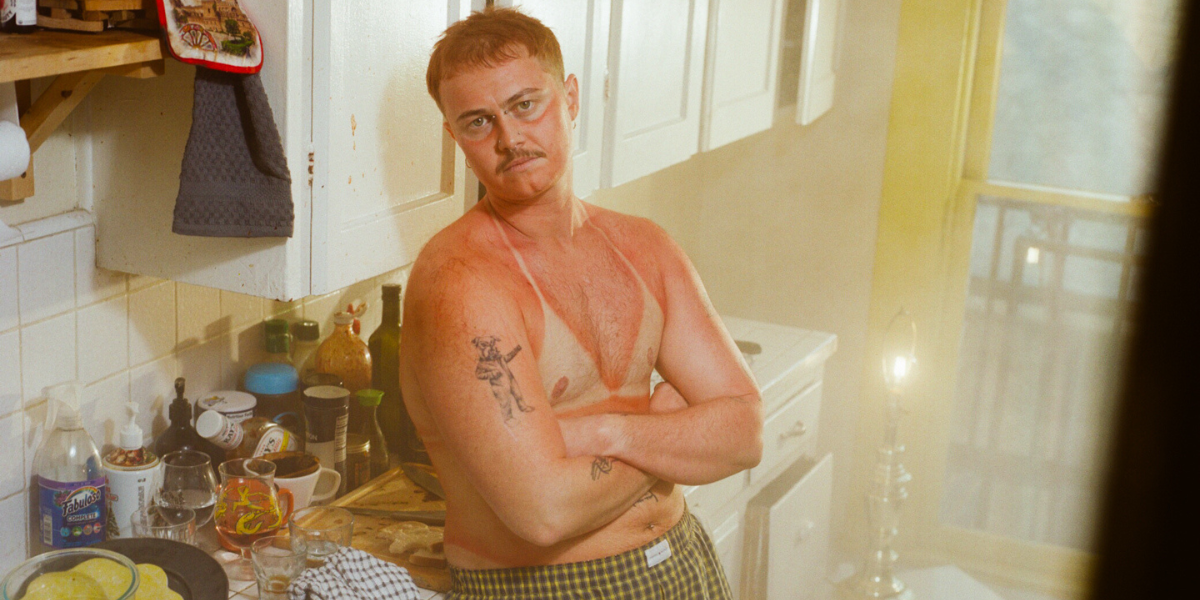
Swsh (they/them) is a Los Angeles-based producer, singer and songwriter whose work explores family, love, sex, heartbreak, addiction and the ongoing process of coming into their own. Their music also considers the queer body as both sacred and ordinary; something to be celebrated, desired and normalised in equal measure.
I sat down with Swsh to talk about safe spaces, queer creative communities, and making work through identity, desire and growing confidence.
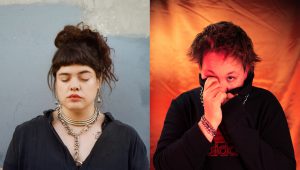
Image by: Jonathan Muench
Alice Vyvyan-Jones: I want to know where your story began. Can you paint a picture of your early years?
Swsh: I was a bit of a handful in my early years (lol). I think I was kind of an angry, angsty-ass kid. I was always causing trouble in class and hated school, but I loved drugs, loved my friends, and loved music.
If I wasn’t off smoking weed or at a party, I was playing guitar for hours on end. I had a really wonderful group of friends, so I think I always knew love and closeness from an early age. I think that’s taken me really far in life.
AVJ: That sense of love and closeness feels really foundational to the way you speak about community now. You mentioned home as a safe space, what does safety look like for you?
S: My home! Not everyone can say that, and I feel so blessed every day to live in such a beautiful place with beautiful people.
AVJ: That feeling of safety and chosen community feels especially significant in a city like Los Angeles. For people unfamiliar with it, how would you describe the queer creative scene there right now?
S: I think LA is kind of a transitional place right now. It recently came to light that there’s been some misconduct and abuse of power in several event spaces, and I think it’s caused quite a divide. A lot of queer creatives run in tighter-knit groups these days with people they trust, which isn’t necessarily a bad thing. I think it’s pushing people to create community and connections that feel more authentic and more aligned with their praxis, not centred around one leader.
I’m excited for the future. LA is full of really talented, wonderful freaks. Being surrounded by queer people committed to their work is really powerful and definitely pushes you to be the best you can be.
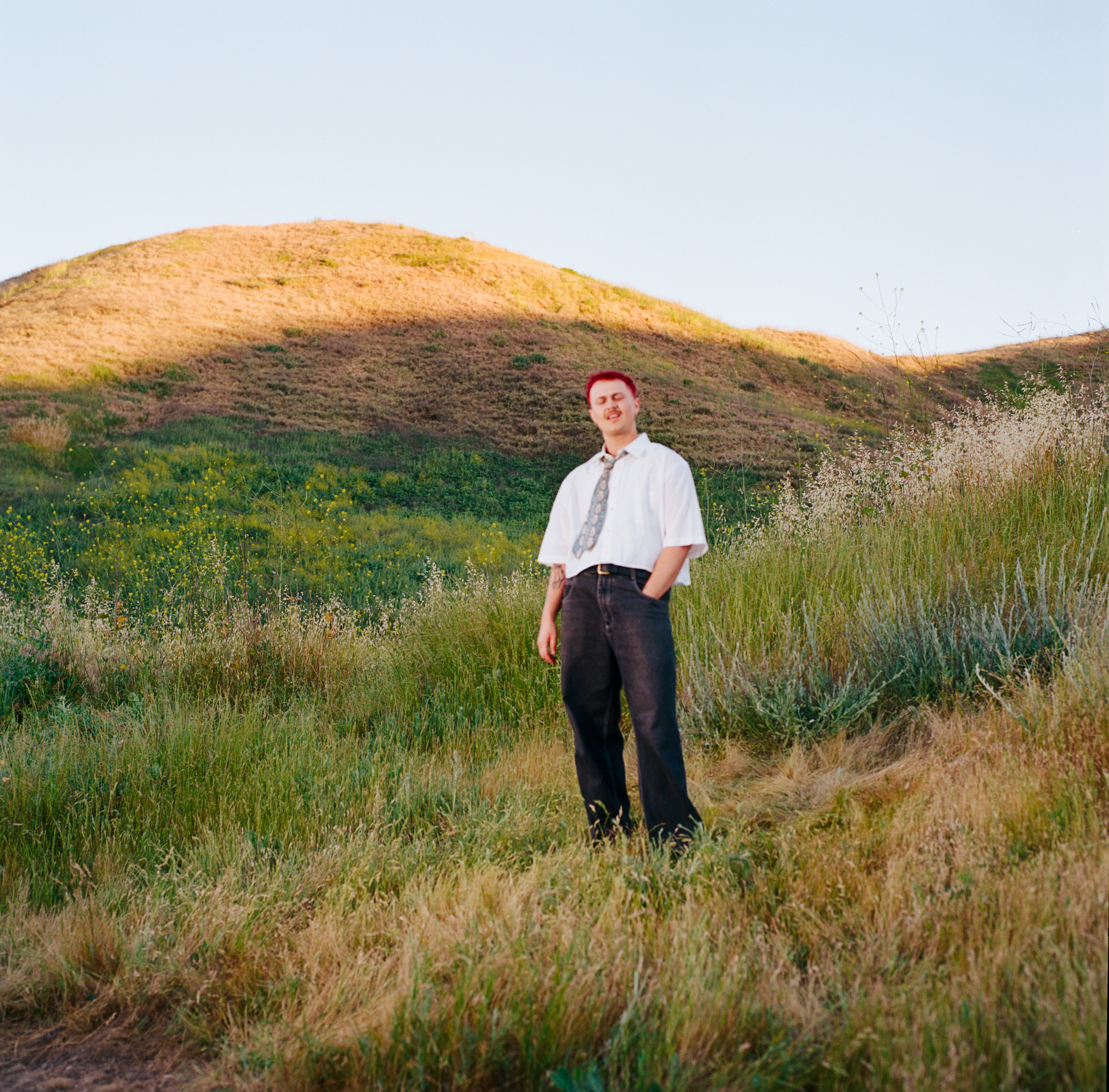
Image by: Jonathan Muench
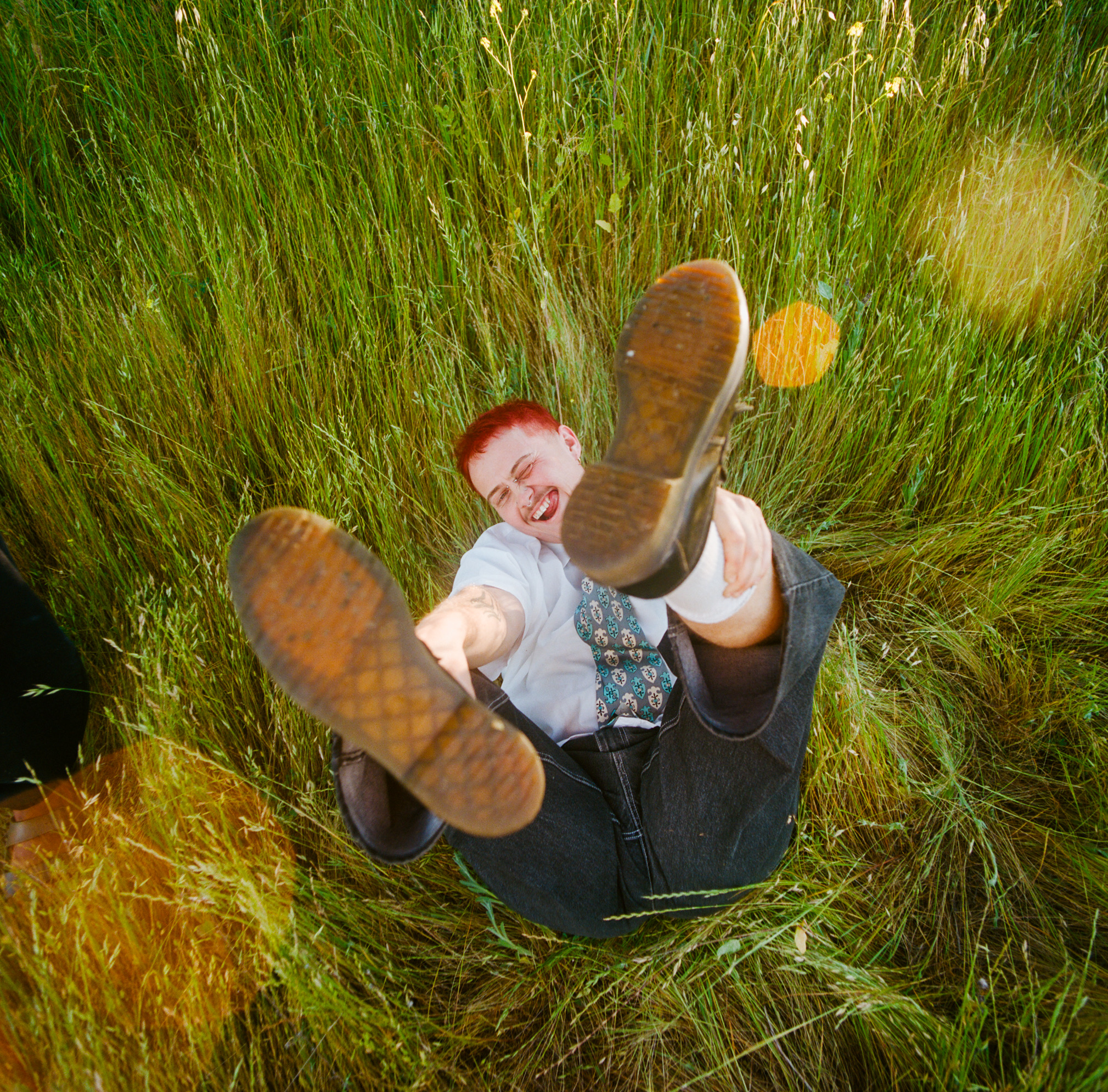
Image by: Jonathan Muench
AVJ: You describe LA as both creatively energising and emotionally fractured right now. With the increasing attacks on trans rights across the USA, does living and creating there ever feel emotionally complicated? Or does that tension also shape the work creatively?
S: I can’t think of a better way to express it than emotionally complicated. I think every creative is wrestling with the need to talk about important issues and protect their community, while also trying to make a living.
I’m hoping the two can coincide or feed into each other, but then again, what is the pursuit of making a living if not a way to distract us from the violence our government enacts on us every day?
I’m excited for the future. LA is full of really talented, wonderful freaks.
Advertisement
AVJ: That tension between survival, identity and creation also makes me think about audience expectations. It feels like there’s often an expectation for trans and non-binary artists to explicitly centre identity in their work. Do you feel pressure to do that?
S: I don’t necessarily feel the need to explicitly talk about identity or politics, or for those things to be centred in my work. Everything in my life is informed by my identity, so even if I’m talking about love, sex or family, it’s all through the lens of a trans person.
If cis people who listen to my music can relate, I think that’s beautiful, but ultimately I do make music for trans people. I think sometimes the line gets blurred between catering to queer/trans people and catering to cis people when trying to centre your identity in your work.
Everything in my life is informed by my identity, so even if I’m talking about love, sex or family, it’s all through the lens of a trans person.
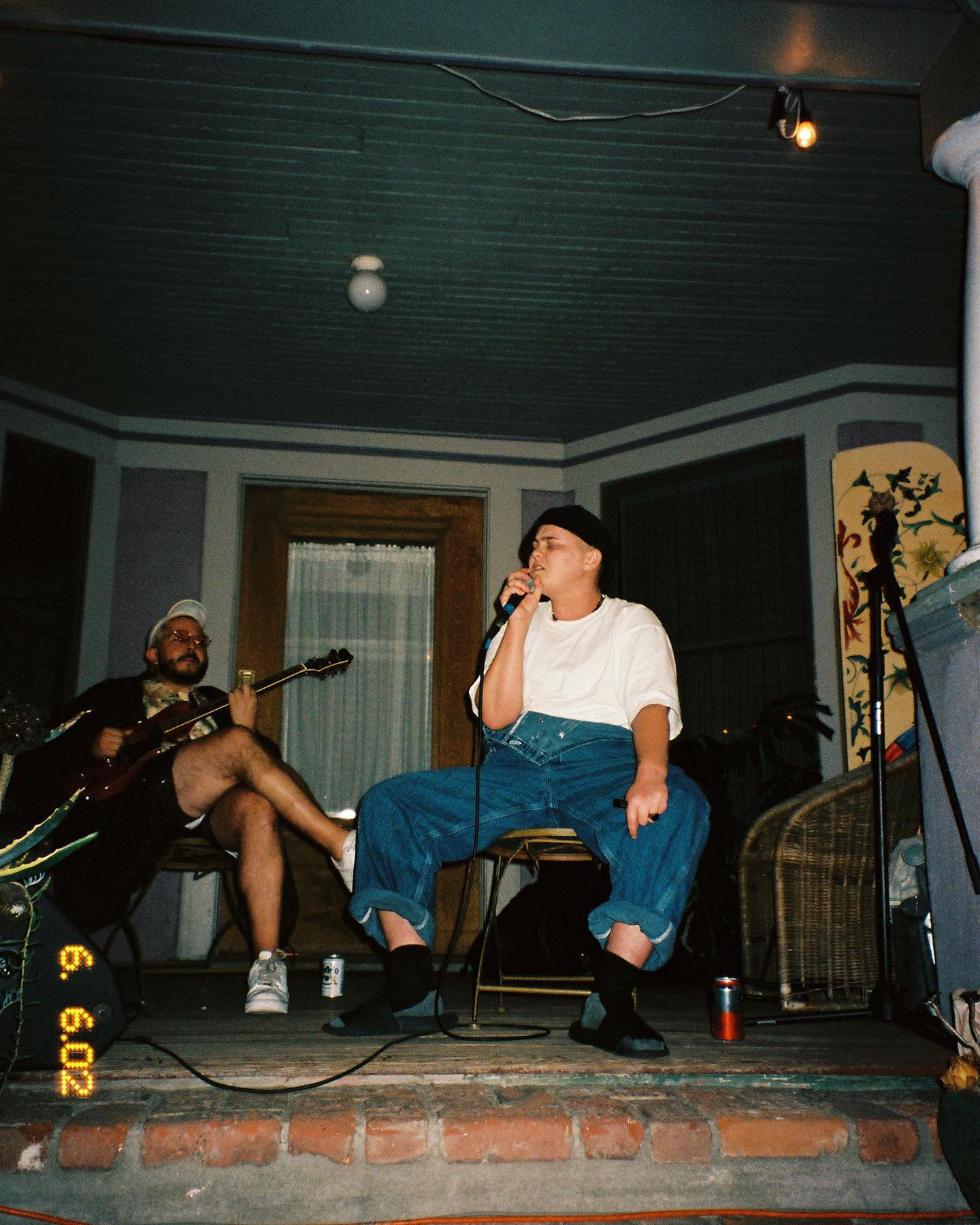
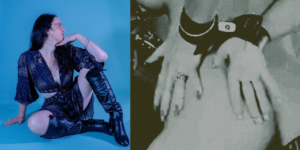
Image by: Paula Balls
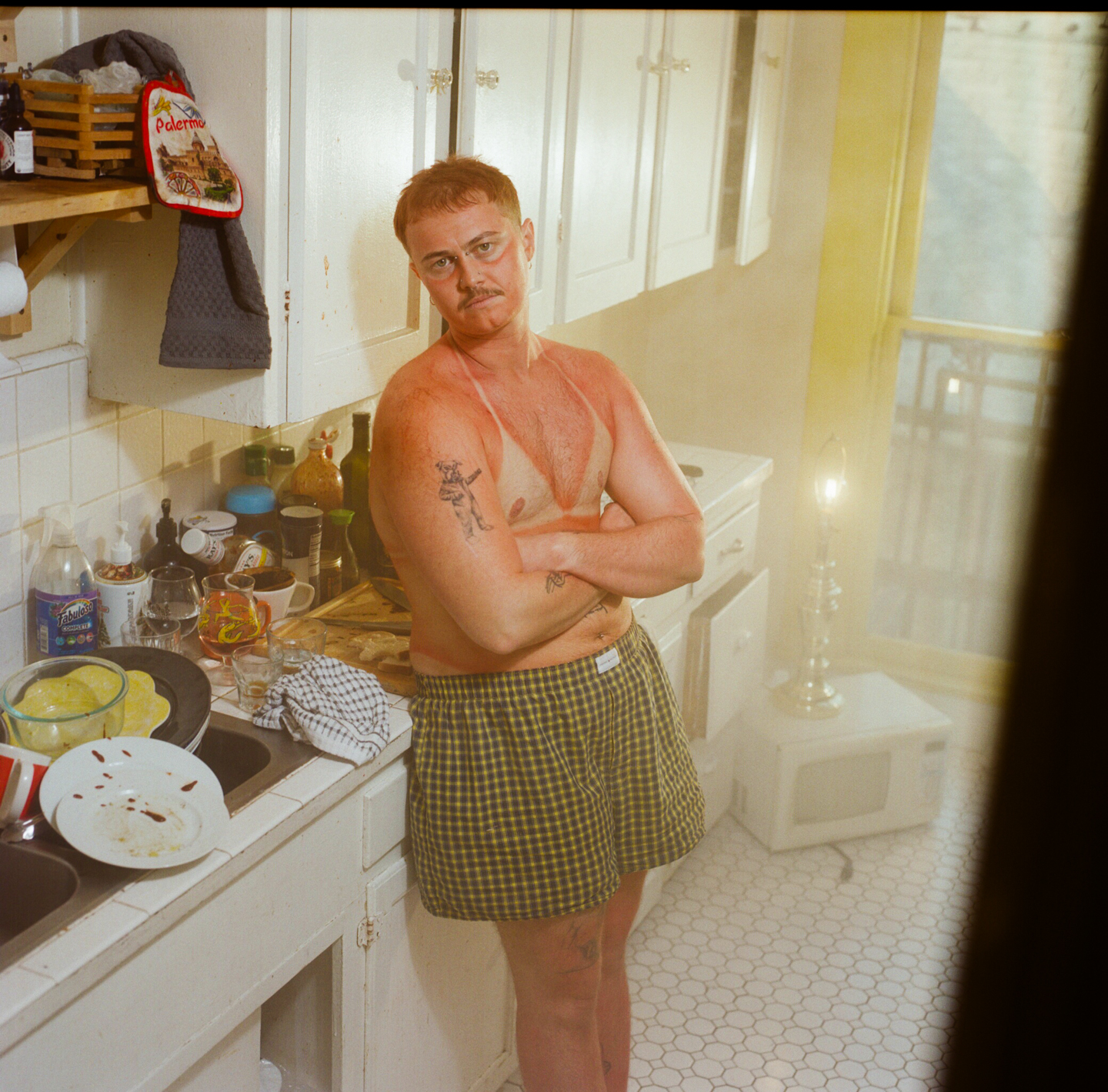
Image by: Jonathan Muench
AVJ: I really love that distinction between making work through your identity versus explicitly about identity. Your visuals and songwriting often depict queer bodies and desire in ways that feel both playful and politically charged. What draws you toward that kind of imagery?
S: To be honest, my intention isn’t for it to be politically charged at all. I want my art to be a window into my life, and my life is full of queer bodies, including my own.
I think queer bodies are sacred, sexy, resilient – but also super regular.
AVJ: There’s something really powerful in the way you balance the sacred with the ordinary. Even titles like Goodboy and ‘I LOVE SLUTS‘ feel intentionally provocative. What interests you about pushing people a little with your work?
S: I like the idea of grabbing people’s attention or giving a title that makes them look, but I also think it’s relatable. Because I am a good boy and I do love sluts and I know there are other queers who feel the same way.
I am a good boy and I do love sluts and I know there are other queers who feel the same way.
AVJ: That confidence feels especially present in ‘ALL YOUR FAULT’. You mentioned it was one of the first songs you made after starting testosterone where you felt hopeful again. Did music become a way of reconnecting with yourself during that period?
S: I think it was a long process of reconnecting with myself – and one that didn’t come easy.
Not being able to sing for a period of time is something I’m still coming back from, so every good moment with music feels like a win. I don’t want to approach my music timid and afraid, and I don’t want to think about transitioning as something that made me that way.
Putting out ‘ALL YOUR FAULT‘, a song I feel complete confidence in, feels like a way to affirm and practise that confidence.
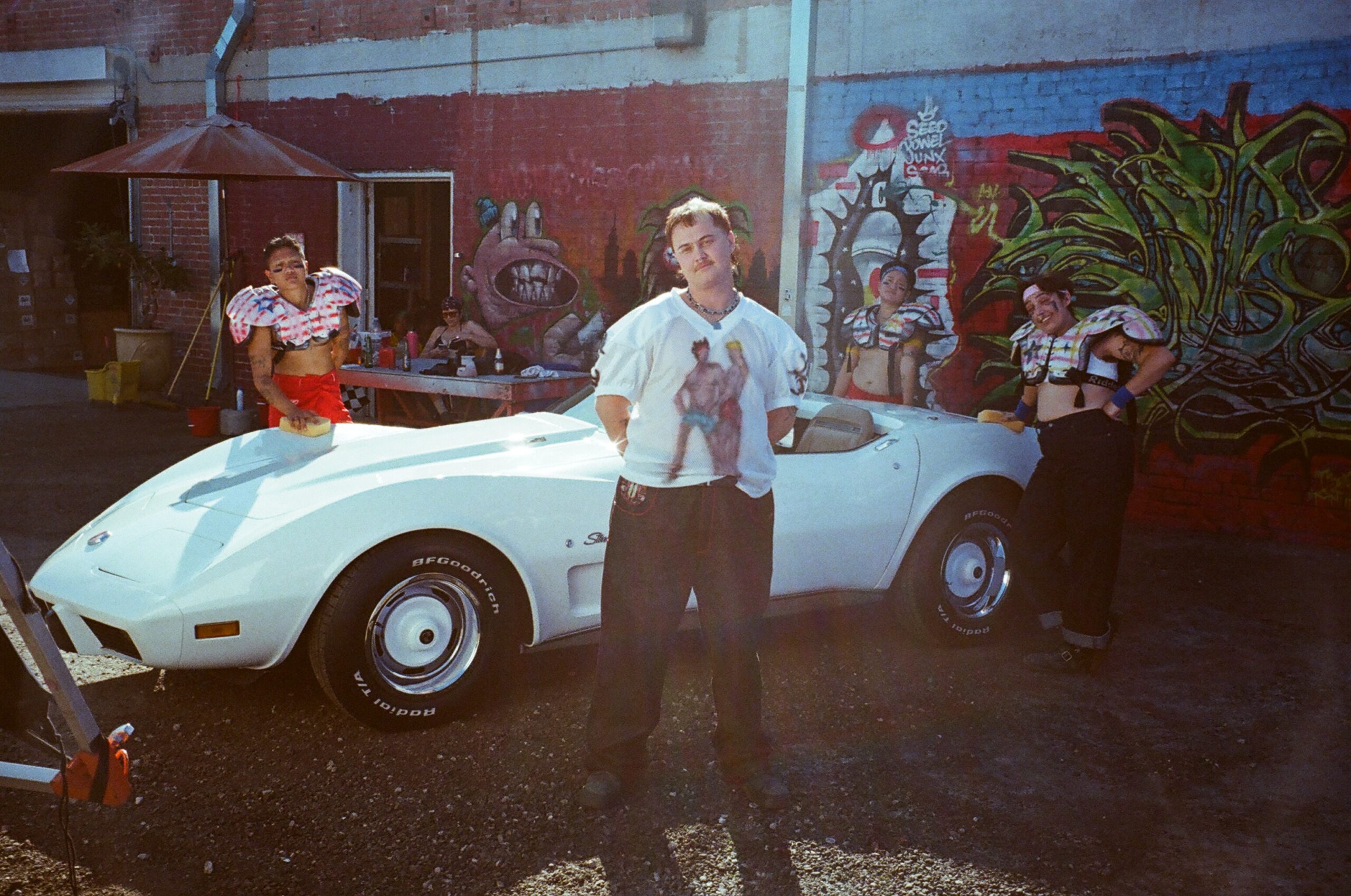
Image by: Naseem Eskandari
AVJ: That idea of stepping into confidence feels like such a strong thread throughout everything you’ve been describing. Do you think feeling seen, heard and understood come more from external validation, or from something internal?
S: Maybe a mix of both. I think you can overdose on external validation and become reliant on it without realising it, and then suddenly when it’s gone, you’re like, Damn, better figure out this internal validation thing.
You’re gonna have a flop era or two in your life, but it’s all part of the process. So, you need to work that internal validation muscle before people catch on and you get that external validation.
AVJ: If you could tell your younger self something, what would you say?
S: It’s not that serious. For the love of god, relax.
AVJ: Thanks so much for chatting with me, Swsh!
Stream ‘ALL YOUR FAULT’ by Swsh wherever you listen to your tunes.
Live video coming soon.