

Archer Asks: Mark Wilson and Tim Draxl on the enduring queer legacy of Tennessee Williams
By: Archer Magazine
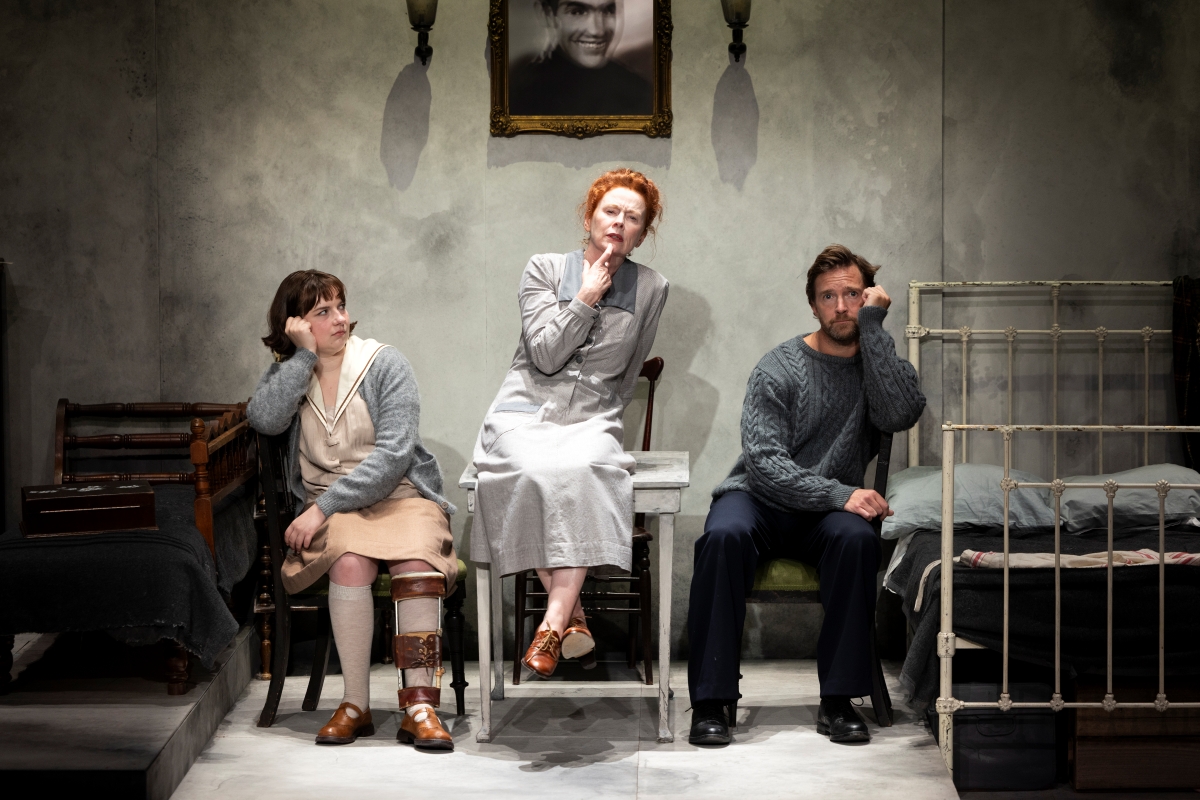
For the first time in two decades, Melbourne Theatre Company presents The Glass Menagerie, the Tennessee Williams classic that changed the course of modern theatre.
Archer Magazine spoke to actor Tim Draxl (The Normal Heart, the Sunset Boulevard Tour, Into the Woods, Jagged Little Pill, A Midsummer Night’s Dream and more) and director Mark Wilson (Much Ado About Nothing, Jacky, Bighouse Dreaming, Code of Conduct and more) from Melbourne Theatre Company about The Glass Menagerie, communicating in queer code and the enduring legacy of Tennessee Williams.
The Glass Menagerie must close this Friday 5 June 2026, at Southbank Theatre before heading to Geelong Arts Centre for a limited time (11 June – 13 June). Grab your tickets at mtc.com.au or geelonartscentre.org.au.
All images: Pia Johnson
Archer Magazine: Thank you so much for chatting to us! We’re really excited to hear more about the Melbourne Theatre Company’s revival of The Glass Menagerie. Firstly, can you tell us a bit about how this production came to be, and why this particular text was selected?
Mark Wilson: Audiences love the classics, and new audiences love the classics especially. So, we’re always looking for plays from the established canon that can speak to audiences in an exciting way.
Tennessee Williams – as the leading queer voice of the 20th century American stage – has plenty to say to audiences today. We landed on this particular text partly because we love it. I first read this play when I was 17, and I saw myself in it and discovered a community through reading it.
Interestingly, two recent American plays by leading queer writers have had plays on Broadway that explicitly reference this play: Mother Play by Paula Vogel, which played at Melbourne Theatre Company last year, and Purpose by Branden Jacobs-Jenkins, which played in Sydney a few months ago. So, it felt like an invitation to return to the source!
AM: There’s something particular about the way queer artists keep returning to Tennessee Williams. What do you think he offers as a canonical writer that we continue to relate to and resonate with as queers after so many decades?
MW: Tennessee is an icon of the theatre, and of the 20th century more broadly, as well as for the queer community.
Importantly for artists, he’s near enough but distant enough. He went in and out of fashion while he was still alive, but his work is now totally established – the major plays, at least. And his plays still exist in the mind’s collective unconscious – they’re parodied on The Simpsons. [laughs]
I’d love, love, love for his later, more experimental plays to be more famous. It’s not just about him being gay either – he was a truth-teller all through his career, and it’s this, really, that makes him so significant.
Of course, one of the truths he told was about sexuality, and the centrality of sexuality in our lives. His works make clear that sexuality and gender identity are fundamental to our internal worlds, and to the exterior, social world. His works are part of the 20th century’s expression of this.
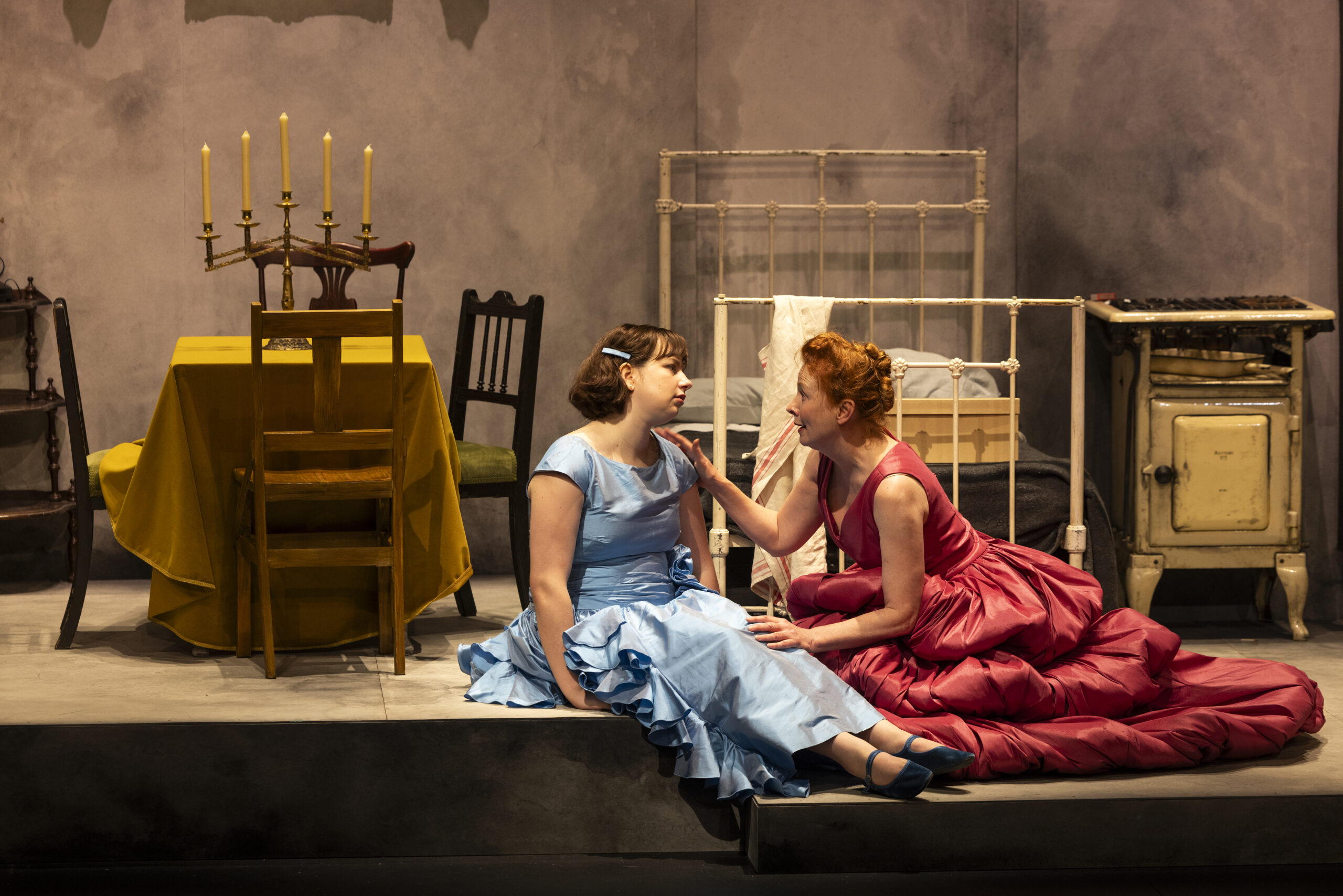
Millie Donaldson and Alison Whyte. Photo: Pia Johnson.
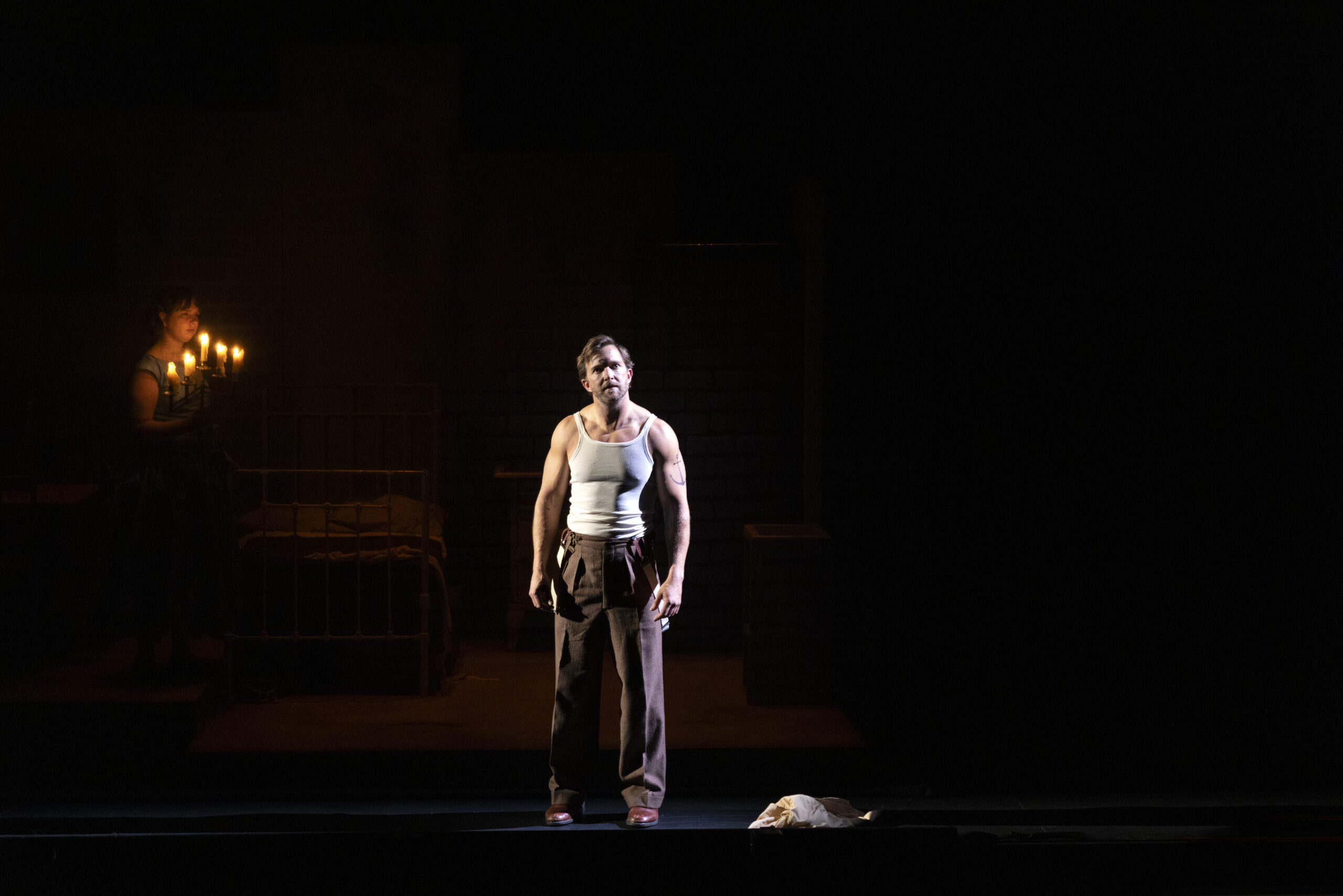
Tim Draxl. Photo: Pia Johnson.
AM: Exactly – we’re seeing how his ideas around sexuality existed then, and through his ongoing legacy, how they resonate and prevail today.
Tennessee Williams was writing queerness in code at a time when he couldn’t do otherwise. What does it mean to stage The Glass Menagerie now, when audiences can name what he was circling around? How does that legibility change the experience of the play?
MW: The funny thing about the whole ‘coming out’ thing is that we all speak in code for a while before we come out. So, we all have connections with queer people through history. We know how to read between the lines. And we can all recognise the need to sometimes speak in code in different contexts. But yeah, there’s definitely something different about an audience who think that Tom is just going to the movies as opposed to audiences who read that Tom might be doing something else. [laughs]
One of my habits as a director is to make explicit what’s boiling underneath the surface. It changes the rhythms and shifts the way audiences identify or react to characters – and sometimes it turns out different to what previous versions have looked like.
Some people are not happy with an explicitly queer production, but people, come on. Let’s rip off the bandaid and see what’s underneath.
AM: On that idea of making the invisible explicit, in some ways Tom Wingfield has been read as queer for decades. How do you hold that tension between what the play knows about itself and what contemporary audiences bring to it?
Tim Draxl: The role of Tom has, in fact, been read as straight for decades. The joy of our production is that we’re going hard. We’re foregrounding the queerness of the character, and making it unapologetically queer.
I can draw parallels from my own life in having had to live in the closet for the first part of my career. Now, living with the freedom of being an out gay actor gives me the confidence to play the part as unapologetically queer.
If there’s tension, it’s about challenging conservative audiences who want to keep Tennessee Williams in the closet. It’s our obligation as queer artists to challenge that.
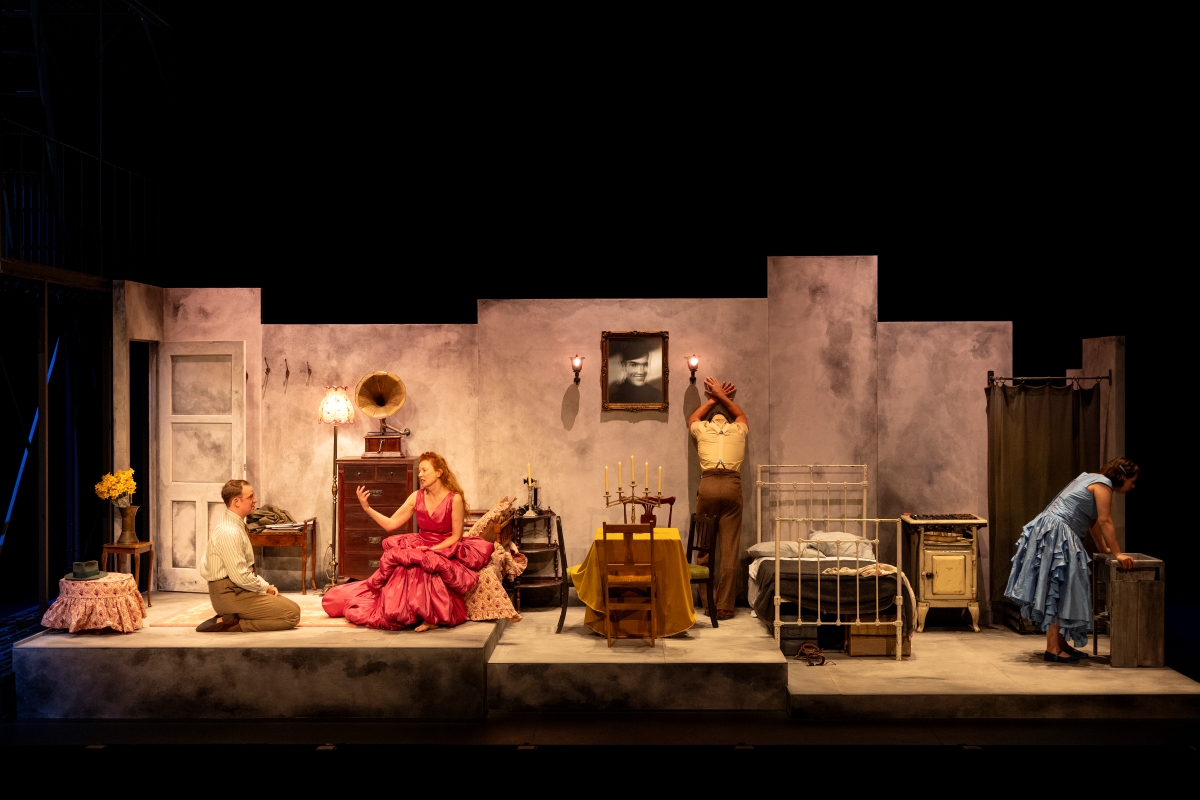
Harry McGee, Alison Whyte, Tim Draxl and Millie Donaldson. Photo: Pia Johnson.
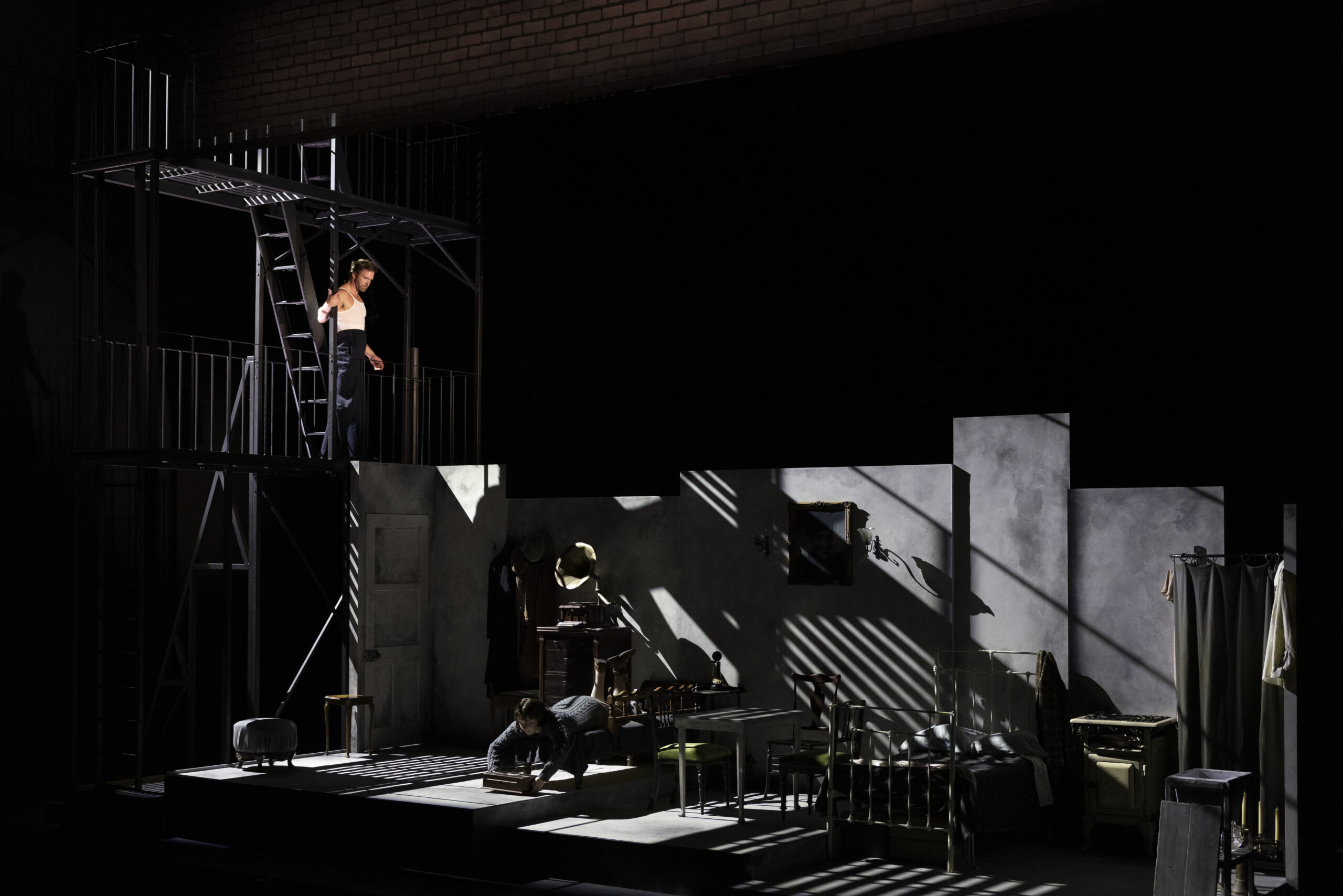
Tim Draxl and Millie Donaldson. Photo: Pia Johnson.
AM: Absolutely. Keeping the queer legacy at the forefront. Memory and secrecy are central to this play structurally, not just thematically. How has that influenced the production, and how do you feel that maps onto the wider experience of queerness?
TD: It’s Tennessee trying to process the trauma of his adolescence and early adulthood. And also, the guilt he felt around his relationship to his sister.
The creative genius of it is that he wrote The Glass Menagerie in such a way that it allows us – contemporary queer artists – to recognise the universal human experience in it, and to express ourselves through it.
Of course, Tennessee’s experience of living as a gay man in the 20th century is different from ours. But some of the same challenges still exist, and the same joys and perversions. [laughs] His insights in this work are about the nuances of family relationships and the challenges around that, and of course the ‘closet’ plays into that.
At the end of the day, he’s gay, we’re gay, it’s a great play.
AM: Thank you for chatting to us Tim and Mark! Best of luck for the rest of the run!
Melbourne Theatre Company presents The Glass Menagerie by Tennessee Williams.
Until 5 June 2026 at Southbank Theatre, The Sumner. Get your tickets here.
11 June – 13 June 2026 at Geelong Arts Centre. Get your tickets here.
Don’t miss out!