

LGBTQIA+ carer experiences: On agency, community and advocacy
By: Archer Magazine

Advertisement

Advertisement
Being a carer within the LGBTIQIA+ community can look many different ways. While caring relationships are often thought of as happening solely within biological family relationships, this is a misconception: queer identities and experiences expand the definitions of caring in a plethora of incredible ways.
Queer caring can look like caring for friends, exes, relatives, lovers, neighbours, housemates and anyone else within our expansive community. Queer carers might not even know that they’re carers, and that there are supports and resources available.
We spoke to two LGBTQIA+ carers, Chloe and Alex, about their experiences of being carers, and about prioritising agency, community and advocacy in their caring relationships.
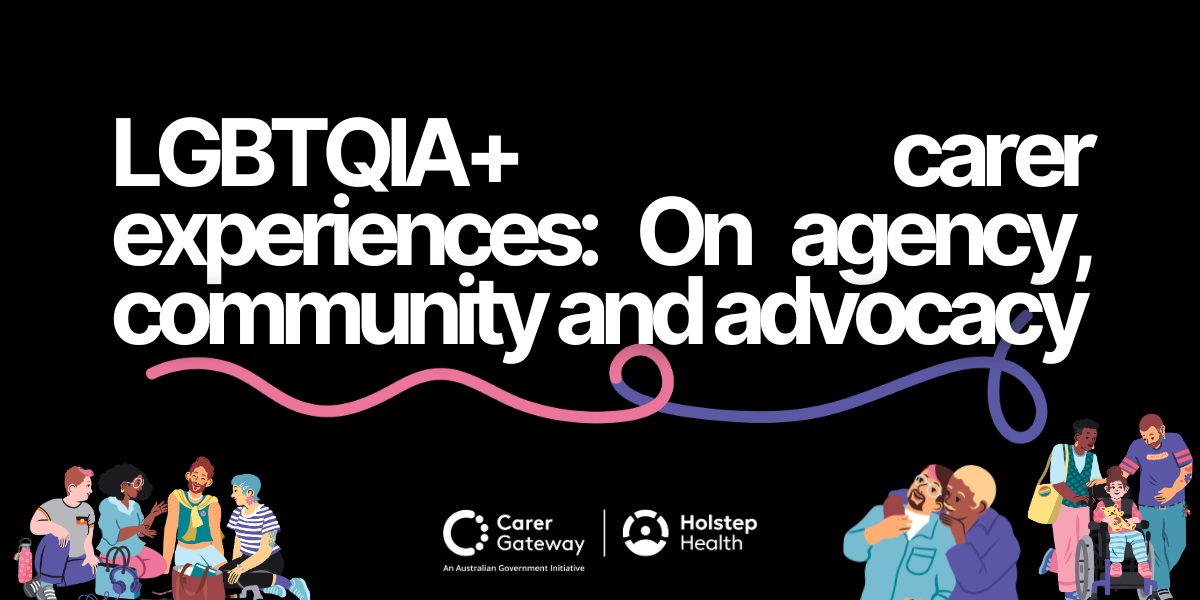
Illustrations by Michelle Pereira, developed in collaboration with Carer Gateway and LGBTQIA+ carers.
Chloe’s story
I’m a carer for my best friend, and I also identify as disabled.
My best friend and I live together. In our situation, we don’t always have a clearcut carer-recipient relationship. It can be reciprocal: there are times when I’ve been the one who’s needed care.
I’m autistic, and I live with mental health conditions. As part of the disabled community myself, I feel strongly that I’m not a hero for being a carer. I’m just a person who’s doing what I feel is right. My care recipient is not a burden; we’re both just people living our lives.
Carers are so often only thought of as parents with young children. But anyone receiving care deserves autonomy, privacy and to be treated with respect.
My best friend has trouble with organisational tasks. In our household, I keep track of the financials, help her manage her money, and make sure our bills get paid.
Every Sunday, I sit down and make sure that our tablets are sorted into our Webster packs. I’ll make sure that we’ve got enough on supply.
I’ll check things like: Do we have enough scripts? Do I need to make sure she’s got a doctor’s appointment to organise her scripts or any sort of medical needs to be addressed?
People don’t always understand the complexity of caring relationships, even within the queer community.
Last year in January, I came out as gay. I joined some women-loving-women groups on Facebook. Some people in the group had opinions about relationships that I didn’t agree with.
My best friend and I have a beautiful relationship. It’s not a romantic relationship, but a platonic one. In my eyes, that’s still as valuable.
Our relationship keeps getting deeper. The love we have for each other is there. I wish that these relationships were valued as highly as romantic ones, especially among fellow queer folks.
Looking back, I actually didn’t realise that I’d become a carer until maybe three or four years into my caring journey, around 2019 or 2020.
There are a lot of misconceptions that caring will always involve things like toileting, showering or manual hoisting. Because I didn’t do any of that, I thought, Well, I’m not a carer.
But people need different things. Caring doesn’t always involve those tasks.
It was when I joined the Carer Gateway Advisory Committee that I sort of went, Actually, no, I am a carer.
I absolutely love being on the advisory committee. We give feedback on all the different programs that Carer Gateway offers. Some people go to different events to help people to access supports, or even just have chats because, like me, they might not yet know they’re a carer.
I think the biggest message I’d like to pass on is that you may be a carer and not recognise it. And as a carer, it’s important to access support, because it really takes a village.
Alex’s story
I’m a queer, neurodiverse and disabled trans non-binary person with dynamic disabilities.
I care for my younger sister (in her thirties) who is autistic and has mobility issues due to complications with diabetes. She also lives with some psychosocial disabilities that impact her everyday life.
I’ve been pretty much caring for family members most of my life. My parents both have significant mental health needs and generational trauma. At various times, I’ve had to step in to be a co-parent.
For a few years, I sort of went my own way and did my own thing.
But then, my sister and my mum experienced homelessness, which was traumatic. My sister had gotten to the point of living in a caravan at the back of someone’s house, and had no space and no agency in the situation. So, she came down to stay with me for a little bit to have some respite, and I just couldn’t send her back.
I set some parameters with my sister. I don’t think I realised that I would be taking on the carer role, but my parents ended up stepping back in their own capacities as well.
For the most part, my sister’s care involves helping her with developing more agency and independence, while also accessing services and taking care of her health, home care and wellness. I do a lot of domestic tasks and errands for our household.
Previously, my sister wasn’t getting all of the support she needed, like regular counselling appointments. I’m very hands-on with these tasks. I’m like, Let me make the call, let me help you with this, let’s get support in place. We just take our time, start slow and then go from there. Having a dynamic disability too, there are a lot of crossover tasks that I’ve gained confidence and skills in being able to manage that aid the both of us.
I have my own life goals, as does my sister, so our caring arrangement is long-term but transitory, in the hopes of building her skills and independence.
My sister and I are focused on Disability rights and care politics in the home, and in our community.
We do all the internal work, making sure that we have support systems and can advocate for ourselves. In the past, we’ve been in family structures where those things weren’t possible, leading to codependent relationships.
As a carer, I wanted to make sure that there was no codependency in our arrangement from the get-go. This means helping my sister feel grounded in the space and safe to unpack past experiences, but also having an enduring sense of resilience – emotionally and practically.
My sister can speak up and make choices for herself. She can say, Well I don’t actually really want to do that, and I can say, Beautiful, let’s negotiate something else.
Although I’m incredibly proud to be a carer, I noticed that I was becoming burnt out after a while. I wanted to return to work, and to experience more social connection so I wouldn’t lose my identity – and self – in my caring role.
I reached out to Carer Gateway when my health was deteriorating due to burnout. Up until that point, I hadn’t really accepted that what I was doing was caring. I just thought, She’s family. I want to support her. There wasn’t another alternative. It was an entirely new identity to adapt to, being an active carer.
An employment agency suggested that I look into Carer Gateway, as they support unpaid carers. I saw they offered services like at-home care and counselling, and I was like, That’s perfect – that’s really what I need.
I called up, and they were very accessible. By the end of the week, I had support – including a couple of counselling sessions organised, and a house cleaning. The counsellor was specifically trained in carer experiences, which was pivotal for me. It was refreshing not having to do the emotional labor of explaining things.
Carer Gateway is also a resource for finding more resources. They helped me access things I didn’t even know existed – like autism carer support, for people who are either autistic themselves, or taking care of someone autistic, or both.
So many carers are disabled ourselves. It’s disabled people helping disabled people; we’re all taking care of each other, navigating the nuances of unpaid caring.
Around 12 per cent of the Australian population are unpaid carers. We’re doing incredible work, and we deserve recognition: from ourselves and within the community.
Carer Gateway were very person-led, understanding my intersections as a carer.
I now feel more seen, heard and connected to community. I’m fueled in my desire to talk more about dynamic disabilities and queer care.
By taking that chance, opening that door and having those conversations, I think the world does open up for you. I hope other unpaid carers will explore these options, too, because there are so many resources out there.
While caring can bring moments of joy, it’s not always easy, and you may feel overwhelmed, burnt out or like no one understands what you’re going through. It’s important to know that you are not alone. Carer Gateway provides free support and services to support your health and wellbeing. Call 1800 422 737 (Monday-Friday 8am-5pm) or visit carergateway.gov.au to learn more.
Carer Gateway is a proud supporter of Archer Magazine.