


Butchness, euphoria and existing defiantly: My gender is butch
By: Matilda Meikle
Advertisement
Advertisement

Advertisement
Content warning: This article briefly mentions disordered eating and slurs.
When I was a kid, I wore clothes from the boy’s section of Target. Not because I identified as a boy, but because I wanted to dress like Buzz Lightyear or Ben 10.
On playdates, I wore boxers under my shorts. I went to the beach in a Toy Story muscle tee.
That was before the whispers started – when things like gender and popularity didn’t matter to the group of boys I hung out with. I might have been teased if I forgot to bring my Ben 10 watch (the omnitrix) to school, but so were the others. It was bad for our image.
Then puberty hit. My chest grew; theirs didn’t. And suddenly we weren’t the same anymore.
My classmates looked at me weirdly and called me a lesbian when they thought I couldn’t hear. I wasn’t “girly” enough, they said. Eventually, even the boys didn’t want to be seen with me.
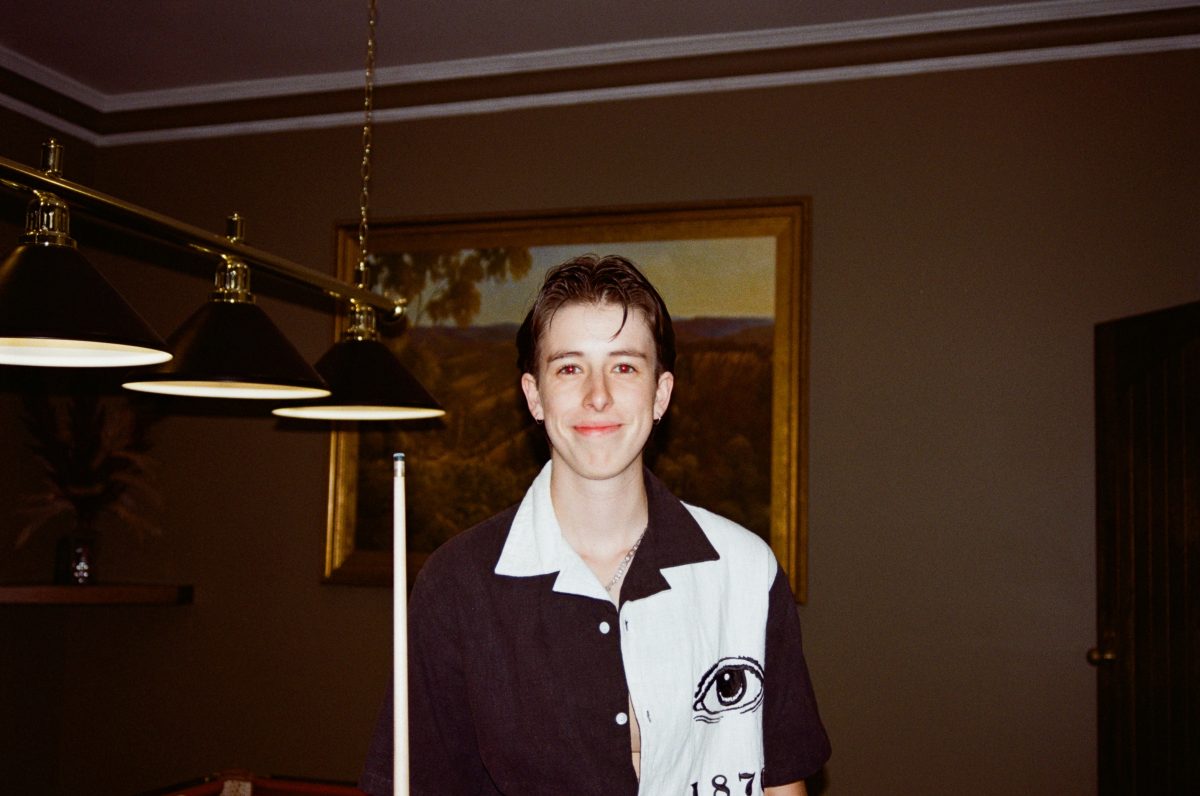
Image: Courtesy of the author
So, I changed.
I learnt how to apply makeup and bought a floral dress. I told myself that I loved skirts and high heels, that I just hadn’t tried hard enough before.
I told myself that if I could make my peers think I was one of them, then it would all stop. They would welcome me with open arms. I’d finally feel normal.
The farce lasted 11 years. Eleven years of trying to squeeze myself into that shape, only to feel less attractive than before. I starved myself, grew my hair long and waited for something to click. But it never felt right.
The truth came to me in stages.
First, at the age of 18, I realised I was a lesbian. I kissed a girl for the first time in a club on a Wednesday night, and started following queer influencers on Instagram.
Then, a year later, I met my girlfriend online, and discovered that I enjoyed carrying her bags and holding the door. I wanted to be a gentleman. I wanted to feel strong and capable.
And then, finally, came the realisation. I am a butch. I have always been a butch.
I told myself that if I could make them think I was one of them, then it would all stop. They would welcome me with open arms. I’d finally feel normal.
But what does butch even mean?
When cis-heteronormative society only recognises the existence of masculinity and femininity – and of man and woman – anything existing outside of these binaries is deemed ‘wrong’.
Society doesn’t know what to do with people like us. In the late 1800s and early 1900s, women dressed in masculine clothes in Australia could be arrested and charged with vagrancy or disorderly conduct.
Butchness wasn’t illegal, but the system found a way to punish us for our differences.
The narrative is that butches are predators, trying to steal innocent women away from ‘real’ men.
According to these harmful stereotypes, we’re confused. We’re ‘going through a phase’ before emerging from our cocoons in sparkly ballgowns. Think Cynthia Rose from Pitch Perfect, or the aptly named Predatory Lez from Scream Queens.
And while my struggle isn’t nearly as hard the butches who came before, I still feel like I exist between the lines, or beneath the cracks.
The kids from the after-school care centre I work at cry because they think I’m lying about being a woman.
Male friends insist on taking shopping bags from my hands because “that’s a man’s job”. I’m called a fag just walking past a group of boys at the beach.
I’m made to feel not man enough, not woman enough. Just… not enough.
And yet, the more I accept and relish in my butchness, the less I care. Because I’ve never experienced a gender euphoria the way I do now.
Butch is not simply a sexuality, or a way of referring to women who read as traditionally ‘masculine’. It is a culture, an expression, a way of moving through the world.
Butch is not simply a sexuality, or a way of referring to women who read as traditionally ‘masculine’. It is a culture, an expression, a way of moving through the world.
I feel the most butch when I wear Calvin Kleins, when I pay for dates with my girlfriend and when I work out.
I am soft yet tough, anxious yet confident, and quiet yet proud.
Coming to this realisation showed me how restrictive the gender binary really is. I write as a white person, meaning I come from a position of privilege even while facing adversity. For multiply-marginalised butches, this isn’t always the case.
I’ve spent a long time wrestling with myself – trying to make myself ‘feminine’ in the way others wanted me to be, only to eventually revolt against these boundaries.
Ironically, embracing my butchness and feeling comfortable in my skin has brought me closer to my femininity. But it’s not the femininity that heteronormative society wants me to subscribe to.
Gender (like so many other things) is on a spectrum, but we’re not encouraged to understand this as kids. Gender isn’t about how you look or act, it’s about how you feel.
I feel closest to my gender – I experience euphoria, joy and belonging – when I’m fully engaged in my butchness. That is the stark opposite of how I felt when I was trying to be someone else.
And yet, the more I accept and relish in my butchness, the less I care. Because I’ve never experienced a gender euphoria the way I do now.
I’ve never felt more secure in myself and the way I present than I do now, and yet I’ve never faced this level of scrutiny, assumption and misgendering.
As long as rigid binaries continue to be enforced, I won’t fully belong in the system. I’ll stand out, and that can be scary.
But I also won’t change myself, because I’ve come to realise and embrace being butch: an identity that captures who I am – and who my loved ones know me to be.
My gender is not as simple as ‘male’ or ‘female’.
My gender exists in small acts – grabbing my girl’s hand, pulling on a binder, talking through my insecurities.
It’s complicated and confusing, and sometimes, even frustrating. But no matter what: My gender is butch.





Thank you for sharing your story. I am a 50 year old, white, bearded ‘bushie’ from a NSW regional town and my child told us they were non-binary years ago. Didn’t really mean much at the time as we love them no matter what, however, now years on I wish we could have ‘seen’ it earlier. It would have made their life so much easier in some ways I think. Thanks again Matilda and thanks Archer – you help me learn more every month.
From the other side of the spectrum as a Femme, this resonates so deeply.