

Twilight’s queer renaissance: Sparkly vampires, lust and Kristen Stewart
By: Ruby Perryman
Advertisement
Advertisement

Advertisement
Lost in the quiet, industrial part of Preston, in Melbourne’s north, it’s dark out.
I spot someone wearing a pencil skirt with Kristen Stewart’s face stretched over the thigh. Relieved, I follow them – trailing a respectful couple of metres behind – to our shared destination.
The energy inside the pub is charged. Hundreds of fans are gathered for a Twilight-themed trivia night, chatting loudly over Muse blasting through the speakers. My friends Meg, aged 30, and Hannah, aged 29, nut out a strategy for ordering drinks, lest any questions go unanswered in someone’s absence. Hannah stays put while Meg joins the long, winding bar line.
I’d noticed Twilight re-entering pop culture discourse online and in my circles over the past few years, but I didn’t expect a trivia turnout this large and enthusiastic.
Out in the Australian suburbs, 20 years after the release of the first novel, I wonder why the Twilight franchise still proves resonant.
Is it because original fans, like myself, are now old enough to view the text through a new lens? Or is there something more at play?
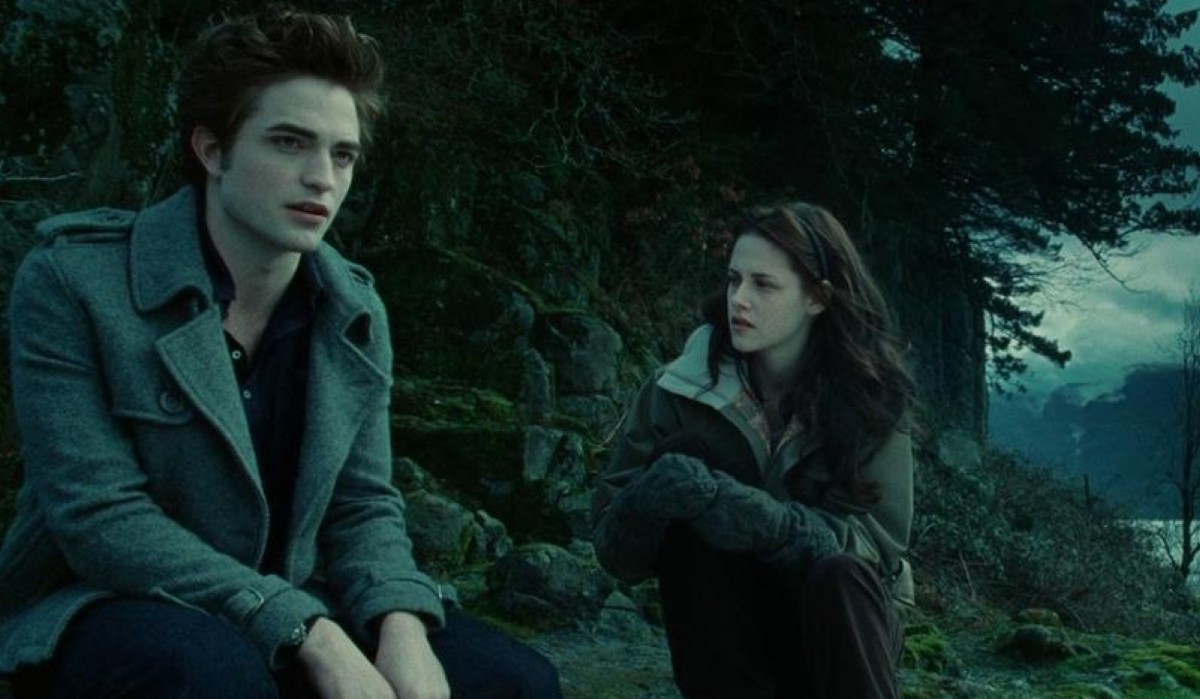
Image: Twilight (2008), Summit Entertainment
“I was really nervous. I felt like there was a lot on the line for me,” Meg told me as we sat on her living room floor, a few weeks after the trivia night.
“In a way, I wanted to make my younger self proud. And almost validate my long, deep obsession with Twilight – and achieve some sort of glory.”
Meg and Hannah didn’t take their trivia preparation lightly. The couple spent their three-year anniversary watching the films, jotting down notes.
In the week that followed, they quizzed each other on the soundtracks, listened to the audiobooks, borrowed the visual novels from the library, and trawled through relevant Reddit and Wikipedia pages.
Meg saw Twilight for the first time upon its Australian release in December, 2008. She was freshly 13 years old, and went with her older cousin. Her heart raced during the opening scene: a deer being stalked in the forest.
“I walked out of the cinema a changed girl,” Meg said. She immediately asked her mum to take her to the bookstore to buy the entire series.
Hannah read Twilight for the first time in grade six.
“It was having a severe moment at my school,” Hannah said. Wandering the grounds, almost every student had the novel under their arm. They would stack their books together in the middle of the lunch table, building a wall of Twilight spines.
“My life at the time was pretty sad, to be honest,” Meg told me.
After a childhood in suburban Melbourne, Meg’s family relocated to an empty block of land in regional Victoria. They lived in a shanty while her dad built their new permanent home. In her closet-sized, makeshift bedroom – no windows, cement floor – devouring the Twilight saga provided Meg an escape.
“I connected with the story so much, and with the feelings of isolation. I really needed that sort of imaginary world of fantasy,” she told me.
“My first year of high school was horrible,” Meg added. “I was struggling with my sense of identity and belonging. I was one of those girls that kind of made Twilight part of my personality.”
Sitting with Meg during our interview, I think how she would fit well into the Cullen family – long red hair, clear pale skin, cool-toned outfits.
Meg hated the barren regional Victorian landscape.
Copying Stephenie Meyer, who googled ‘the rainiest place in the US’ when choosing the location for Twilight, a young Meg googled ‘rainiest place in Australia’ for a sense of escapism. There was something about the wet forest setting that drew her even further into the Twilight world – a world that felt so different to her own at the time.
Nowadays, she appreciates the beauty of gum trees and the dry bush.
Meg also grew up in the Evangelical church. Twilight’s religious undertones – imbued by Meyer’s Mormon values – felt familiar.
“The first book opens with a Bible quote,” Meg said. “The whole abstinence conversation, I guess I resonated with. I didn’t have any questions about why Edward would want Bella to wait on account of her soul.”
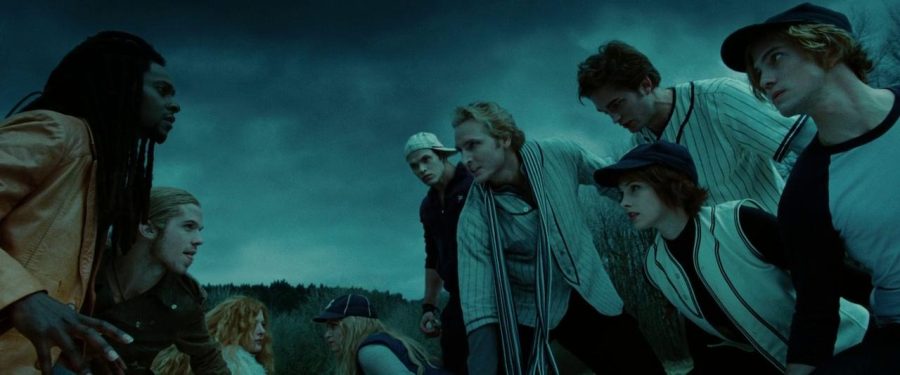
Image: Twilight (2008), Summit Entertainment. Editors’ note: We couldn’t not include a still from the iconic baseball scene.
Hannah grew up a tomboy.
“I hung out with the boys, presented as a boy, pretty much,” Hannah said. “Then I reconnected with some girls due to a common interest in Twilight.” Said girls took Hannah to the local shopping centre to give her a makeover.
“They picked out all these new clothes from Jay Jays and got me a haircut at Just Cuts to have an emo fringe, which was very ‘girly girl’ at the time.”
For Hannah, Twilight was pivotal in her transformation towards girlhood.
“I think I used Bella as a model for how that should look,” Hannah said. She’s lent back into a more androgynous gender expression in her adult years.
“I was obsessed with Kristen Stewart specifically,” Meg said. She recalls a can tab bracelet threaded with a shoelace that Stewart was photographed in. Meg made her own version and wore it every day.
“In retrospect, I just wanted to be with her. But at the time, I thought I wanted to be her.”
The franchise faced a swathe of valid criticism, namely over Meyer’s racist portrayal of Indigenous Quileute people, and Bella and Edward’s problematic relationship.
The less valid criticism: people hated Twilight because girls loved it.
Meg remembers ripping out the first page of Twilight, on which she’d written a sentimental quote, before giving it away to the op shop – in fear of someone discovering how much the book had moved her.
“I think society finds teenage girls ‘cringe’,” Meg said. “You didn’t want to be at the butt of the joke with Twilight.”
I often still see Twilight sitting dusty on bookshelves in second-hand stores, my beloved old copy somewhere among them.
The recent ‘Twilight Renaissance’, as coined by online communities, has seen a queering of the text that was not the author’s intention.
Upon release, Meyer’s sparkling, feminine portrayal of vampires was met with moral panic and homophobic rhetoric. Those online in the early 2010s may remember the viral meme trend ‘Still Not as Gay as Twilight’.
“I think I was, like, horny for their love, if that makes sense,” Meg said. “That obsessive, all-encompassing kind of love and lust is the core of the narrative, even more so than the characters themselves.”
Cultural critic Natalie Wynn (also known as ContraPoints) explains in her 2024 Twilight video essay that the story’s impetus is limerence, eros or longing love – and draws a parallel to Sappho’s poetry.
Kristen Stewart has spoken on this theme herself in a 2024 Variety profile.
“It’s such a gay movie…” Stewart said. “I mean, a Mormon woman wrote this book. It’s all about oppression, about wanting what’s going to destroy you. That’s a very Gothic, gay inclination that I love,” Stewart said.
Stewart’s coming out as bisexual in 2017 is likely a contributing factor in the reclamation of Twilight among queer communities.
“I started to reconnect with my interest in her [after she came out], my respect for her,” Meg said. “Maybe there was a part of me, as a young person, being intuitively drawn to her queerness. Despite not having named that within myself yet.”
Hannah agrees. “I definitely think I connected Kristen Stewart as being queer-coded somehow – her outfits, or just the edginess of her,” Hannah said. “So watching Twilight again, knowing that she actually is queer and you’re not imagining it, you can get a new enjoyment out of it.”
“I just feel like she was a queer character – Kristen Stewart shone through Bella or something. I’ve always felt the casting for Bella was a happy accident,” Hannah added.
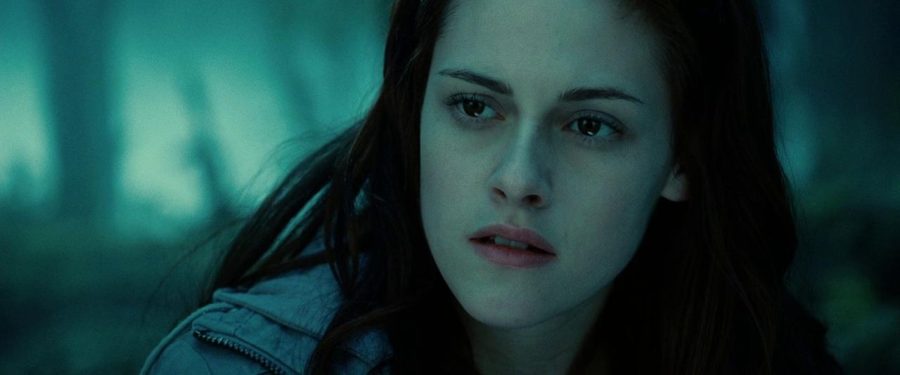
Image: Twilight (2008), Summit Entertainment
I asked Dr Lauren Rosewarne, Associate Professor in Social and Political Sciences at the University of Melbourne, about the re-emergence of Twilight in queer culture.
“Queer communities have long embraced ‘outsider’ art: either art created by outsiders or art which features outsiders,” Dr Rosewarne said. “Vampires by their very nature are outsiders.”
“Historically, there has also been queer interest in vampires – or, at least, queer readings of vampire texts – due to the role of blood and themes of contraction: something of heightened interest to homosexuals during the AIDS epidemic,” Dr Rosewarne explained.
“There is, of course, also a potent sexiness in many vampire presentations – be it implicit or explicit – that has distinct appeals.”
When times are tough, nostalgic media can offer temporary relief.
“For certain groups of people who rightfully feel that their rights have been trampled in recent years – I would argue this is distinctly potent for women and queer people in the US – certain kinds of comfort content can provide a balm,” Dr Rosewarne said.
This sentiment came through when I spoke to Meg and Hannah, too.
“A lot of queer people really connect to elements of fantasy, and almost need that in a world where reality is so unkind,” Meg said.
“Before Covid-19, I used to read heaps of nonfiction and was very connected with current affairs and politics,” Hannah said. “[During lockdowns] I pulled back from all the heavy, real shit and started returning to nostalgic fantasy.”
“I’m a retired ‘Twi-hard’ who still thinks fondly of the good old days,” Meg said.
“I definitely don’t think Stephanie Meyer is the voice of our generation, and I don’t think I align with the majority of her values. I think Twilight grew beyond what she ever intended, and it has a life of its own culturally.”
From the dozens of Twilight-themed trivia nights and movie marathons hosted across the country in 2025, it seems many Australians agree.
“It was really meaningful and affirming to be in such a big room full of so many people who all shared my special interest. To give myself permission to lean into an interest I had repressed for so long,” Meg said.
“I wanted to put myself to the test,” she added.
“And we won. I would definitely go to another Twilight trivia, because the one we went to was way too easy.”