

I am Little Death: Teenage Sex and Death at Camp Miasma and being a trans horror fan
By: Charles O'Grady

Advertisement

Advertisement
Content warning: This article contains discussion of transphobia and transmisogyny, and descriptions of horror violence.
I wasn’t always a horror fan. Until I was about 20, I could barely watch something as tame as a moderately unsettling Doctor Who episode.
Like many though, a horror movie is the first place I can recall seeing any kind of trans identity. It was The Silence of the Lambs, at a sleepover in Year 8, and while it was The Shining earlier in the evening that had me scared to close my eyes, in the nearly 20 years since I’ve spent far more time thinking about the former.
If you’re unfamiliar, and you’ll forgive me spoiling a 35-year-old film, the killer at large in the movie is Jame Gumb (Ted Levine), aka Buffalo Bill, whose main thing is murdering and skinning women. Early in the film Hannibal Lecter (Anthony Hopkins) tells Detective Clarice Starling (Jodie Foster) that Gumb believes “mistakenly” that he is transgender, and has been rejected by multiple “gender reassignment clinics” for this reason.
This scene has lived rent-free in my head for a solid decade – even more than the more blatantly transphobic and oft-parodied ‘Goodbye Horses’ sequence – because I don’t really understand the difference between thinking you are trans and being trans.
But hey, they tell me it was the ’90s, and I bet nobody gets rejected from gender-affirming care because gatekeepers don’t believe they’re really trans any more. Right?
Images: Teenage Sex and Death at Camp Miasma (2026), courtesy of MUBI
I‘ve been through a journey of loving this movie, then hating it, and now not really knowing what I think. It’s a film that harmfully misrepresents trans identity, yes. To look at it with the reading that Gumb is ‘really trans’, though, is to see someone so desperate to receive medical help to transition that they resort to horrifying measures. I don’t think that’s the intended meaning of the film, but how am I supposed to read it?
This is basically what being a horror fan and trans – or indeed a horror fan of any marginalised identity – is like: a constant process of internal re-negotiation of what does or doesn’t cross the line.
Do I feel violated by this? Do I like this? Should I like this? Is this movie about a cannibal who is allowed to practice forensic psychology from prison a good representation of gender dysphoria, and does it matter if it isn’t?
It’s not just your Leatherfaces, Norman Bateses and Buffalos Bill, the ones you can brush off as ‘relics of another time’. When I revisited the Insidious franchise, I was surprised to find that a 2013 instalment featured the reveal that its main ghost, “The Bride in Black”, was a man whose mother forced him to dress as a girl and who died in an attempt to castrate himself.
An entire subgenre of crossdressing killers – in films like Psycho, The Texas Chain Saw Massacre, Dressed to Kill, and the aforementioned Silence of the Lambs – was built on the lie that Ed Gein was a crossdresser. Even now we’re not free from the spectre of Geinsploitation, with the last season of Ryan Murphy’s umpteenth streaming embarrassment Monster focusing on Gein himself.
So why am I a horror fan?
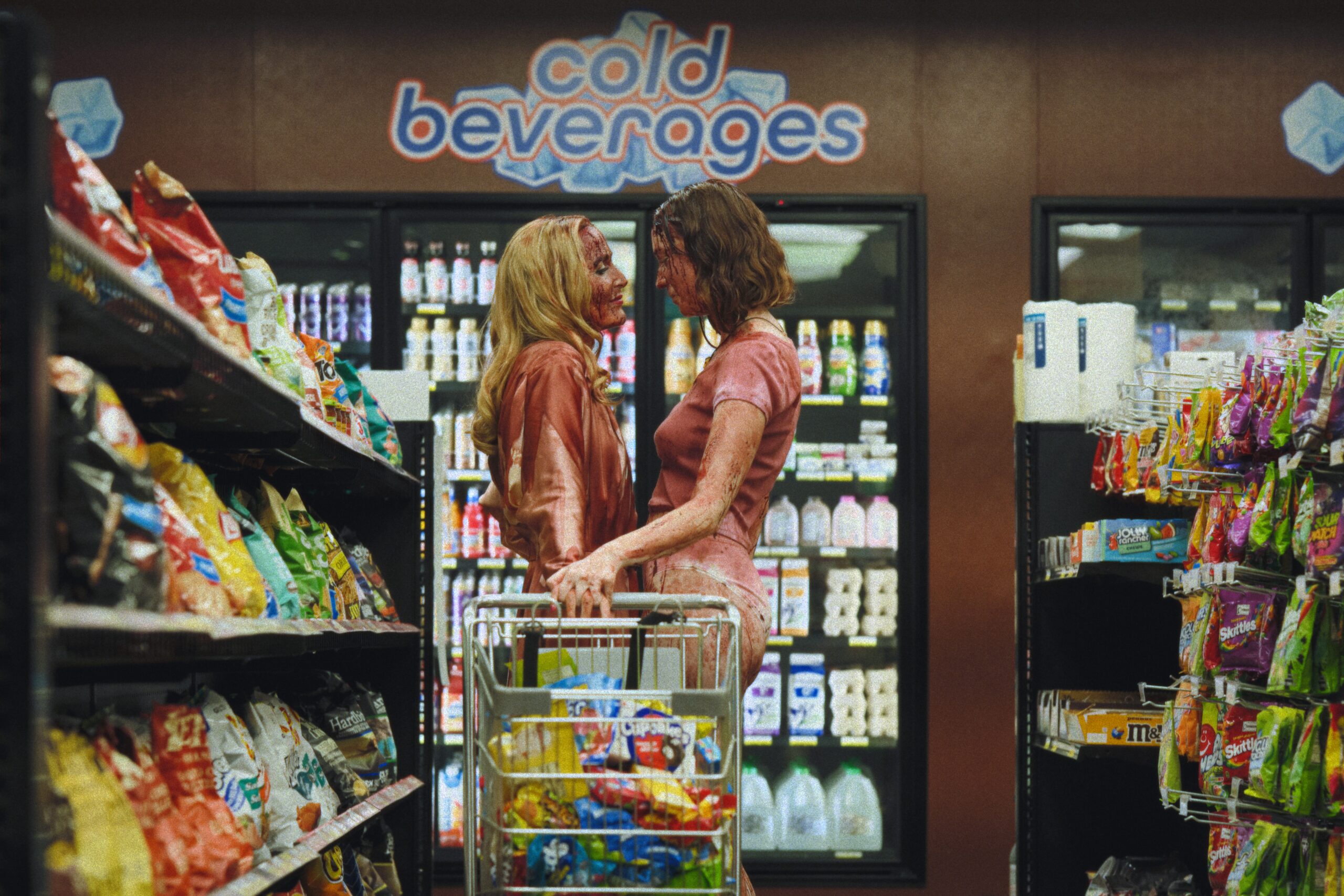
Recent years have seen more varied representation in the genre.
Lee Cronin’s Evil Dead Rise and Kyle Mooney’s Y2K star trans performers whose identity is both incidental and accepted. David Bruckner’s 2022 Hellraiser reboot saw Sense8‘s Jamie Clayton play the main villain in a film where the chuds were so mad about a woman playing Pinhead they seemed to not even realise said woman was trans. Meanwhile, Australian director Alice Maio Mackey brings both a trans sensibility and trans casting to her delightfully schlocky micro-budget teen screams with titles like T-Blockers and Satranic Panic.
And then there’s Jane Schoenbrun, whose latest film Teenage Sex and Death at Camp Miasma is their third feature film to use horror to explore nuances of the internal journey of transition.
Schoenbrun is a trans horror fan themselves: in an interview for MUBI’s Program Notes with Michael Koresky, they described themselves as “somebody who lived and breathed slasher movies as a twelve-year-old”, which is clear from just the title sequence of this movie.
Camp Miasma is a sort of metafictive horror-slash-steamy romcom about Kris (she/they) (Hannah Einbinder), a queer director tapped to reboot the fictional Camp Miasma slasher franchise, and Billy (Gillian Anderson), the final girl from the first movie who Kris wants to star in their reboot.
There’s any number of angles from which to enjoy Camp Miasma: as a Lynchian take on the Scream franchise, a celebration of queer and trans sexuality, an examination of the interplay of sex and violence in horror and erotic fiction alike, a tribute to the enduring hotness of Gillian Anderson.
I think if I spent the next year only writing about this film I might not run out of things to say.
Any slasher, even one intended to be a commentary on the genre, needs a great villain.
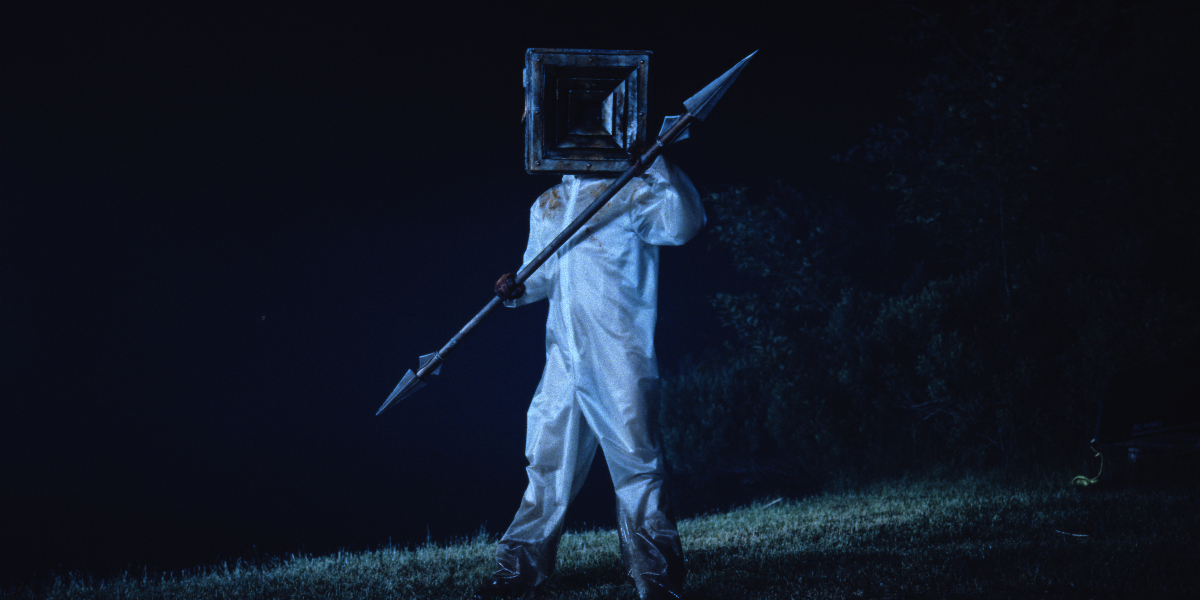
Schoenbrun has found one in Little Death, played by previous collaborator Jack Haven. One of my favourite sequences in the film is Little Death’s murderous rampage from the first fictional Miasma instalment, which Kris and Billy watch a print of together. Right before said rampage, it was revealed by one of the camp counsellors that the legendary Little Death once attended the camp, and was essentially murdered in a hate crime by the other campers. (“This part’s transphobic,” Kris whispers to Billy, who replies: “Shut up.”)
As they watch, Billy quietly murmurs for Little Death to “rise”. Like she’s casting a spell, the image skips, stretches and flickers, and suddenly we see things from Little Death’s perspective as he rises out of the lake, spear in hand. From there, in a one-take sequence, we see Little Death annihilate each and every one of the youths who were calling him a “freakhouse” mere minutes ago.
The camera whirls back and forth between Little Death and what he sees through the hole in the HVAC unit covering his head, which could just as easily be a camera’s viewfinder. It’s hard not to feel a thrill of satisfaction. Seen through Little Death’s eyes, it feels like you‘re the one taking power back.
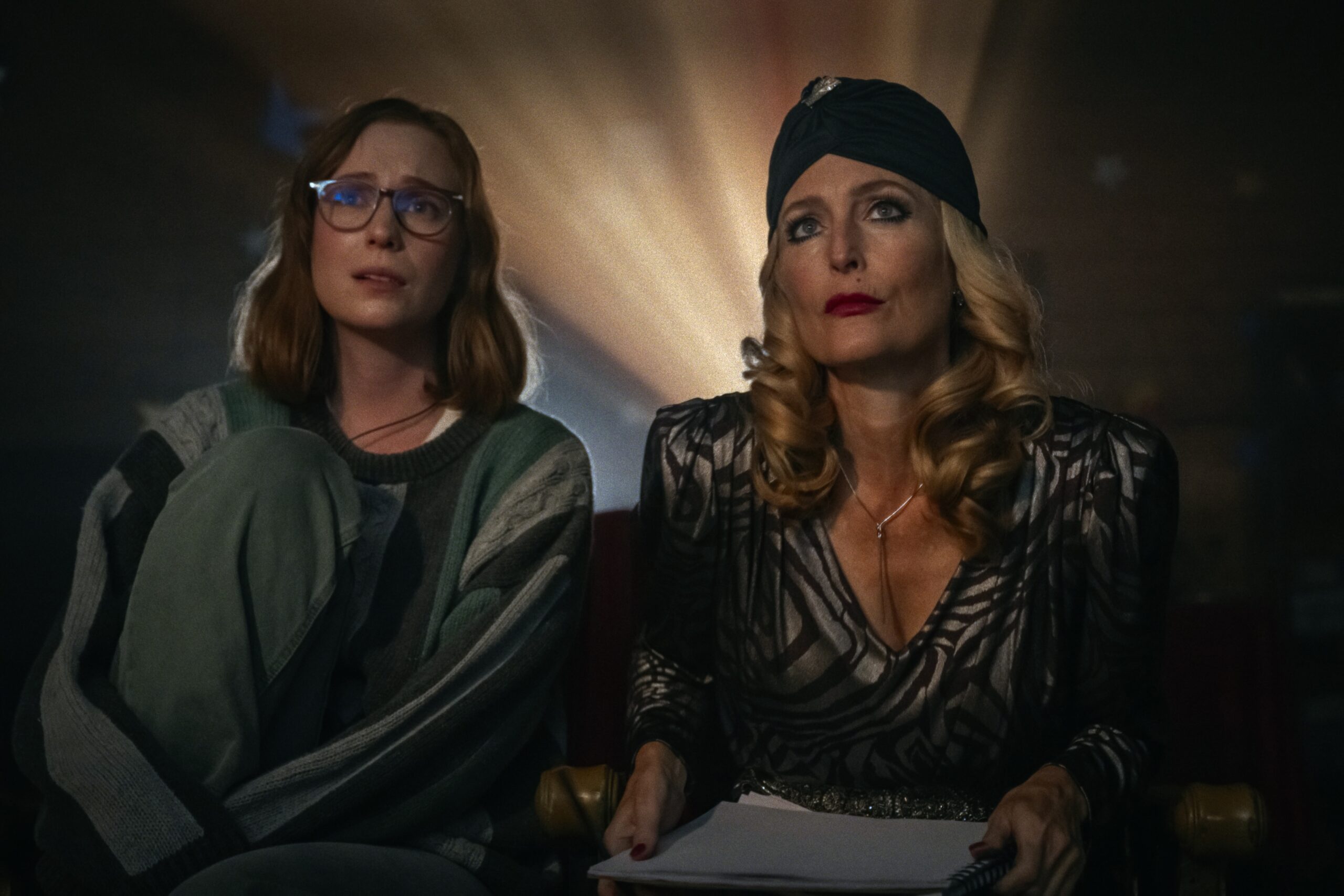
This is, for me, the best distillation of why I’m a horror fan. To be queer and watch horror is to frequently find yourself identifying with monsters because they, too, have transgressed against cis-heteronormative standards.
Isn’t it a little bit fun, a perverse thrill, to see a figure who represents all of society’s fears around gender non-conformity – a genuinely trans slasher villain – literally destroy the enforcers of those norms?
Little Death – who lives under the lake, “where the movies come from”, who is both the creator of bloody spectacle and its primary audience, voyeur and monster – is the platonic ideal of a Trans Horror Fan.
He’s Kris, coming into their queerness in front of a CRT TV in the middle of the night.
He’s Schoenbrun, processing their identity through the media they consume and create.
He’s me. He’s you.
Note: I use he/him for Little Death as those are the only pronouns he’s given in the film by protagonists and antagonists alike, aside from pejorative use of “it”.
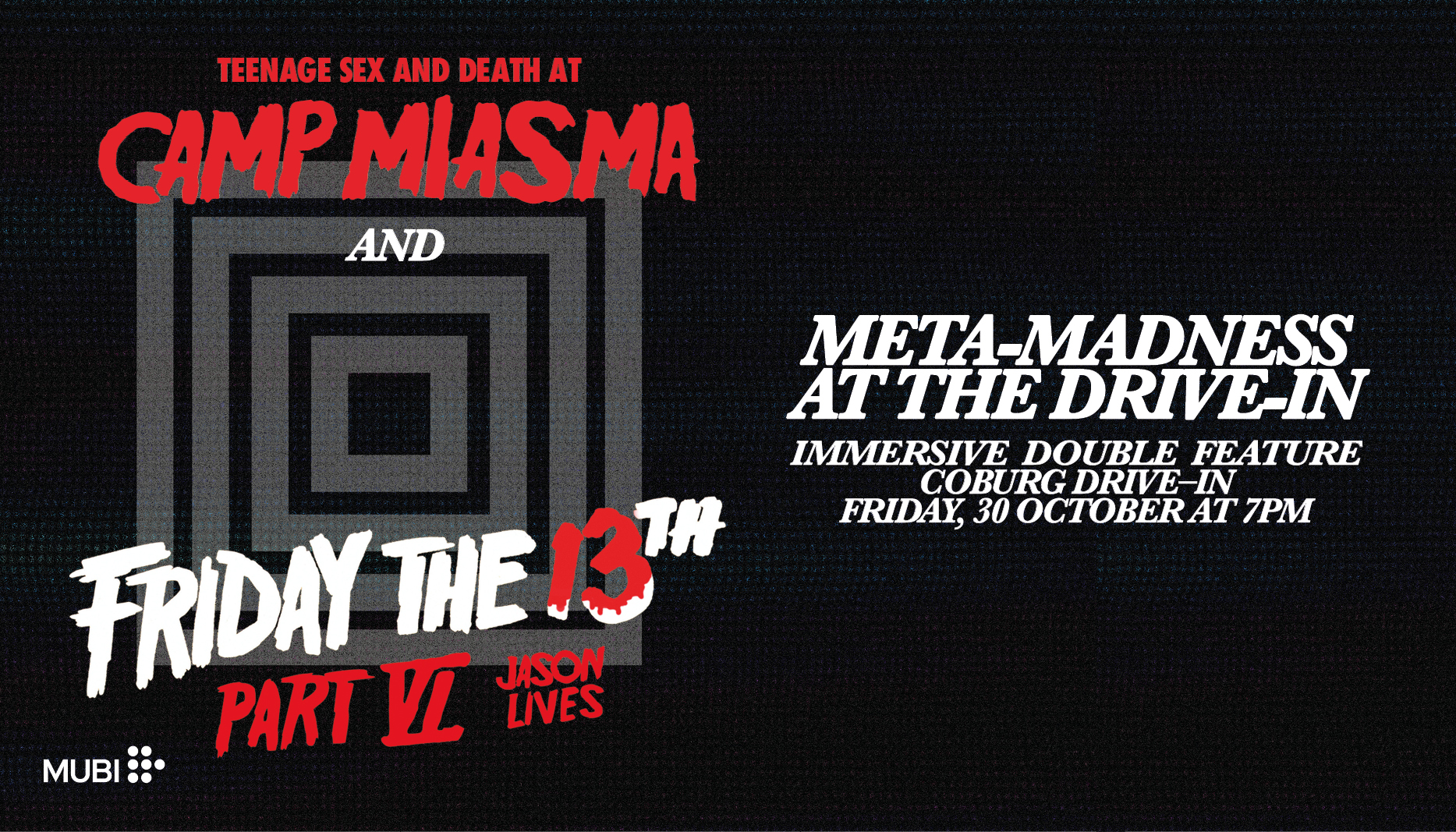
META-MADNESS STRIKES AT THE COBURG DRIVE-IN
See Jane Schoenbrun’s Teenage Sex and Death at Camp Miasma, followed by Friday the 13th Part VI: Jason Lives.
The Coburg Drive-in becomes Camp Miasma for the night. Free gift on arrival, face painting, food trucks, camp counsellors on duty and a best-dressed competition with merch and prizes to win.
Follow an enthusiastic, direct and secluded final girl in Camp Miasma‘s Billy, as she falls into a blood-soaked world of desire, fear and delirium. Then, watch Jason rise from Crystal Lake in Jason Lives; it’s the year 1986 doing what 1986 does best.
Watch out for Little Death. He always comes back.
Friday 30 October, Coburg Drive-In
Gates 7:00pm. First film 8:00pm. $60 per carload.