


Asian migrant sex workers deserve justice: Violence, raids and racism
By: Raani from Justice For Our Sisters

Advertisement
Content warning: This piece discusses, in detail, violence, murder, sexual violence, racism, police raids and sex work stigma.
I remember the first time I read about Hyun Sook Jeon and Yuqi Luo: two migrant sex workers who were robbed, assaulted and brutally killed by a client while working independently in their workplaces within a span of 24 hours. It was December 2022.
That night, I reached out to everyone I knew who were sex workers and those who advocated for them. The panic that would later ripple through the community hadn’t hit me yet.
I was angry. Very angry. That same night, three of us decided that we had to do something about it.
All images: Couresty of Justice For Our Sisters.
The coming week, we spent time strategising and reaching out to others whilst grieving.
Yuqi and Hyun mattered to us. There were a lot of feelings.
We felt unsure if others, including non-Asians or non-migrant sex workers, would even join us. Slowly, we gathered support from various groups, including sex work advocates and leaders, and non-sex workers – eventually, we even saw the communities come together.
We felt hopeful, but also had started to accept that justice for Yuqi and Hyun would be a long fight.
This set a trail of Asian migrant sex workers autonomously advocating against racist raids by Australian Border Force, workplace discrimination, violence from clients and the stigma imposed by police and the broader public.
For some of us who had always been involved, it wasn’t anything new. For a lot of others who later joined us, it revealed to them the peculiar manner with which Asian migrant sex workers were treated by the system.
Our stories, our lives – that are mostly only silenced, ignored or only discussed as sensationalism – urged us even more to fight for Yuqi and Hyun.
Moving forward, on 7 November 2024, Yuqi and Hyun’s murderer was sentenced for a lesser term of 14 years prison, despite the courts recognising the severity of the offending, and the fact that two women had lost their lives within 24 hours.
In that moment, those of us who had been in the fight – trying to gather solidarity and hope – were left shaken.
The outcome deeply unsettled the Asian migrant sex worker community. It revealed, starkly, how little weight and dignity our lives were afforded within the justice system. It sent the message that we were just numbers and that our lives did not matter.
The outcome deeply unsettled the Asian migrant sex worker community. It revealed, starkly, how little weight and dignity our lives were afforded within the justice system.
After tireless advocacy from sex workers and our allies, Victorian prosecutors eventually successfully appealed for a longer sentence: in May 2026, Hyun Sook Jeon and Yuqi Luo’s killer had his sentence increased to 18 years, with a minimum non-parole period of 14 years.
For the advocates and the community, it was unsurprising that it took years to get an outcome.
Yes, we had somewhat lost hope, but our continuous fight – which was unnerving, full of fear and hopelessness for the collective – did not stop us from showing up at the courts and appealing that we deserved more.
In a way, it wasn’t just the justice system that was failing us, but also the victim-blaming that followed in public, through media shaping the narrative for us Asian migrant sex workers.
In the community, both Asian and non-Asian sex workers were urged to question if the reaction would have been similar if Hyun and Yuqi were not Asian or immigrants. Or, if they weren’t Asian migrant sex workers, or Asian migrant women.
Was Yuqi murdered because she asserted her rights asking for additional payment for services, or because the perpetrator had no regard for migrant women, especially those in sex work?
Were the headlines, the public discourse, and even the court’s language shaped by sensationalism, misogyny, racism or stigma?
Why was the humanity of Hyun and Yuqi so absent in how the case played out, while the humanity of the man who killed them was so carefully constructed?
In the community, both Asian and non-Asian sex workers were urged to question if the reaction would have been similar if Hyun and Yuqi were not Asian or immigrants.
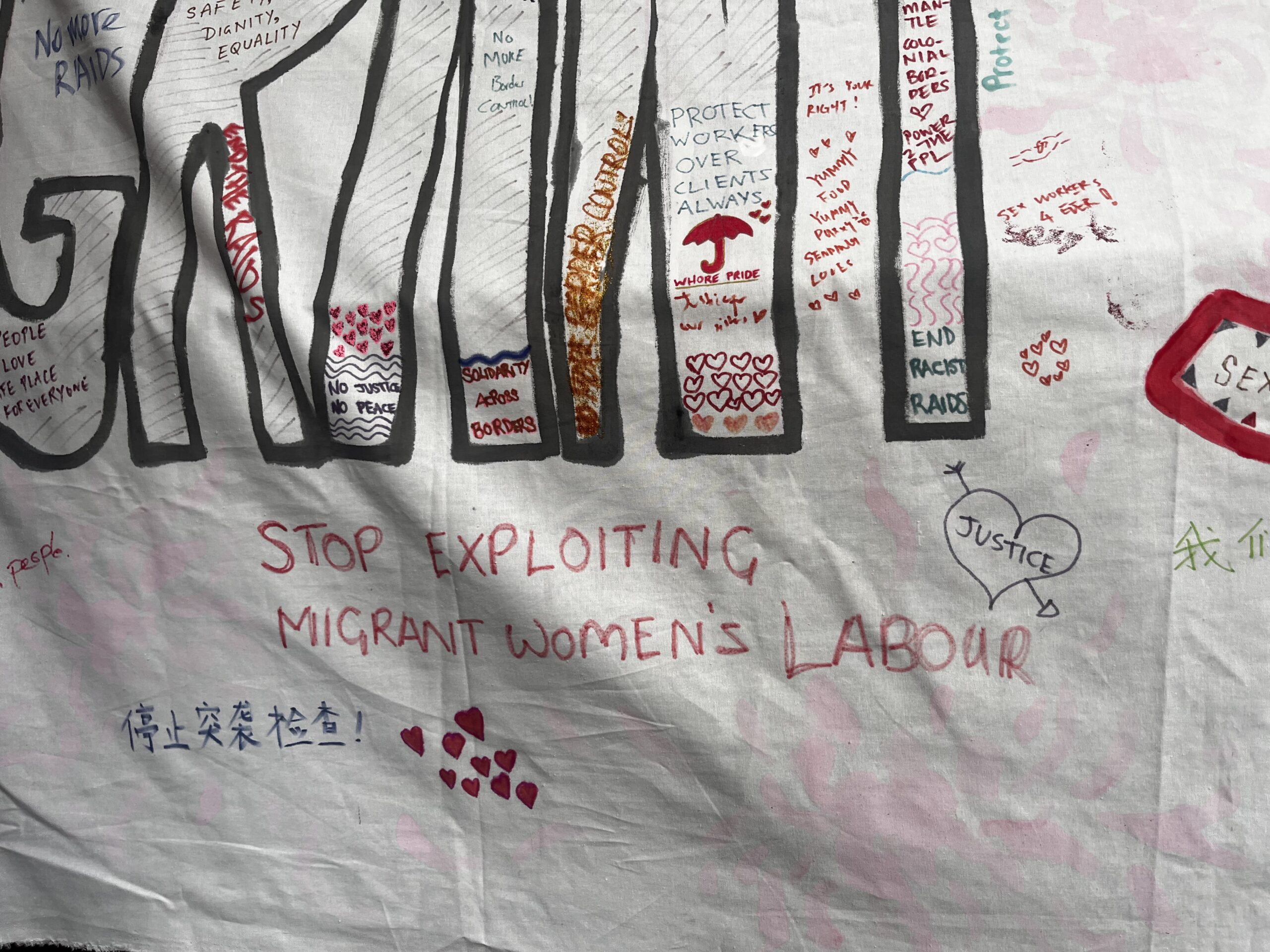
In no way was this an isolated tragedy – it was part of a pattern.
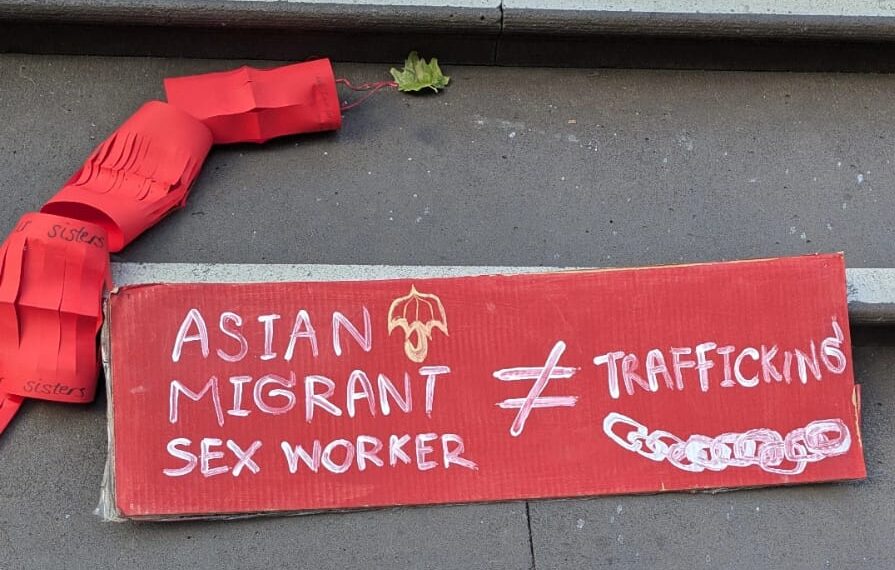
For Asian migrant sex workers specifically, the combined weight of racism, migration precarity, labour marginalisation and stigma, means that violence is both more likely to occur and less likely to be recognised.
It also reminded us of the numerous migrant women who have faced violence, whether they made it to the headlines or suffered silently.
A few months after the hearing, just as our community’s advocacy was gaining momentum, we were dealt another devastating blow.
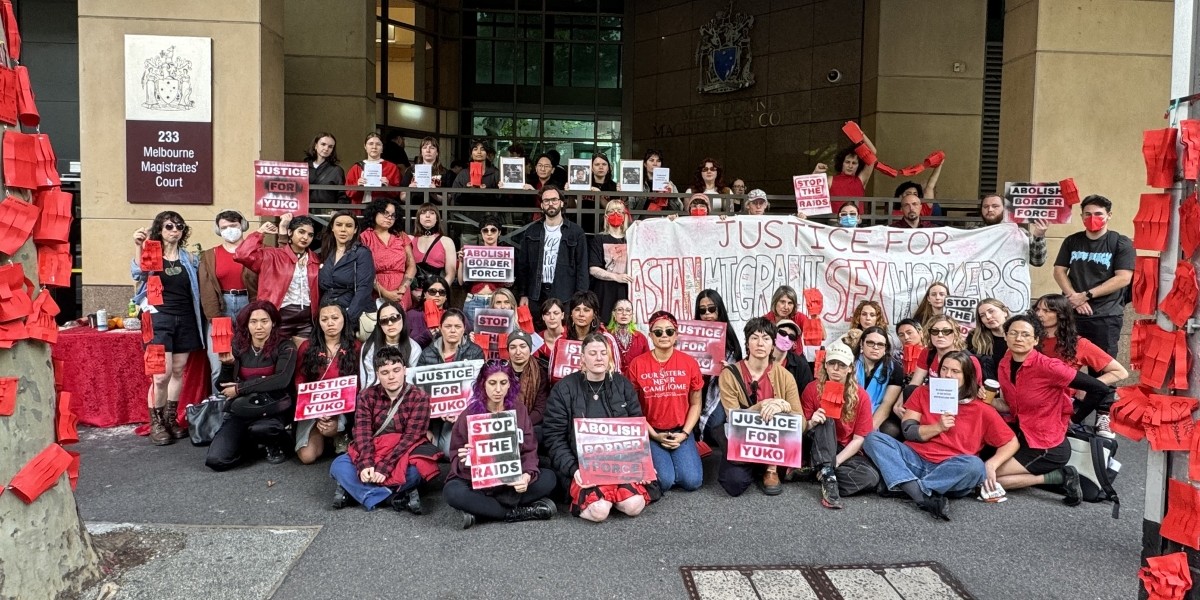
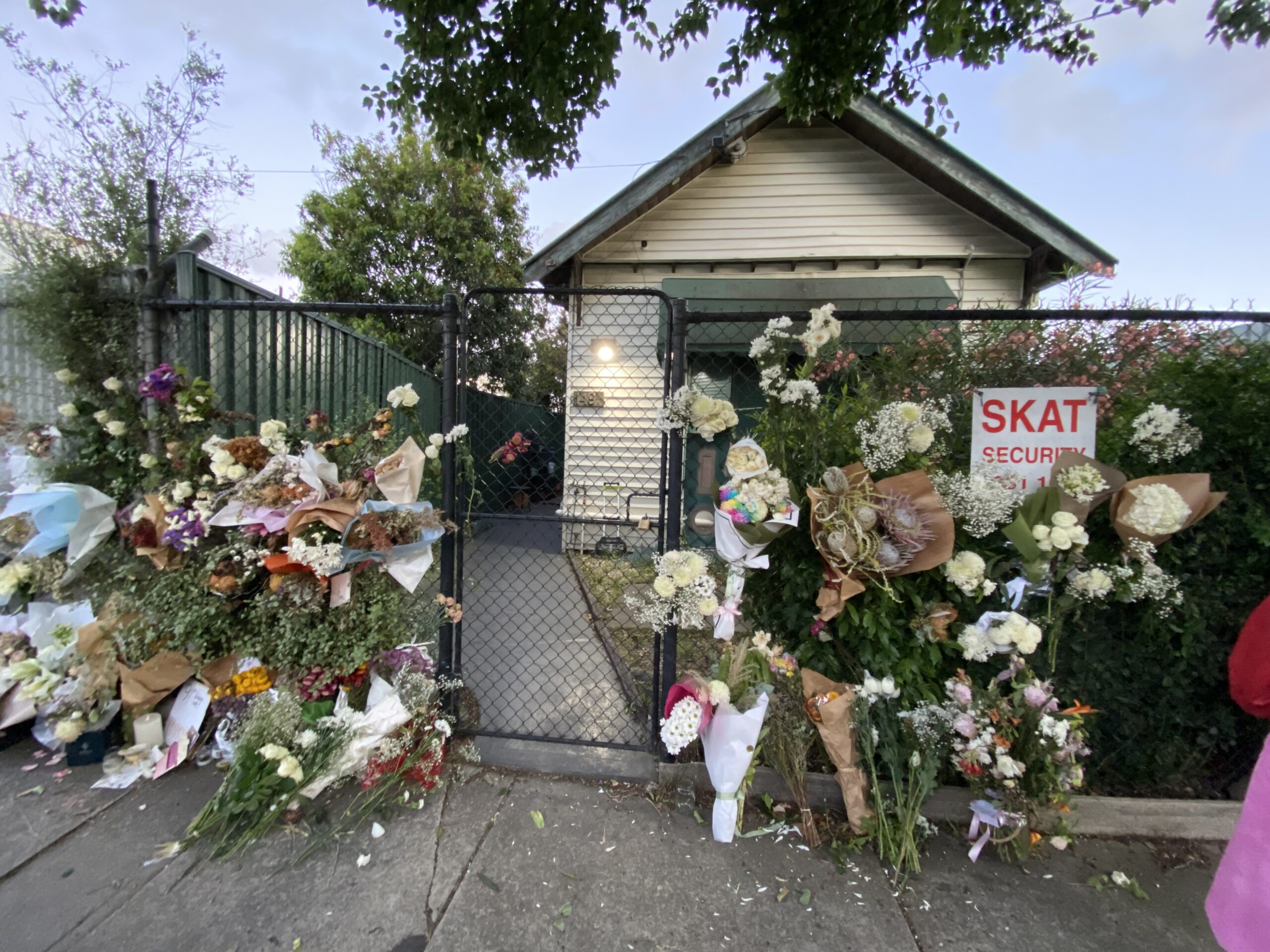
Yuko, another sister of ours, had died – allegedly, murdered. We visited the brothel she owned and worked from, and dropped flowers in her memory.
Eventually the brothel got demolished, but the flowers and the tokens of love continued to collect there.
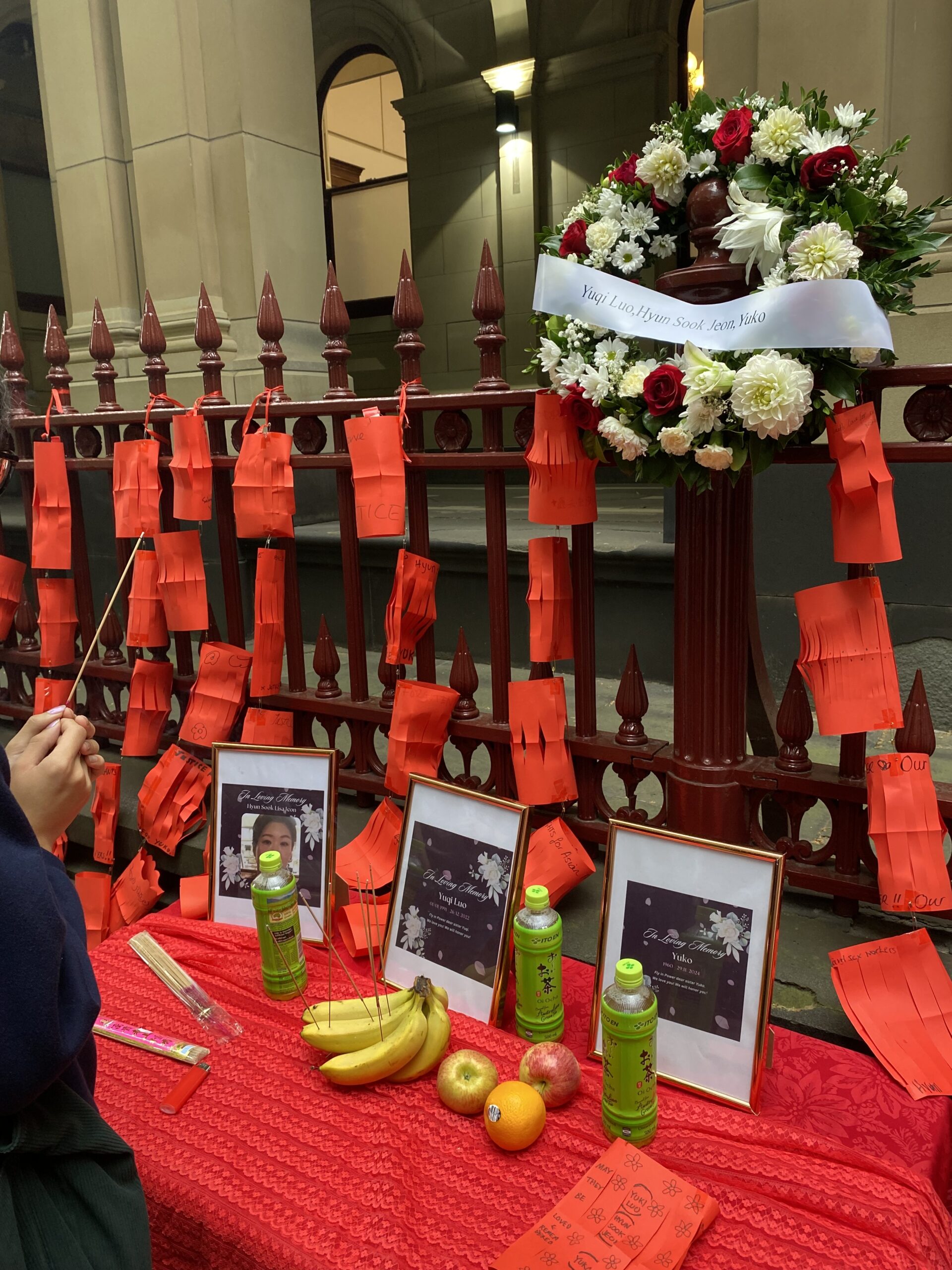
At our vigils, we gathered and spoke with strength about how we were going to find justice for all our sisters.
For Asian migrant sex workers specifically, the combined weight of racism, migration precarity, labour marginalisation and stigma, means that violence is both more likely to occur and less likely to be recognised.
On 31 March 2026, at the Melbourne Magistrates’ Court, the man who allegedly killed Yuko faced charges of murder, rape and 3A murder.
The narrative around sexual assault in court – despite evidence of blunt force trauma consistent with rape – reflected deeply troubling assumptions about sex work. The defendant’s barrister speculated that the injuries “could have been inflicted by a previous client”.
The Magistrate ordered a Supreme Court trial on the murder charge, but the charges of rape and unintentional killing in the furtherance of a crime of violence were dismissed. The rape charges were dismissed on the grounds that the evidence was “speculative”.
At the directions hearing, the prosecution has indicated that they may lay additional sexual assault charges before it goes to trial.
For the remainder of this court case, we will continue to show up to stand with our sisters outside the court.
In our view, the violence faced by migrant sex workers is not just physical violence, but is embedded in everyday systems through workplace racism, client violence, prejudice when reporting to police, stigma, barriers to housing, and judgment within healthcare.
LGBTIQ+ and street-based migrant sex workers, in particular, are often left out of these conversations entirely.
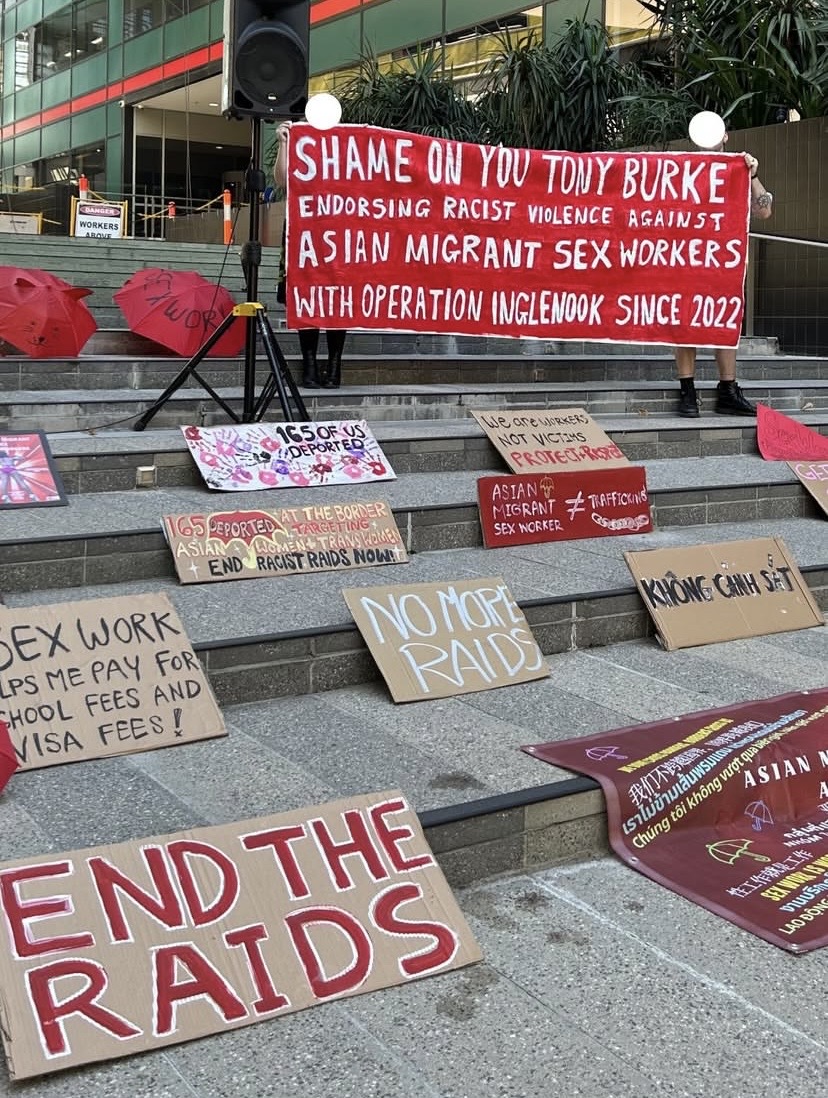
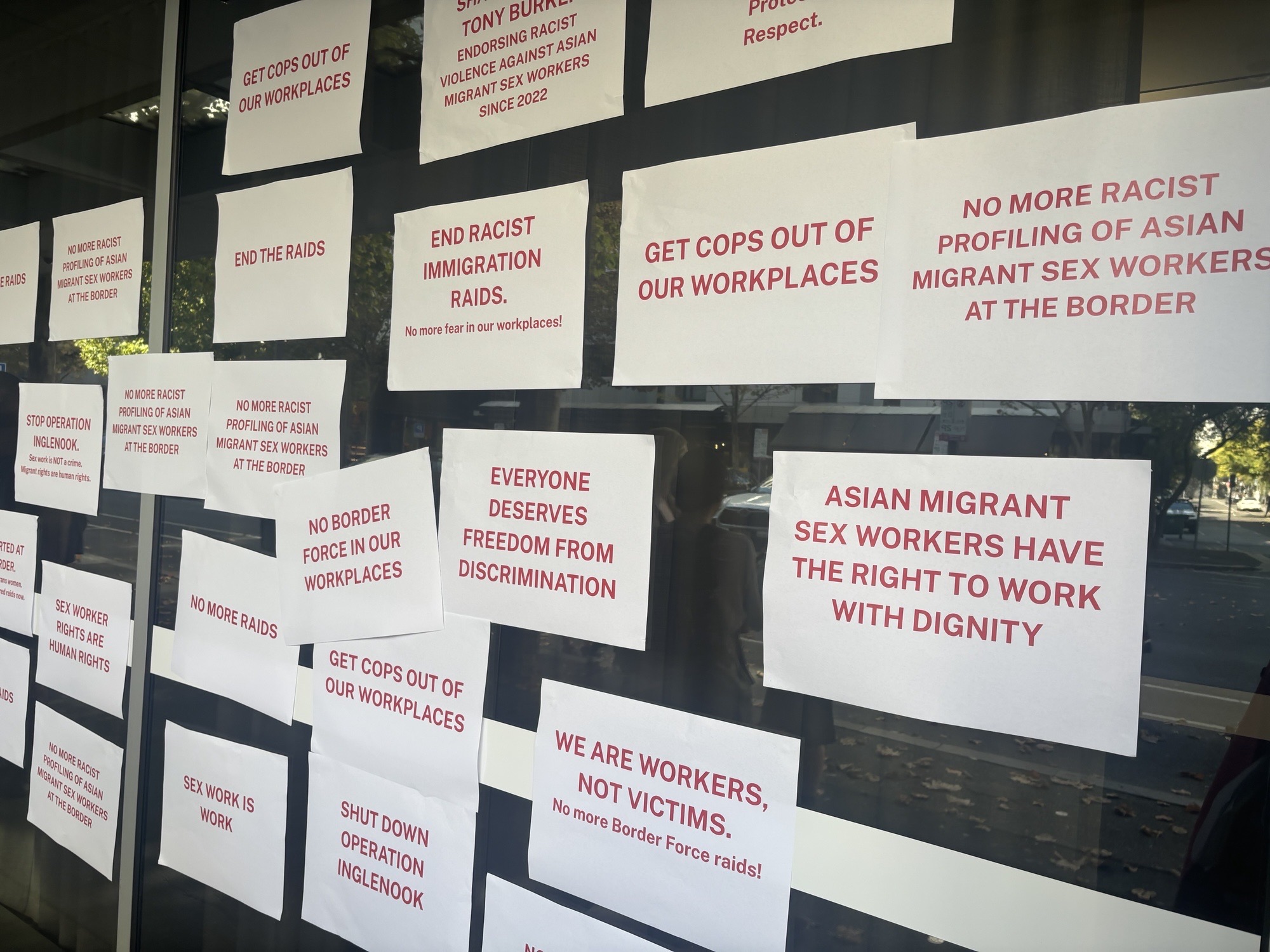
In 2025 alone, the sex work industry saw more than twenty raids, many carried out by the Australian Border Force – creating a climate of fear across community.
The raids disproportionately target migrant workers and have been conducted in ways that workers called “disrespectful and dehumanising”.
One worker said: “Officers entered workplaces with heavily armed personnel, including [with] firearms, often barging into premises. They walked into private backrooms and even rooms where services were being provided, disregarding our privacy and dignity.”
These raids also occurred while clients were present, further exposing workers to humiliation, stigma and potential safety risks.
In our view, these actions send a clear message: that migrant sex workers are not treated as workers deserving of safety and rights, but as bodies to be policed and controlled.
In our view, these actions send a clear message: that migrant sex workers are not treated as workers deserving of safety and rights, but as bodies to be policed and controlled.
As a member of Justice For Our Sisters said at one of the vigils, in grief: “Some of us forget that our destiny really doesn’t change, despite moving countries for safety and a better life. It’s like you are forever running and forever in survival mode.”
Over the last two years, at several vigils, demonstrations and speak outs, we have witnessed sex workers and allies come together in huge numbers remembering our sisters.
Justice For Our Sisters, and its sister group Rising Red Lantern, have had the support of several volunteers who contributed their skills to make these events possible.
I think it is clear that we are not here to be intimidated or made to feel small. We will continue to gather outside the courts or out on the streets with determination.
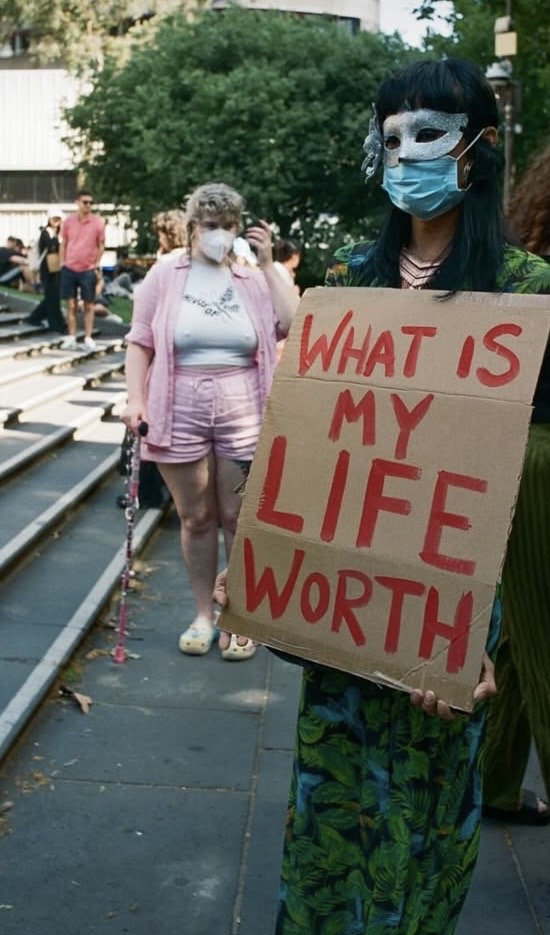
We know Justice for us has never existed within these institutions, yet we will be loud and clear until everyone knows the truth.
We know this: we belong, we have rights and we are as human as anyone else. Our fight will continue, and we invite each and all of you to join us outside the courts, at the vigils and the speak outs.
Sex workers have always stood at the forefronts of every movement; our existence is tied to resistance.
While we continue to fight, we do need your support. We want you to use your skills, your voice, your privilege to stand with us.
Let this movement grow. We want justice.
Let’s stand together for Asian Migrant Sex Workers.
Hyun Sook Jeon
Yuqi Luo
And Yuko’s lives matter.
Join us.
Donate to support migrant-led organising and care: The Rising Red Lantern Project.