

Abolition, autism and agender identity: Breaking the performance of femininity
By: Ella Chase

Advertisement

Advertisement
Content warning: This article discusses sexual violation, misogyny, gendered oppression and dysphoria.
My deepest foray into performing femininity happened in Year 9, amid a battlefield of female friendships based on competition and exclusivity that were perilously maintained for the status they conferred.
At this time, my sense of self was non-existent: moulded by the expectations and demands of others, into a form that awarded me praise and camouflage. I knew I was attractive and had managed to make friends who were popular enough to make me acceptable in return.
I interpreted surviving school as blending in among those who shared power, so I learned how to dress, speak, move and act by observing others. This was an unconscious way to avoid social ostracisation – a maze of overthinking and masking that I thought was inherent to human existence.
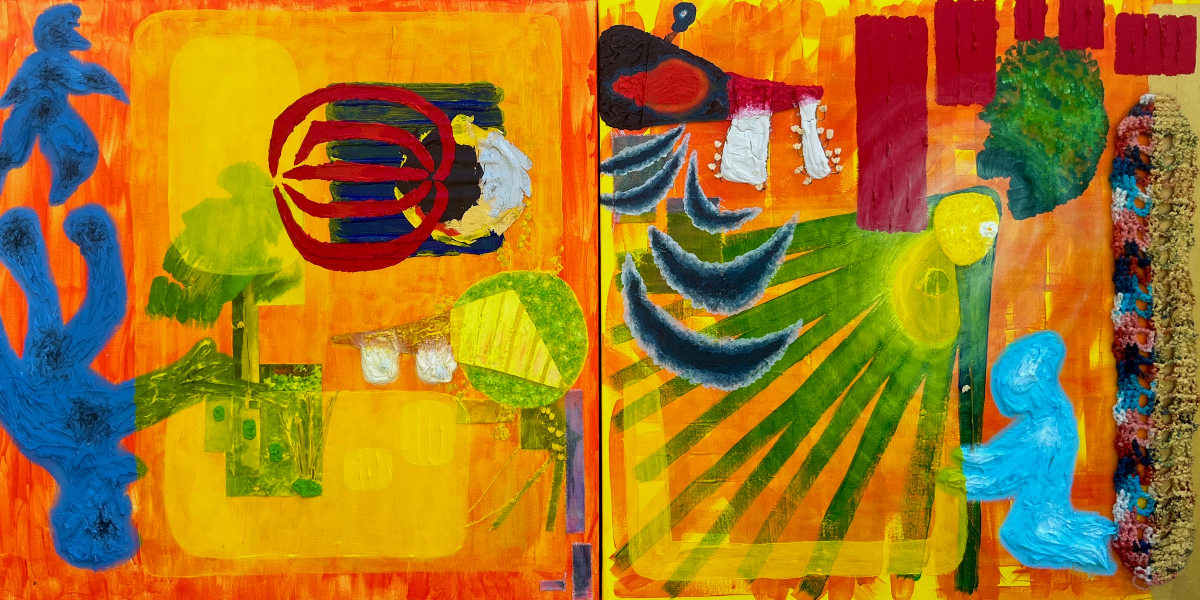
Image: Created by the author
When I saw my name on a Snapchat party list – more daunting than the physical party invitations handed out in elementary school – I knew what the ticket would cost. My close observation of others taught me that men only wanted me around for my body, and this event would likely be no exception.
Before the party, I practised giving a blowjob, and didn’t take any time to consider whether I actually wanted to do that. I wore the tightest, smallest clothes I could reasonably wear for New Year’s in Canada. I drank and smoked.
I thought I knew exactly what would happen in the closet. The taste stayed in my mouth for days afterwards. I was confused when he kept putting his hands down my pants. I didn’t even think to shave, and was shocked that he thought I would have sex with him.
I thought we were only playing pretend. My body was never meant to be involved in this charade.
Femininity is not an inherent ‘female’ trait; often, it’s a reflection of the docility that the patriarchy demands. It can be a trap that captures agency and subjectivity, and forces some individuals to become a mirror that men can look into happily. At the party, I knew that I had betrayed myself, but couldn’t help feeling pride over being wanted.
I’ve felt the power that comes with the object of my body being enjoyed: how it proves I’m worthy of attention. Looking back, I’m sad that I let myself be uncomfortable because I thought that didn’t matter in the face of being wanted.
The male gaze causes people subjected to misogyny to confuse our interests with the interests of others. We can gain power under a cis-het man’s eyes when they deem our bodies – and therefore, ourselves – meaningful.
The basis for a ‘successful’ life is one that denies our own desires, independence and agency in service of the patriarchy. In a society built upon denying our autonomy, it is no wonder that we can lose ourselves for the sake of another.
Through an auspicious combination of autism, agenderism and a voracious appetite for anti-oppressive literature, I have managed to become conscious of what I see as the trap of womanhood.
Emerging from bouts of pandemic-induced isolation, where I learned what it means to exist comfortably for myself and gained respite from the social quagmire of high school, I was able to accept my lesbianism and disinterest in men.
With short hair and a more masculine presentation, I was free from their constant attention, the flattery it brought, and the femininity it demanded. I could embody my personhood instead of performing womanhood.
But my freedom was not complete: I still felt at odds with my body and the world, still felt alienated from the joy and ease that other seemed to access easily. The realisation that I’m autistic connected all the dots for me.
To me, being autistic means that my body recoils at uncontested universal ‘truths’ and the illogical, painful performance of femininity.
In my unknowingly autistic life, any semblance of gender identity was only a combination of bodily, interpersonal – and therefore, life-encompassing – codes and conventions that I was too scared not to follow.
It’s been easy to give up on gender as my inherent disinterest in performing any of the markers of femininity has combined with the knowledge that, politically, historically, spiritually and philosophically, gender is killing many of us. The Second Sex by Simone de Beauvoir explores some of the reasons why this is; it unearths many of the roots that I could never pull out of the ground.
Instead, all I can do is sort through the endless demands I’ve received, and abolish all my desire to answer people who serve only to make me ‘desirable’. I refuse to meet demands that affirm an oppressive system I don’t believe in, and that deny my need for a world where we can coexist interchangeably.
Over time, I started dropping what I didn’t like doing, and what became obvious as a costume of womanhood.
It was scary to turn away from all that I’ve been told gives me value, but it would be even scarier to build a life centred around a conditional acceptance, rescinded in the moment that I did not fit into an oppressive category.
Now, I build my own reality, instead of shrinking all my possibilities into a restrictive, ready-made form.
I wear what makes my body feel like my own, not the advertised and commodified cookie-cutter outfits that made me look like everyone else. I stopped flirting – which I interpreted as becoming more attractive the less challenging I was – and learned to accept the oppositional honour of being disliked by straight men who would only like my submissive disappearance into femininity.
I’d never liked shaving, so now I intentionally let everything grow. This is the natural state of my body and, simultaneously, a radical statement: all our bodies grow hair in similar ways, but many are considered disgusting, dirty and unattractive if they choose not to remove it.
I stopped wearing makeup because it made me more aware of what was supposedly ‘wrong’ with me, and enriched a beauty industry that profits off my insecurity. Even when I’m in a space where I can tell I’m the black sheep, or I’m seen in a hostile or patronising light, I now let myself enjoy being annoying, confusing or disobedient to those who will inevitably be annoyed or confused by any deviation from obedience.
Why would I choose to follow the codes that make me legible to the oppressor? I choose to be challenging instead, freeing myself and encouraging others to do the same in one act.
Gender is famously a performance, but we forget that being on a stage is to turn oneself into a vessel of creative invention.
Anyone can turn away from the script we’ve been forced to read, and embrace a performance of gender that is subversive, spontaneous and written by our individual autonomy. Yet, I question how trivial my acts may be to the larger waves of feminism and in the face of the all-powerful patriarchy, even though the sense of empowerment alone makes it a worthy pursuit. There is no choice but to turn inward and create within myself the world I want to live in.
If we can free ourselves from restrictive gender constructs, and embody the free people we deserve to be, will everyone be allowed to follow? I do know that if we remain trapped without a fight, nothing will change.
Wresting control from the male voyeur in my mind is hard work, but I will never get tired of forcing cis-het men to face the reality of my humanness rather than the expected mask of obedient femininity.