

Archer Asks: Robert Baxter on pop star personas, queer fashion and ethereal gay heaven
By: Ella Ion
Advertisement

Advertisement
Robert Baxter is a non-binary Taiwanese/Australian pop artist, model and influencer based in Naarm/Melbourne. Drawing on a rich background in dance, modelling and theatre, their creative practice is unafraid to explore vulnerability, desire and humour in equal measure, sitting comfortably in the tension between the serious and the playful.
First emerging with their debut album you wouldn’t expect cupid to cry in April 2024 and STARGIRL singles ‘SUSPICIOUS’ and ‘CAMBOY’, Robert’s diverse catalogue, striking visuals, and multidisciplinary practice position them as an artist proudly building spaces for community while carving out their own dazzling lane in Australian pop.
Robert Baxter spoke to Ella Ion, fragmented-folk musician hailing from Kaurna Land (Adelaide), all about being a pop star, embracing yourself through fashion and creating a queer heaven where we can be free of judgement from the normies.
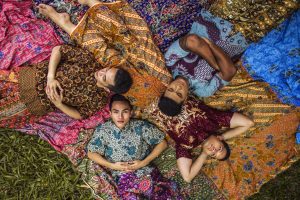
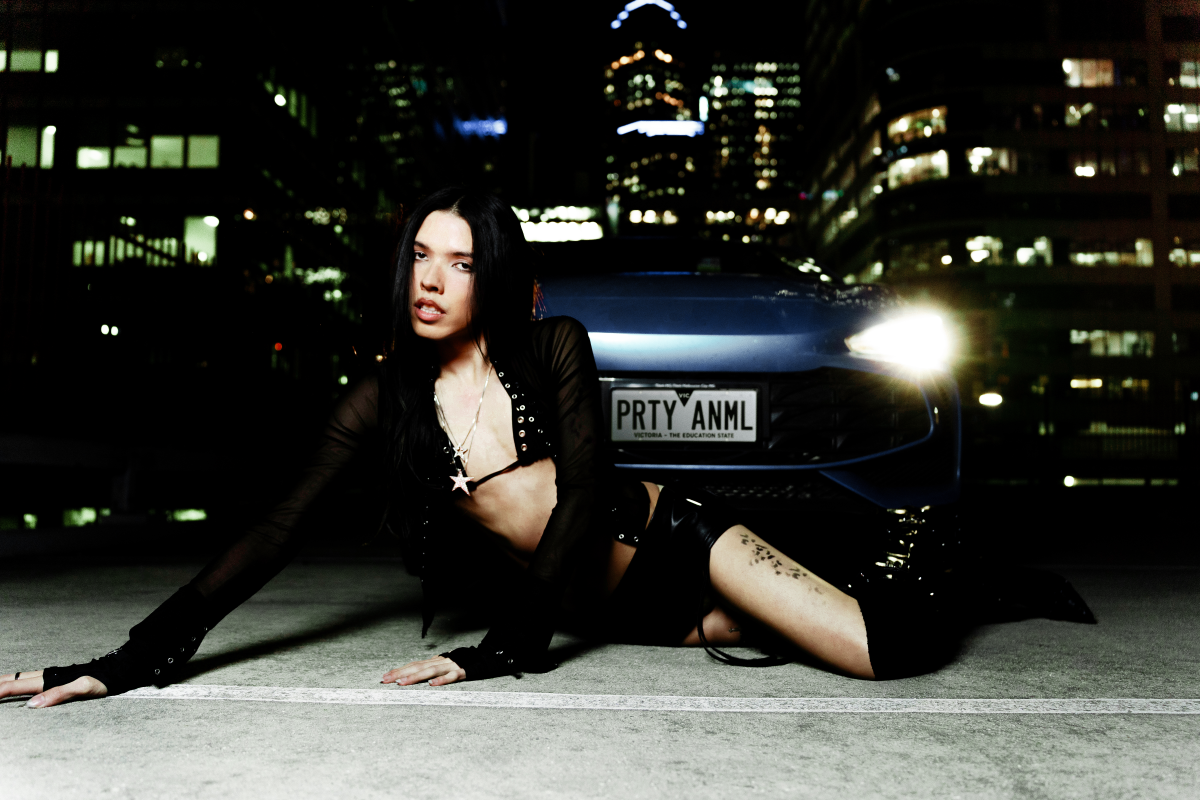
Header image: Robert Baxter, taken by gigishoots.
Ella Ion: My first question for you: I love when you proclaim, “I’m a pop star”, which is obviously true. But I’m curious to know, what does the term “pop star” mean to you?
Robert Baxter: Wow… so with a dictionary definition, it’s a star who makes pop music. But for me personally, I used to say I was one before I really felt it. I was kind of faking it ’til I made it.
Everyone would ask me [to make] a cocky dance/club track, and I didn’t feel comfortable writing it, because it didn’t feel honest. Now I write them so easily, because I truly believe everything I’m saying.
When I say I’ve worked hard and I deserve to be here, I believe it. That, to me, is what makes me an undeniable pop star.
There was a time when I was the only one who believed in me, and now everyone believes in me.
When I say I’ve worked hard and I deserve to be here, I believe it. That, to me, is what makes me an undeniable pop star.
EI: It just goes to show that it always starts with your own self-belief, doesn’t it? I’m really glad you decided to believe in yourself – definitely worth it.
This leads me to my next question very nicely. Something I’ve struggled with as an artist is using my real name. The lines can get blurred in my identity between Ella the artist, and just myself as a person. Do you think it’s more important to have a creative persona that is completely reflective of your identity, or to separate Robert Baxter the artist and Robert Baxter the person?
RB: I think it would depend on what your persona is, and depends on who you are as an artist.
I think I am myself about 90 per cent of the time. The other 10 per cent where I’d have to push is when I’m in a situation like giving a speech or performing onstage – where there’s a reason that I might get nervous, and I have to push those feelings away to step into my persona. But most of the time, I’m myself.
I think it’s important to do both, to make sure that your persona is true to you, but then also knowing that you can leave it behind.
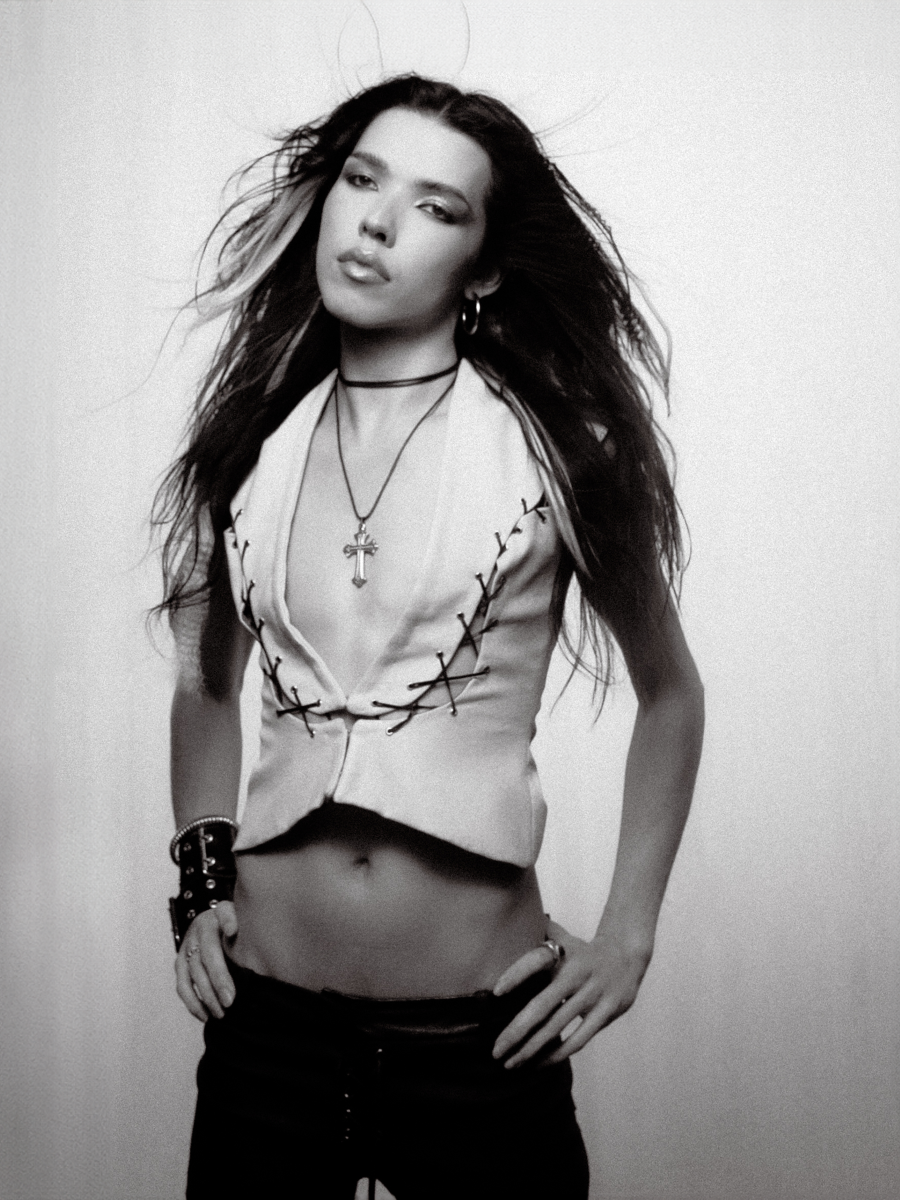
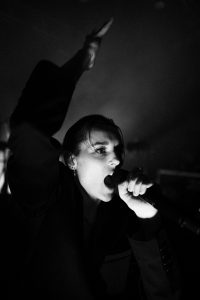
Image: Robert Baxter, taken by Linda Chen.
EI: I love that; it’s totally true. Particularly in a gig setting, you’re onstage doing this performance, and people behold you. There’s all this curiosity, and people make assumptions about who you are based on what they see or what they hear in the song.
It’s almost like projecting your artist self onto your real self, which is a lot easier to do when you use your real name – instead of being called, like, Lady Gaga. What’s Lady Gaga’s real name?
RB: Stefani Germanotta.
EI: That’s beautiful. God, of course it is.
Something really special about you is the way you dress, the creativity of your outfits, your glamour and your wildness. Tell me about your relationship and journey with fashion.
RB: Okay, I used to dress so wild as a 12-year-old. I did not want to wear what everyone else was wearing, and it would lead me to make such interesting choices.
I would just wear board shorts all the time, not just at the beach or the pool. Some of them had disco ball prints on them, some had flames on them.
I probably found myself interested in fashion at 17 or 18 years old. I was starting to know how to dress for an occasion, whether I was being more formal or more extravagant.
You know how people like Steve Jobs have their uniforms they always wear, so then they can focus on other decisions? Decision fatigue is so real, and deciding what to wear all the time is hectic, especially when you want to pull out looks all the time.
So, I decided if I’m doing a gig where I’m not getting paid, then I’m not wearing heels – things like that. Or when I’m going to give a speech, I’m in my… have you ever seen those photos of Cardi B at court?
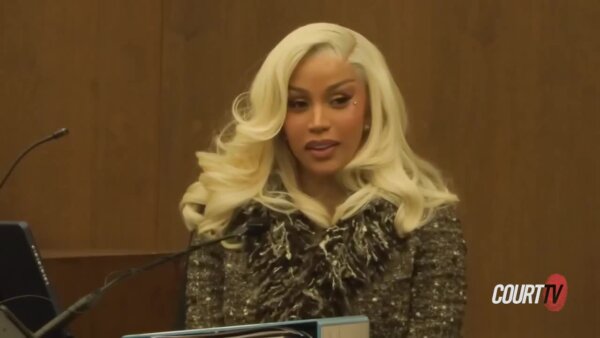
Cardi B in court. Credit: Court TV
EI: You showed me them.
RB: That’s my inspiration when I’m doing something professional. Definitely a pop-style uniform, not a tech bro uniform. But I was gonna ask a similar question back: how has your queerness influenced your style?
EI: It’s so funny, I almost want to say that my style has influenced my queerness. I only came out on New Year’s Eve [2026], so just recently…
RB: Woah, this year? Welcome!
EI: Thank you, it’s good to be here.
For a long time, I dressed pretty weird. I always wanted to express myself in this way that was masculine or something, and it just felt right. I never really questioned it, but then I ended up surrounded by queer friends, and I think everyone just started to assume I was [also queer], but I didn’t know yet.
I was expressing myself in the way I lived my life, the way I talked, the way I dressed – and that made other people notice something about me that I hadn’t explored yet. Obviously not that you need to dress any certain way to be queer – queerness is just queerness, however you express it. But I was like, Maybe this is something I need to think about… and then, on New Year’s, and I was like, Holy shit!
Having such ease with other people’s queerness was so interesting, because when it came to my own, I’d pushed it way down. I just assumed that I was straight – and I mean, never assume anything, right?
So queer fashion kind of helped me come to that conclusion about my sexuality, which is really cool.
RB: That’s beautiful.
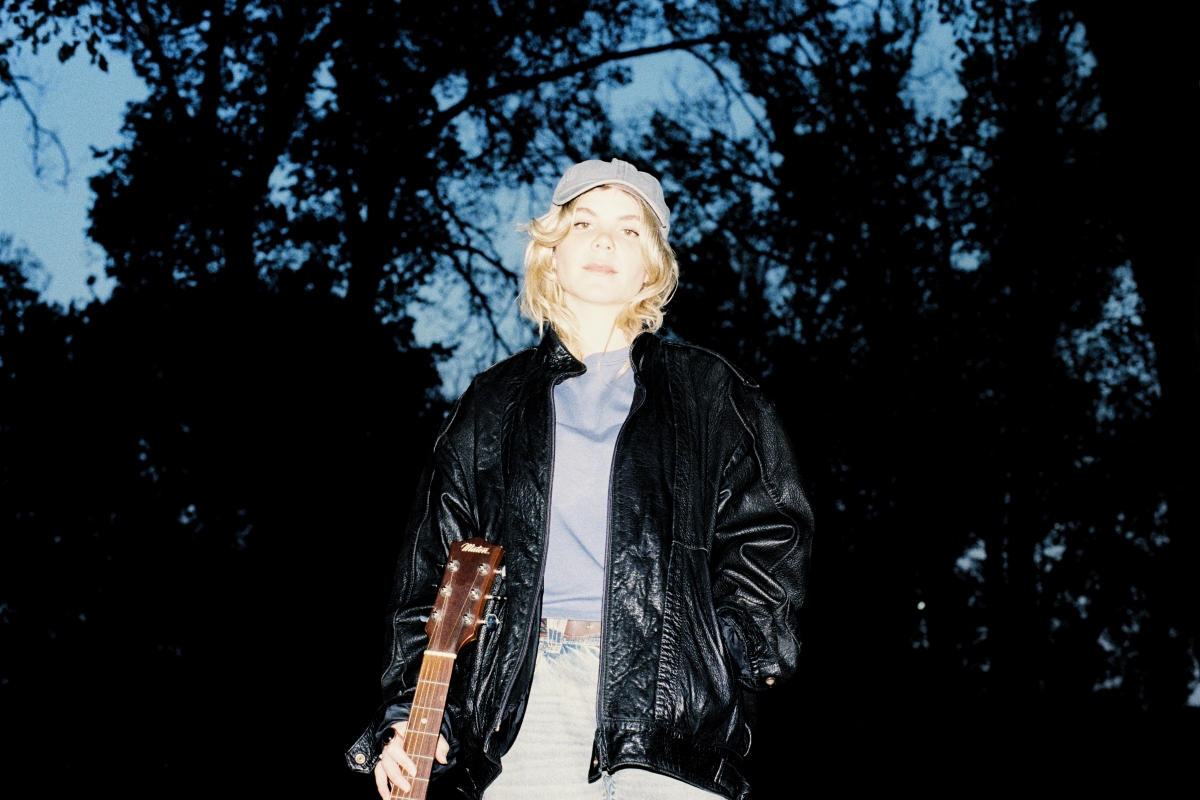
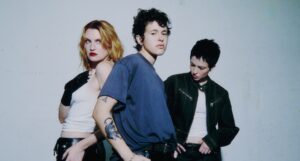
Image: Ella Ion, taken by Izzie Austin.
EI: I want to talk about the last song on your PARTYANIMAL EP called ‘SKY CITY’. That song stood out to me; it’s a little bit more emo than the other songs. What is ‘SKY CITY’, and what does it represent?
RB: I think in my queer community, everyone identifies as an angel or an alien or a witch – something mystical.
Everyone relates to being that other thing that maybe scares the normies, because that’s what our life has been like. To me, SKY CITY is this idea of gay heaven, where it’s a rave for the people who want it to be a rave, it’s peace for the people who want it to be peace.
It’s a place where our community feels safe and loved – where no one’s questioning our lifestyle.
Sometimes when I’m at queer events, whether it’s the club or a show or whatever, I look around and there’s all these beautiful queer people that don’t have to explain themselves, because everyone around them already understands them. I’m like, That’s SKY CITY.
EI: It’s so beautiful, Robert. I want to go to SKY CITY.
RB: Well, when we hang out, we’re there. Like, that’s the point.
EI: I feel like your shows would be like SKY CITY.
RB: I think so. I’m really, really proud to make a space like that. I think that’s the reason I’m here.
It started from the pickup line, “Did it hurt when you fell from heaven?” I’m like, yeah it hurt, but luckily, I have my community to look out for me while we’re here on Earth.
It started from the pickup line, “Did it hurt when you fell from heaven?” I’m like, yeah it hurt, but luckily, I have my community to look out for me while we’re here on Earth.
EI: It’s such a wonderful thing in queer culture to be able to take a line that’s been around forever and repurpose it.
You’ve reclaimed something that would be used as a sleazy pickup line, and made it into something beautiful, so props to you.
RB: Can I ask one final question? What part of yourself do you find the most beautiful?
EI: That’s such an emotional question.
The parts of me I find the most beautiful are inside. [Such as] my genuine desire for others to be comfortable in who they are, and [for me] to do what I can to make others feel comfortable. Not in a way that I never challenge anyone, or have a hard conversation, but why would I ever want to do anything that would make someone else feel not as good as they can feel?
I’ve always strived to create a feeling of warmth whenever I can, with whatever resources I have, because the world is a cold place sometimes. And if we can’t create warmth, then what’s the point?
That’s something I admire about myself; I feel proud of that quality. What about you?
RB: I’ve taught myself to let go of a lot of beauty standards and re-define what beauty standards are. So the way I physically am, I find beautiful. I love what it represents, even more than representing myself.
I’ve taught myself to let go of a lot of beauty standards and re-define what beauty standards are. So the way I physically am, I find beautiful.
And mentally, I think my brain is so beautiful. I strive so hard to feel alive and to make everyone around me feel alive.
I love to ask the hard questions, I love to talk deeply, I don’t want things to pass me by and I don’t want things to pass the people around me by.
I want people to have the chance to decide why the world gave them this life, and whether they’re happy with that or not. How we can combat that, or how we can appreciate that if they are happy.
I love my drive, my work ethic, my sense of self and sense of purpose. I think they’re all beautiful. I actually don’t think anything about me is not beautiful, so…
EI: Fuck yeah. So basically, if people hang out with us, they get to feel really warm and fuzzy and alive.
RB: If they should have the honour.
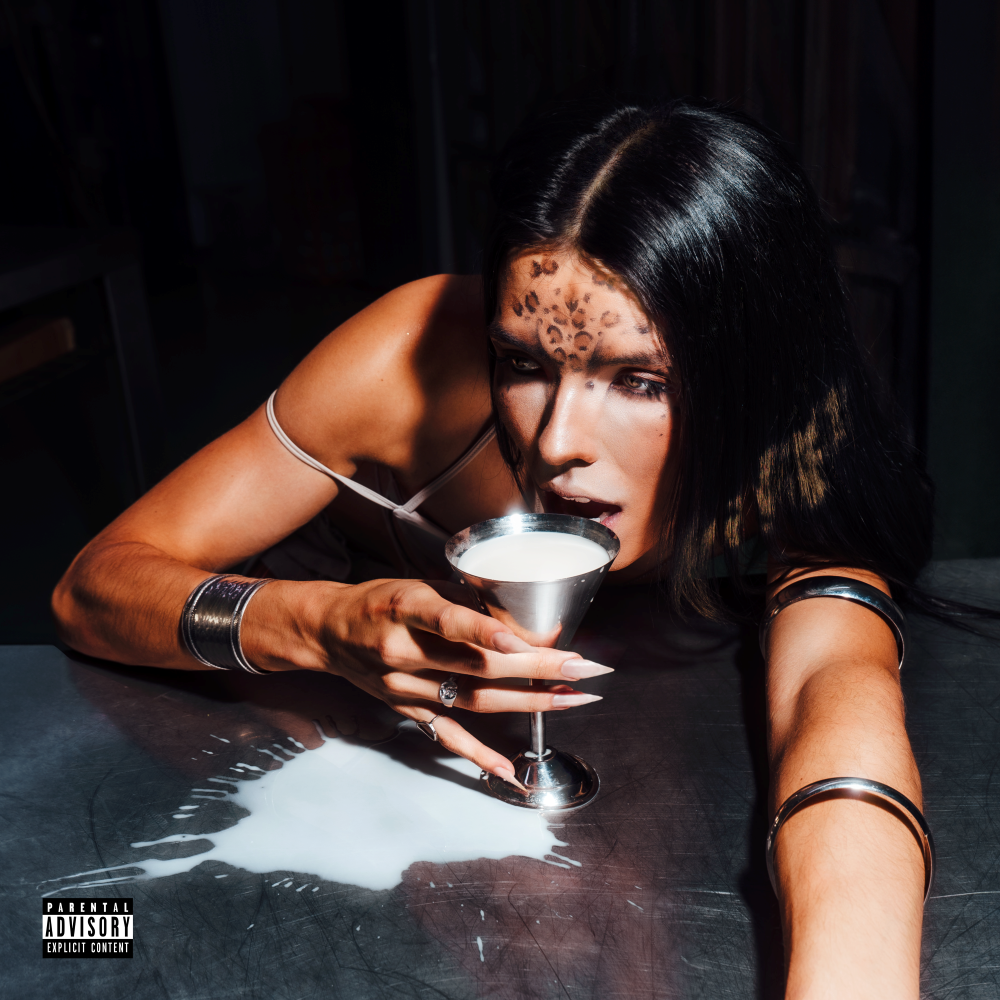
PARTYANIMAL EP. Image credit: Jarrad Levy.
Robert Baxter’s new EP PARTYANIMAL is out now.
Buy/stream it here.