

Muslim Americans, mental health and police violence: Immigrant blood
By: Hina Ahmed


Advertisement
Advertisement
Content warning: This piece contains in-depth discussions of police brutality and murder, racist violence, Islamophobia, ICE, mental health crises and self-harm.
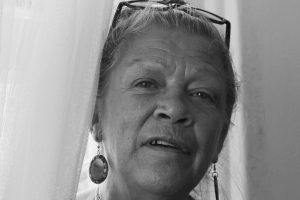
Image: Author in Upstate New York. Courtesy of the author.
It was late one February night, during the beginning of Ramadan, when I received a text from my mother containing a breaking news article about my hometown, Binghamton, New York.
“One person dies after police-involved shooting in Vestal,” the article read.
Heat rose in my body. My breath felt trapped in the back of my throat. I braced myself for what was likely to come: another article that justified police brutality.
The victim was a 38-year-old Egyptian-American man named Eslam Hegazy, who had lived in the USA for 19 years. He had a wife and three small children.
The article said that he carried a knife and was threatening to self-harm. When the police asked him to put the knife down, he refused. He threw a TV at them and then proceeded to walk toward them with a knife, when shots were fired. The article stated that a further investigation would be held.
The language used filled me with rage. It left out details like how the police communicated with Hegazy – through their words and their body language. It left out precise details of their interactions, and strategically chose language that granted the officers impunity.
The article says shots were fired after Hegazy walked toward them, implying the officers acted in self-defence.
According to a report from the Police Data Archive, at least 1201 people were killed by police in America in 2025.
Ninety-five per cent of people killed by police in 2025 were killed by police shootings, and each year, fewer than three per cent of killings by police resulted in officers being charged with a crime.
The report states that in many countries, police routinely disarm people who have knives without shooting them. In the United Kingdom, a country of almost 70 million people, police encounter knife attacks at a similar rate as in the US. However, the UK police fatally shot two people with knives in 2025.
Comparatively, in California, which has a population of 39 million, law enforcement killed 32 people allegedly armed with knives in the same year.
Upon reading the article about Eslam Hegazy, I thought not only about police violence, but another relevant question about the context of his death: what are the barriers for Muslim Americans receiving mental health support?
Many Muslim communities exist within the context of immigrant and refugee communities. According to research conducted by the California Pan-Ethnic Health Network, there are three major barriers that prevent immigrants and refugees from receiving high-quality mental health support.
First is the lack of cultural and linguistic competency within mental health services, which includes a lack of interpretation and translation services. Secondly, there are structural barriers to accessing mental health services – such as working long hours, a lack of accessible childcare and difficulty understanding confusing healthcare systems.
The last barrier outlined is cultural stigma around mental health, where seeking help is seen as a weakness. Some individuals are skeptical of Western models of healing, preferring Eastern ones instead.
…I thought not only about police violence, but another relevant question about the context of his death: what are the barriers for Muslim Americans receiving mental health support?
In her essay ‘Muslim Americans in the Fight Against Mental Health Stigma’, academic Sarika Antora outlines how complex systems, lack of diversity among trained professionals and the perceived incompatibility of professional help and Islamic values, significantly reduce accessible mental health support for Muslim Americans.
She outlines how traditionally, Muslims have primarily relied on God, religious leaders and community elders to discuss social and internal conflict – this is who they trust.
From within the Muslim community I grew up in, I’ve heard phrases like, “What can a Western, non-Muslim therapist understand about our struggle?”, “We don’t share our feelings with random strangers,” and, “We turn to Allah, for only HE can change our lives.”
Antora goes on to argue that the Muslim American’s mental health struggle is unique because they live in a society that consistently pits parts of their identity against each other. This creates internal conflict, which manifests in the form of mental distress.
She adds that research shows that people who self-identify as both American and Muslim struggle the most with identity conflict, low self-esteem and self-stigma.
This presents challenges in receiving adequate professional care, because it requires providers to understand these complex and intersecting identities.
The context of mental health intersects with Islamophobia to represent a specific kind of narrative of Hegazy’s death.
The language used to describe people with mental ill health is similar to the language used to describe terrorists. Words like ‘crazy’, ‘mad’ and ‘senseless’ are examples of dehumanising words that make it easier to justify discriminatory treatment and violence against Muslim peoples.
Take a Muslim man with a mental health crisis, and you have a recipe for a grave tragedy.
How would things have been different for Hegazy had the people interacting with him approached him with understanding and compassion instead of with a gun?
Would this Muslim man have responded with a knife, or thrown a TV, if the local Imam or a trusted community member walked through his front door instead of the police?
Take a Muslim man with a mental health crisis, and you have a recipe for a grave tragedy.
The history of how police have responded to BIPOC communities and Muslim individuals needs to be considered as a vital part of the mental health conversation.
How did Hegazy’s Arab-American identity affect both how the police saw him, and how the public perceived his death? What role do identity politics play in who is memorialised and remembered, and whose life is in vain?
Other news articles revealed Hegazy’s body would be buried in Egypt. To take his body back was to take back his dignity – to grant him the sanctity of resting on a land that wasn’t washed with the stains of his immigrant blood.
The next morning, I woke up to a myriad of texts containing other news stories about how ICE was on campus at the University of Kansas.
Instructors were cancelling classes and colleagues were sending photos of black vehicles a few blocks from where we lived as a warning to be careful.
“If you leave the house today, make sure to bring your licence and social security card with you,” my husband said.
“Why? It’s not like those documents saved Eslam Hegazy,” I replied. My husband looked at me alarmed.
“Just like him, I’ll never be American enough,” I said.
I needed to step outside, feel the fresh air against my face – the air that Eslam Hegazy would never feel again, the air that I felt both blessed and disgusted to breathe.
If this story has brought up any issues that you want to talk about, please reach out for support:
- QLife is the national LGBTIQ peer-support telephone service for people wanting to talk about issues including sexuality, identity, gender, bodies, feelings or relationships.
- Say It Out Loud has a list of the LGBTIQ community-controlled services for each Australian state/territory. The organisation encourages LGBTIQ+ communities to have healthy relationships, get help for unhealthy relationships, and support their friends.
- If you or someone you know is in crisis, call Lifeline on 13 11 14.
You are never alone.