


Archer Asks: Travis Alabanza on trans resistance, queer liberation and making political art
By: Alex Creece
Advertisement
Advertisement
Travis Alabanza is an award-winning writer, performer and theatre-maker. After completing the artist in residency program at Tate Galleries, Alabanza’s debut show Burgerz toured internationally to sold out crowds at the Southbank Centre, in Sao Paulo, Brazil, Berlin’s Hebbel am Ufer (HAU), and won the Edinburgh Fringe Total Theatre Award in 2019. Travis’s critically-acclaimed show, Overflow – which toured Australia in 2024 – is a hilarious and devastating examination of women’s bathrooms, who is allowed in and who is kept out.
Travis and I chat over Zoom. We both wear cute glasses and exchange compliments. The day is just dawning in the UK, while Australia enters its evening. The colours in my kitsch-decorated office shift with the sun as I speak to Travis about all things art, performance, transness and resistance.
All images: Griff Townsend
This article first appeared in Archer Magazine #20: the RESISTANCE issue. Get your copy here.
Alex Creece: This issue of Archer Magazine focuses on resistance. I’m wondering if you could tell us about what resistance means to you, both on a societal and more personal level.
Travis Alabanza: I think when you’re younger, resistance is so much more focused on just yourself – it sometimes takes a while to zoom out.
My first experiences and understanding of resistance came from growing up in a working-class area in the UK, where I was visibly queer and gender non-conforming from a young age.
I remember the threshold between my house and the outside world. Every day I would make choices: choosing to keep the earrings on, choosing not to change my outfit, and continuing to be visibly queer, despite knowing that I’d receive backlash.
As a young child, it was a reminder that personal resistance is choosing yourself over what dominant society wants. That then carries out into a wider idea of resisting the dominant view of power in support of other people.
AC: How can we inspire a spirit of resistance in those around us?
TA: I’ve been thinking about that a lot lately – sometimes you can get overwhelmed by looking at the inaction in the world.
Firstly, I think about the communities that I’m around. I’ve got my friends, I’ve got my geographical community, I’ve got my industry and I think that’s a really good way to start. Where can I impact the people around me? I’ve tried to stop thinking of online as my community, now.
I think in this current state of the world, I need to see an actual tangible change in order to feel some hope. The media and arts industry in the UK is so silent when it comes to the current genocide and I have sat there thinking, What’s it going to take?
I know that shame isn’t a way to make people do stuff, so I’m trying my best to listen, and talk. But, I think there comes a point where you have to just continue to live loudly, in the way that you would like to live, and hope that it will inspire or change others.
I also think, these current world atrocities, they don’t come from speaking nicely. Sometimes you have to block or boycott, or remove yourself, and that can inspire anger. But sometimes I hope that anger then turns into resistance.
AC: Yeah, I’m very much with you. Can you talk to us about how these resistance themes come across in your work as a playwright and performer?
TA: Yeah, so much more intentionally now than when I first started. It’s coming up to 9 or 10 years of making work and when I first started, I was just like, The stage is actually like a democratic place that I can go to.
I used to go to these open mic nights, just because I was like, Oh, well, drama school is too expensive. This place is free and I can share my opinion. I wasn’t really interested in crafting art when I was first starting out. It was literally just a place to speak and be heard.
I always remember that now, when I’m hopefully crafting work a tiny bit better than I was 10 years ago – that it’s still, at its core, a place to speak and be heard. I always start with that as an idea. That doesn’t mean it needs to be void of humour. That doesn’t mean it needs to be void of fun. That doesn’t mean it needs to always have this direct action linked to it. But rather, what am I doing about the stage that means that the specific voices on those stages are going to be heard?
It’s probably good to talk about Overflow, because it had its Australian moment, which I was so happy about. I was commissioned [to write Overflow] originally by the Bush Theatre in the UK.
It was going to be the first show back after the pandemic, and they said it needs to be a single-space show; one person; Covid-safe; particularly in one setting. I knew this show would get heightened attention because it would be the first show after the pandemic in that theatre.
So, I look at all those things, and I think, okay, what is going to be the most inspiring for myself to write, but also will say something without you know, saying it in the newspaper? That’s why I was like, I want this show to be about bathrooms. Because so much of that was being debated in the UK at the time. You know, Overflow is an overtly political show, so it’s a bit less hidden in the work.
But for me, it’s not just about the words, it’s also about the hiring and the casting. Of course, art is art, but it’s also an industry. When I have commissions, I’m like, How can my work also impact economic change within the industry so that more trans people are being hired, more working-class people are being hired, more people from the global majority?
That feels like it’s as important as the words on the stage. I just spoke for so long, sorry!
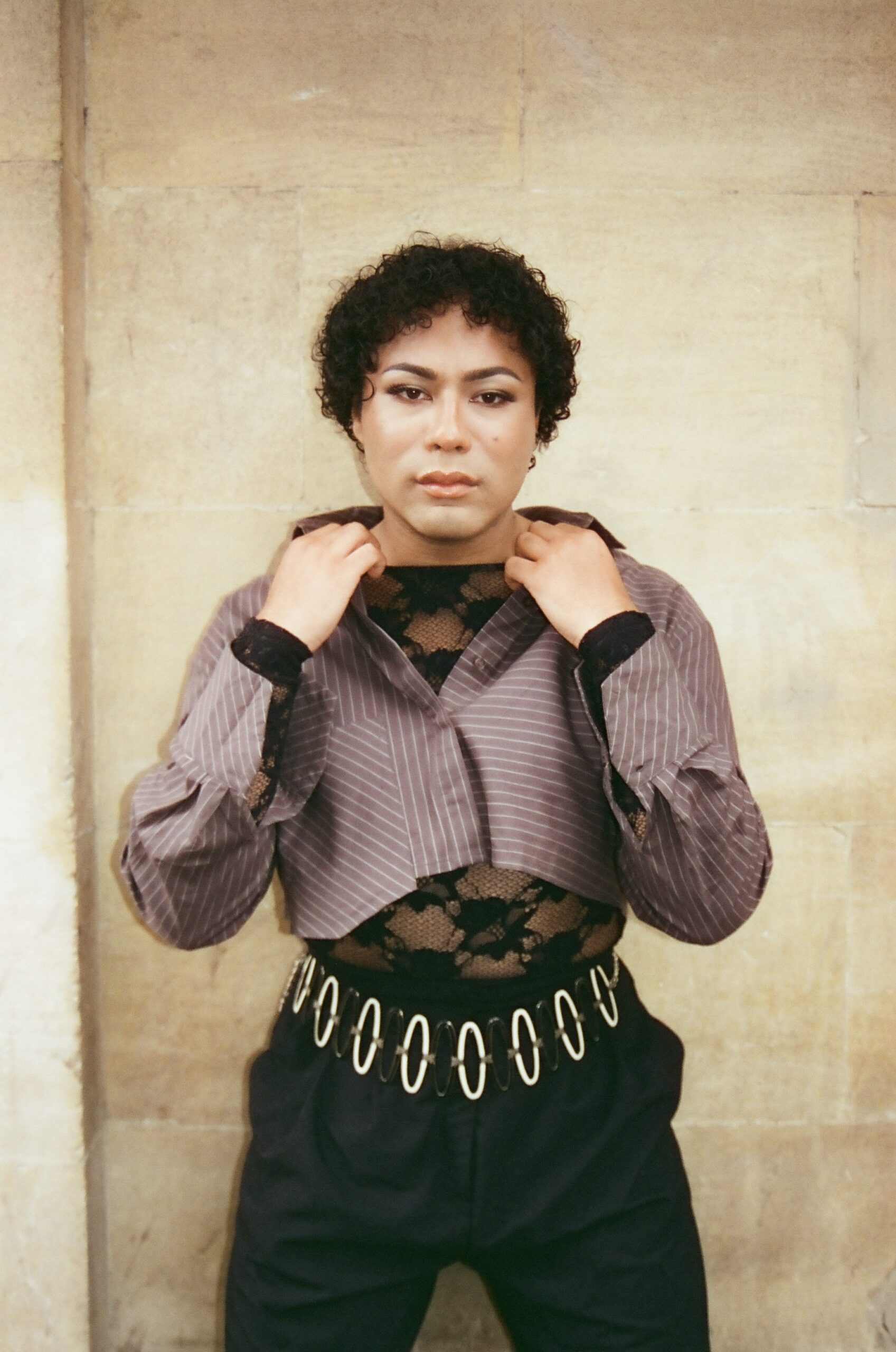
Image: Griff Townsend
AC: No, I loved it! Your answer made me think about when I went to see Overflow. I live in a smaller regional town but Overflow did come here and I went with my partner and we were some of the only visibly queer people there. A lot of the audience probably had season tickets to every single show at the theatre. We were laughing with our bellies when it was funny, and crying when it was sad, and much of the audience was pretty quiet.
Your work is incredibly witty and cutting, and I admire the unique way in which you turn your lived experiences, including painful ones, into art. Burgerz, for example, came from an experience of transphobic violence where someone threw food at you. With this in mind, could you speak about the significance of art as a form of resistance and using that painful lived experience and sort of reclaiming it in a way?
TA: Yeah, sure. Great question! I have two other interviews today, and I feel like I’ve started them in the wrong order. The next interview is like, Tell us five things you’ve got in your bag.
Firstly, I hate it when people don’t see other queers in the room, because it’s a different show for you when you see it with lots of queer people. But I personally get a thrill, because I think that was a choice I made when I started to make art. I’ve actually never said this out loud, and it’s a choice that could sound ugly if taken away from the nuance, but there’s a choice when you’re making work, like: do I want this to be seen by lots of people, or do I want to continue to show this just to my community? Or my basement bars, which is where I was performing.
How can my work also impact economic changes within the industry so that more trans people are being hired, more working class people are being hired, more people from the global majority?
And both choices are valid, right? Sometimes I look at my friends that are only performing in the basement, and I get really jealous, because there’s a freedom, there’s a queerness, there’s a punkness there.
But I, for whatever reason, made quite a conscious choice. I always tell artists this: it didn’t just magically happen that these shows were going around the world. You have to do certain things because of the dominant industry, and I made that choice because it’s the reason that I’m making art – and this is personal for all people – I don’t want to just speak to people that I’m seeing on my Hinge profile, on my Feeld profile, at the clubs, at the bars.
I feel like my calling, for my work, is to be able to use humour and other ways to bring in the mum, or the TERF – even the TERF, right? Like, I told my cast members when Overflow was coming in the UK, I said, “Look, anti-trans people are going to come to this, and I don’t think that’s a failure. I think that’s the success of the work.”
The stage still has loads of politics on it, of course, but in real life, an incident happens to you, and you are disempowered, right? A burger is thrown at you, you can’t fight back. But then using art and theatre and shows, you can recreate the dynamic so that you are empowered, right?
When I think about Burgerz, I end that show by me having the choice of what to do with the burger; by the audience having seen me empowered; by me bringing a person that looks like the person who attacked me and completely controlling them on stage. I’m in control, so I get to experience what that looks like through a different angle.
When I look at Overflow, the lead, Rosie, leaves the bathroom and trashes it, you know, she floods it! This space that is contested and spoken about for her, becomes one that she gets [to have power over].
And that could only really happen in art, you know? We could smash up the bathroom in real life, but then Rosie’s gonna probably be arrested at a higher rate because of who she is.
I think that’s why I go to art – it’s about alternative realities, but realities that are so similar to our current ones that people feel like they’re in it. These cis women can watch this show and be like, “There’s a version of this world where I am not as bothered by this person, and instead want to see her be empowered.
This article first appeared in Archer Magazine #20: the RESISTANCE issue. Get your copy here.
AC: I’m interested in something you’ve written previously about how gender non-conformity is more readily accepted within the realm of performance, but not as a permanent part of someone’s identity. You’ve also spoken of a friend distinguishing between being “proper trans” or “traditional trans” as opposed to a more expansive view of trans identity.
We even see this within the queer community, where some people focus on seeking legitimacy and validation from cis-het authorities, or from the State. Do you find that pinkwashing and rainbow capitalism plays a role in people wanting queer identity to be easily categorised and palatable?
TA: My first preface is that none of this is new, even though it feels new to us. The more you read zines and history and archive books it’s like, queer communities have been talking about this, and the outside gaze, for so long.
And there’s always been this tension between, you know, a queerness that is linked to a radical revolution and a queerness that wants to assimilate. And I find that really calming when I remember that, because sometimes I go, Fuck, what have we done? Like, we’re on the tail-end of a hyper-capitalist moment, all this Instagram stuff.
And then I pause and I go, There’s another version of this that happened. What did they do? How did they think about it?
I think it’s actually not unique to queerness – I think ‘pinkwashing’ is like a good name to use specifically when talking about a bad Pride campaign. But I’m more interested in how this stage of global recession and of late capitalism, after spending two years predominantly on our phones, has created a way in which all communities are feeling hyper individualistic.
I’ve noticed it so much in the last seven to eight months. I’m like, the tone has changed in which people feel connected to other people, period. People don’t feel responsible for their neighbours.
And how that looks in queerness is this idea of, my selling of myself is more important, even if it’s off someone else’s back. And that’s kind of what pinkwashing feels like to me: it feels like my liberation is more important than this person’s.
But I don’t think that is a trend that is, at least in the UK, unique to queer people. I think that we are in this current moment where people are so desperate – because of money and government and state inadequacy – that selfishness is rampant and it just manifests in different ways in different communities.
So, I could be like, “This is how we stop pinkwashing, this is how we stop capitalism,” but instead I feel like what centres me a bit more is asking, How do we promote a lack of selfishness among all of us?
Because those feel like symptoms of selfishness, right?
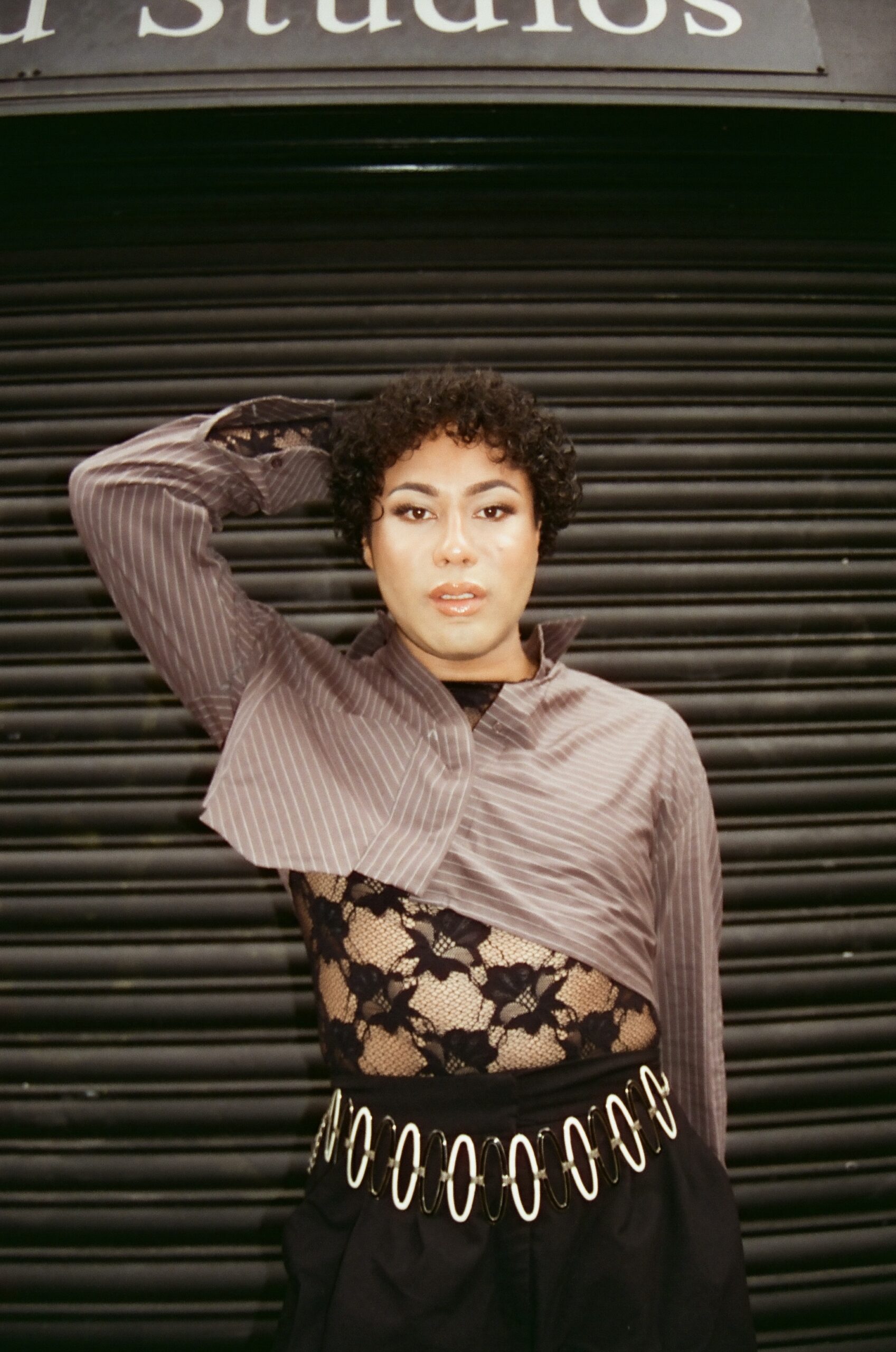
Image: Griff Townsend
AC: Yeah, I really like that, because selfishness is a very human thing, also a very animal thing, it’s something that we’re all prone to and it’s something that we can all recognise in ourselves and other people, and kind of work on collectively.
TA: Exactly, and I’m so glad you spoke it back like that because I guess that’s what I was trying to say. I feel like sometimes I like to look at those emotions, because I know there’s times when I’ve been selfish, and therefore I can empathise with the people around me.
And I think sometimes, especially in the queer community, we go into this real quickness of pointing one finger at loads of people. And I get it, because I’m frustrated. But, then I try and be like, Wait, in my better self, where can I find the commonality?
I’m like, Okay, you’re feeling desperate. You’re feeling selfish. I remember when I feel desperate and selfish, I don’t make my best choices. Therefore, just like I’ve had the capacity to grow, you do, too. Or maybe next week I might make a selfish choice, and I would want compassion.
AC: I love that because it’s really hopeful.
TA: Exactly. I think the old me would always feel a lack of hope, and a distrust in everyone. But I would rather try to trust people and be proven wrong, than go from a place of distrust.
I think that we are in this current moment where people are so desperate – because of money and government and state inadequacy – that selfishness is rampant and it just manifests in different ways in different communities.
AC: In the UK, the Cass Review was recently released, threatening the rights of trans kids. In Australia, we have a lot of transphobia in the news, including the weaponisation of de-transition narratives. Currently, we’re also seeing a huge amount of media bias in the reporting of the genocide in Palestine. How can we push back against mainstream media and misinformation?
TA: Oh my god – the other day I completely got misinformed on something, and I feel quite like media literate. What happens with my mum or my aunties, given that I check my sources? I was like, Damn, this is intense.
I think we’ve just really got to support independent media because more and more, we can’t trust the news. And I don’t need to tell you how hard it is to keep print and media going, but I think we really have to get behind it and support and promote it.
I also though think it links back to my last point about a hopefulness in connections, rather than shutting them down. I’m like, do any of these people know their neighbours? I genuinely think that it’s the smartest place to start: going back to this way of being responsible for the physical people around you, not just a community that fits with your complete ideals of life.
I genuinely think that’s a way to help misinformation – it makes them have to sit with someone who is getting different news, and it makes you have to sit with someone who is getting different news. And because you are geographically next to each other, you can’t run away.
I really think me pushing myself to be with my neighbours was a good way of understanding this particular algorithm I’m being fed, and the particular algorithm they’re being fed, and how to shift that. Then, come election time, or come debate time, or when I’m putting Palestine letters through my neighbours’ letterbox, we’re not strangers. We’re there for a conversation.
AC: I really like that. As someone who lives in a smaller town, I’m definitely going to try to take that away.
TA: Yeah, it reminds me that there’s work to be done, wherever you are. And it seems like small work, but we’re quite small people. And, again, it’s on your better days. There are days when I don’t say hi to anyone.
I actually moved away from London four years ago now, back to my hometown – it is a city, but it’s a city that’s a village. And everyone in London was like, “What are you doing that for?” I was like, “I want to feel more connected and I want to feel responsible.” To others, to myself – and where I moved back to, I could do that. And it was really scary at first, because it is nice to be in the queer utopia.
But I think it only made me feel more connected and helped me to find hope, which, ultimately, at this moment, is not a small task.
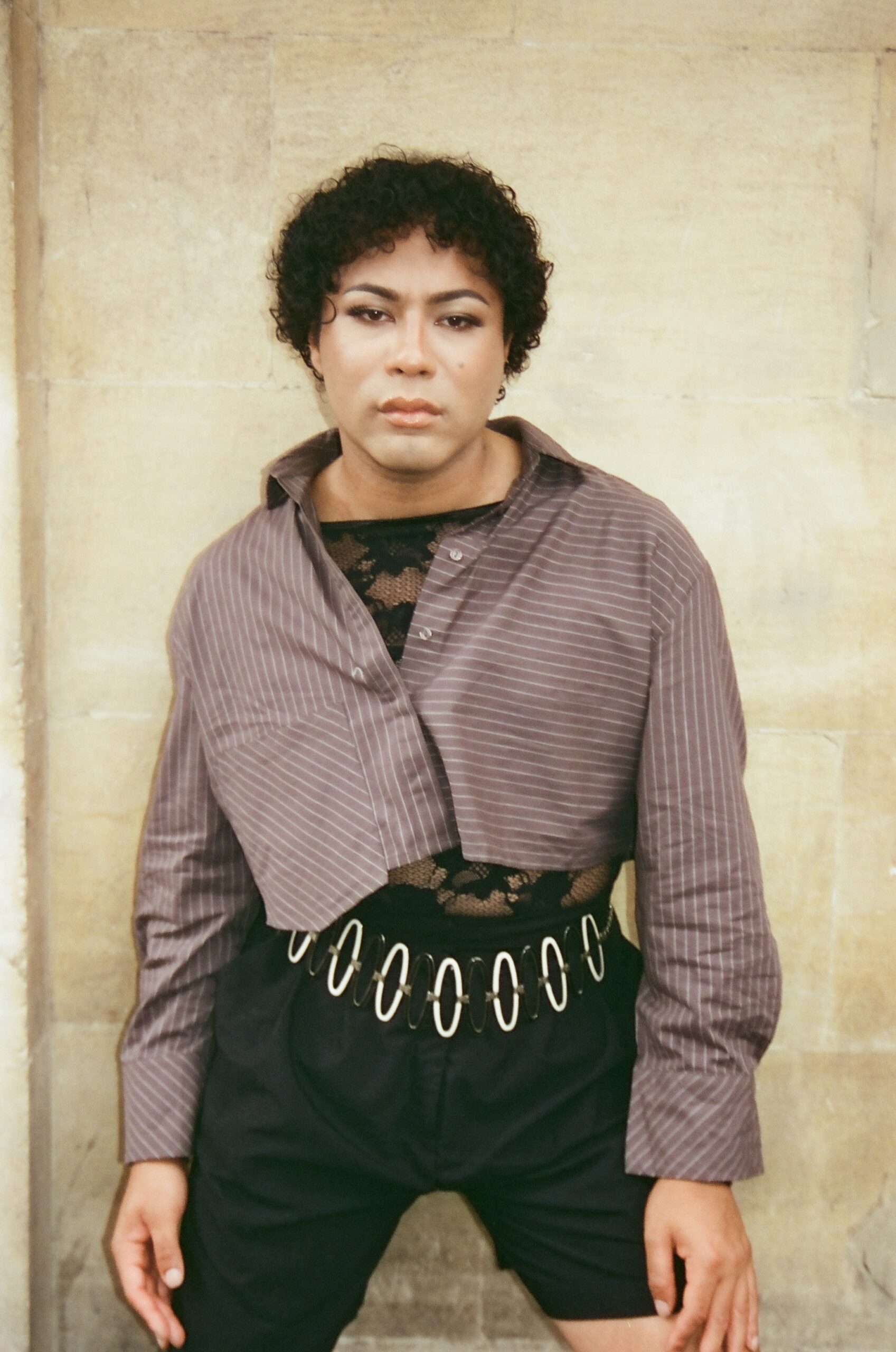
Image: Griff Townsend
AC: The UK is sometimes known colloquially as ‘TERF Island’, given the role of colonialism in spreading and enforcing gender essentialism globally, and several high-profile transphobes hailing from the UK. Do you find the UK uniquely transphobic/TERFy? If so, why do you think this is?
TA: Well, look, I can’t speak to other countries because I visit them as a performing artist, which comes with loads of privileges. I can say that the UK is incredibly transphobic and it makes sense that people call it ‘TERF Island’, because it does feel specific to England in some ways.
I would say England is a small country. Because of colonisation, it sometimes has this idea that it’s bigger than it is, but in terms of geographic and political space, it’s small. Lots of people know each other. And I think that helped in the speed-up of an anti-trans climate within the media and the law, because it doesn’t take long for everyone to be talking about something in the UK.
I also would say that the way in which it happened in the UK at specific political times, that it happened as a political decoy. The widest fear mongering around trans people in the last seven years, was at a time when they were about to be talking about Brexit.
It was an amazing distraction technique in an unstable time for the country, to create another version of instability and fear. And they did it so smartly. And, as you said, England is the heart of colonialism, which ultimately is the heart of order, control, boxes, binary. And so, it makes sense that there’s such a violent response.
England has a commitment to remaining and not rocking the boat in any way. And what transness does is confront all of that, saying, “Here’s the order, and I don’t want to stick to it.” And that terrifies the British way of control, which is all about order, and all about sticking to things.
Yeah, it’s tough. It’s a mess here. We’re at this place now where both mainstream political parties are anti-trans. I think it’s going to take some organising, some change of direction, for us to really get our autonomy back. But, again, I always look at history to calm me, and some of this doesn’t feel new.
What transness does is confront all of that, saying, ‘Here’s the order, and I don’t want to stick to it.’ And that terrifies the British way of control, which is all about order, and all about sticking to things.
AC: I recently saw Overflow performed by First Nations actress Thea Raveneau, who said this was one of the first times the character of Rosie was played by a trans woman of colour. Thea was spectacular in the role. What are your hopes and dreams for trans people of colour in particular?
TA: Oh, I wish I got to see her performance. I’ve heard amazing things and now I’m following her work avidly.
I think my hopes specifically for trans people of colour is a continuation of the work that has already been done, just with the support and resources and access that our white counterparts get.
I want a world where all people, but particularly those most marginalised, get to do what they want to do and be supported in it. It’s as simple as that, really.
And in my world, art and media and writing, I want more stories by us. I can’t wait for there to be bountiful opportunities where everyone is feeling like they can be every version of themselves and bring every version of themselves to the table.
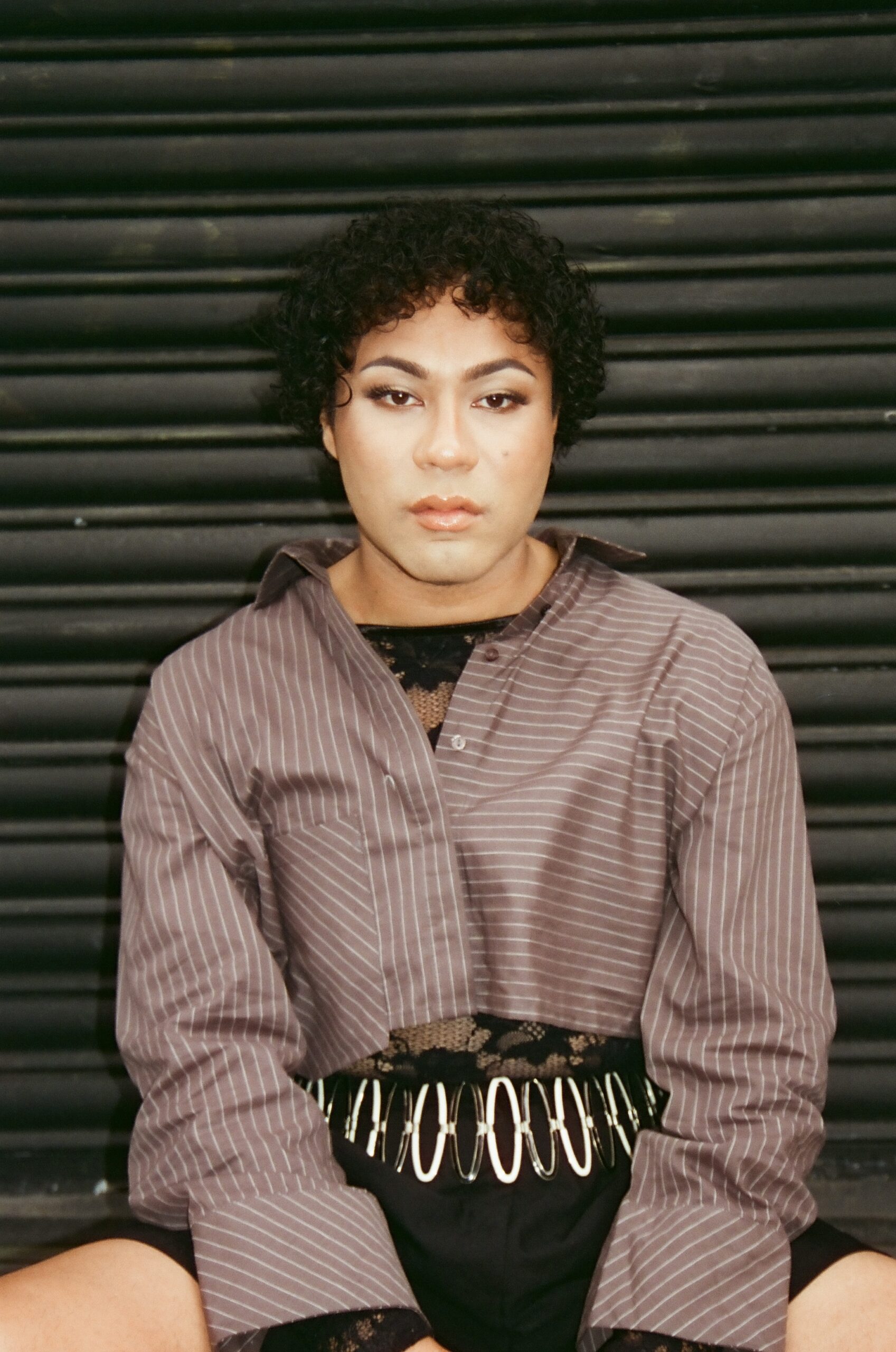
Image: Griff Townsend
AC: What are you working on at the moment? What’s next? What’s on your mind?
TA: I’ve been in a reflection period, because the last few years have been so busy. I wanted to pause and be like, What am I proud of? What am I not proud of? What do I want to do, to be an artist for another 10 years?
I want a world where all people, but particularly those most marginalised, get to do what they want to do and be supported in it. It’s as simple as that, really.
I think when I first started a lot of my work was in resistance to someone telling me, “You can’t be an artist!” And my work was like, “I can!” And now, if I’m honest, the privileges when you make a few successful shows – I’m not saying it’s not hard anymore – actually make it easier for me to be an artist than a lot of other artists.
That doesn’t mean you start congratulating yourself, but that does mean the tone is different, because you’re not fighting to get the stage, in the same way. I can take more risks.
So, I’m thinking a lot about violence, about who gets to inflict violence, in the media and art and stage. I’m looking a lot at revenge. I don’t mean theoretical violence. I mean real violence. I’ve kind of gone down like a horror and gore route, and it feels silly and playful because horror is playful.
There’s something so interesting that’s happening: horror is a well-established genre and then when you pitch something that has been done so many times – we’ve seen so many people killed on screen or stage – but you invert who is doing the killing, and everyone suddenly freaks out! Like, “Oh, what does this mean? Are we inciting violence? Are we promoting violence?” It’s so interesting.
Why don’t we ask all the traditional horror movies that same thing? So, I’m looking at that genre. I’m finding it really fun. It feels like a great way to continue my desire to bring in trans stories. I feel like I’ve done my section of, This is the stuff happening to us. And now I’m interested in my section of, What can we do to you?
AC: I’ve reached the end of my written questions, but I’ve got one bonus question for you if you’ll have it? Can you give me a little teaser of one thing that is in your bag?!
TA: Wow, you’re getting me prepared for this next interview I’m going to have! Okay, everywhere I go, I’ve got a Fenty brown lip gloss, because it doesn’t matter where I’m going to be, I have to know that I can gloss up my lip at any time.






I just loved this