


Transfeminine in Singapore: A love-hate relationship with my home country
By: Xifur Chua
Advertisement

Advertisement
I’m trying my best to leave Singapore. Let me explain why.
Upon turning 18, most Singaporeans who were assigned male at birth (AMAB) go through military service. As part of this process, we’re forced to keep our hair short.
For most in Singapore’s military, this is just one of many necessary evils, paling in comparison to a meagre salary and dirty living conditions.
For me, it meant that the months I’d spent growing out my hair post-graduation, exploring my gender identity outside the confines of school dress codes, were at an end. I can still remember running my hands down the distinct bareness of my shaven scalp, how my mother told me I looked better that way, which is how I knew she’d hated my hair all along.
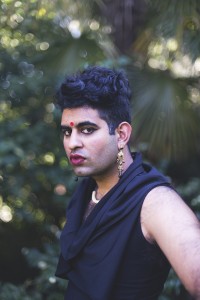
Image by: Kym Ellis
Some trans girls in Singapore get out of mandatory enlistment by coming out during pre-enlistment medical reviews. It’s difficult to piece together disjointed messages in anonymous group chats, but suffice to say, the process can be challenging. Similarly, gay men can get out of strenuous vocations by declaring their sexualities to the government.
I didn’t tell the government anything about my queerness. If I put it on the record, it would no longer be my secret to keep. Instead, I served for two years in the armed forces. In the United States, they say that makes me a veteran.
Like other veterans, I can be called back to service. As an Operationally Ready National Serviceman, I may have to return to military camps for reservist training until I’m 40 years old. Reservist training only aims to refresh my memory of things I learned as a soldier, and as such, should not be particularly difficult. I wish the training was all it entailed.
Since exiting the military, I’ve become more convinced of my transness than ever before.
During my first winter studying abroad, I let my hair grow without restraint. As copper leaves gilded the pavements, my own hair swaddled me with down. I didn’t realise happiness could come to me so easily, that the feathering at my neck when I tilt my head could string together such frissons of bliss.
If I go back for reservist training, I will have to cut my hair. I don’t even want to imagine living like that.
To evade reservist training, I’ll have to be on oestrogen when I see the doctor for a medical review. I’ll need documentation proving that I’ve been on hormones for a year.
If it comes down to it, this is the route I will likely take. It’s not as if I’ve never considered hormone therapy for myself, but it angers me that this might be something I’m forced into for what feels much like survival – that the fate of my body will be out of my hands.
I gave Singapore two years of my life. Was that not enough?
I know that as far as gender goes, I am an anomaly. A part of me remains grateful that those who embrace medical transition are spared service. But Singapore is not generally welcoming to queer people of any kind.
It was only in 2023 that Section 377A was repealed, fully decriminalising sex between men. When I walk down the street in makeup, I sometimes think people are taking pictures of me. And of course, in the military, queerphobia was unavoidable. Even when a gay man I knew in my platoon broke down in tears, I thought I was too smart to be hurt if it happened to me.
I shouldn’t love Singapore. I’ve known this for a very long time. Yet I can’t help but love her still.
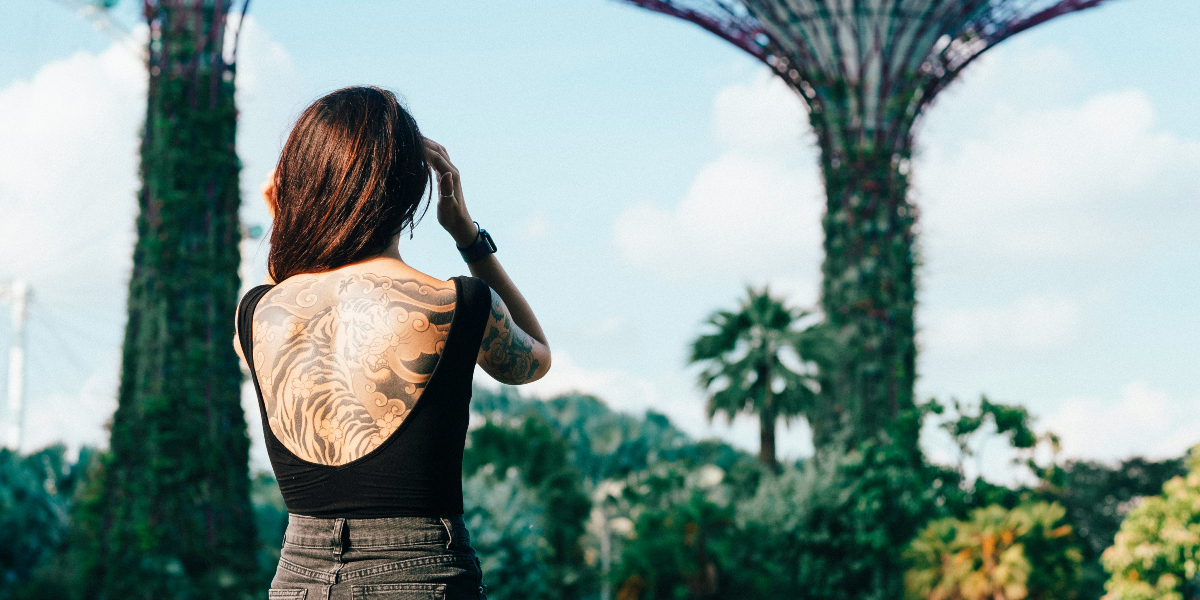
Why do I yearn to feel Singlish on my tongue, the salty smack of it, when it’s a language I harnessed in the thick of the army? Even out here with all the ang mohs (white people), I share my origin. I tattoo her name on my back like a brand.
This essay was supposed to discuss the difficulties of being a trans Singaporean when all my ideas of transness are linked to the West. When I was younger, I told myself that I’d rather give up my culture than my queerness, that there was nothing worse than wanting someone who didn’t want me back.
But is Singaporean culture not also other trans Singaporeans? The transfemmes I’ve spoken to, gotten advice from online? They told me what jobs were good to apply to. They told me where to cut my hair. I follow so many of them on Instagram.
The truth is: the story of Singapore (or at least, the one told to us) is also the story of transition. It’s the story of Western influence, Western colonisation and change under that touch.
It’s going from third world to first against all odds, morphing yourself into a vision of yourself, into the person you want to be. It’s having a rich past and history – one that is predominantly transplanted, because you are also a nation of immigrants. Which is to say that the story of Singapore is the one I sing when I call insurance to talk about my electrolysis, when I see how feminine clothes frame me in the mirror, when I try to network my way to an internship and work visa abroad.
Singapore is a brutish bitch, and I hate her for it. She’s also everything I’ve ever wanted to become.
When we hate Singapore, that’s also a way in which we love her.
In school, I learned Alfian Sa’at’s poem ‘Singapore You Are Not My Country’, alongside other pieces of Singaporean literature. Sonny Liew’s The Art of Charlie Chan Hock Chye, said to have the potential to “undermine the authority of legitimacy of the government”, won the Singapore Literature Prize, which means hating Singapore is seared into and legitimised in her history.
Even on forums like Reddit and HardwareZone, our countrymen call each other sinkies, as if we are all going down the drain.
Hating Singapore is so common, it has become its own art form. It has become a culture, a tradition.
All that and more is why I love you, Singapore. I love you because I gave years of my life to you – like an ex, like a lover – and I know I will give many more. I love you because I’ve always belonged to you, because my great-grandparents fucked in your squat kampungs (villages) like dogs who wouldn’t live another day.
I’ve memorised the stories you tell yourself in the night, and I’ve grown old enough to know which are false and which are true. I love you because I get to decide who you are. You belong to me just as much as anyone else, and that means I get to tell and retell your story.
I am your not-son, not-daughter, one of many they/she/hes to dot your waters, and I love you because I will no longer be ignored.
So, even if I no longer traipse around void decks with my T-shirt and shorts and ah gua (faggy) hair, with these words, I hope you will still think of me.





Heya,
Could I get in touch with the author directly please? fellow born in singaporean trans femme, but moved to malaysia and have been dealing with military fuckies and being told i cant give up my citizenship issues. would love to speak directly to author and ask some in depth questions about the enrolment process singapore uses, this is only the 2nd post ive found about it, the first one was from an ally that basically said “they use DSM-1”. feel free to reach out via my email. thank you so much!!