

Queer emptiness: On belonging and the false promise of ‘community’
By: Ceridwen Millington
Content warning: This article discusses mental health and biphobia, and includes brief mentions of substance use and physical violence.
It took until I was 29 to really get involved in queer community.
I remember an old housemate – two years earlier and pre-pandemic – telling me that I’d probably find belonging in my next house. They seemed to see that I’d have a route into queer community – something that I didn’t know I needed. Back then, I was stuck presenting as a man and uncomfortably out as bi.
But, above all else, I’ve always been – and still very much am – restlessly yearning to find people who really need me. This yearning is painful, and it feels like failure.
Community had always been something that seemed impossible for me to achieve.
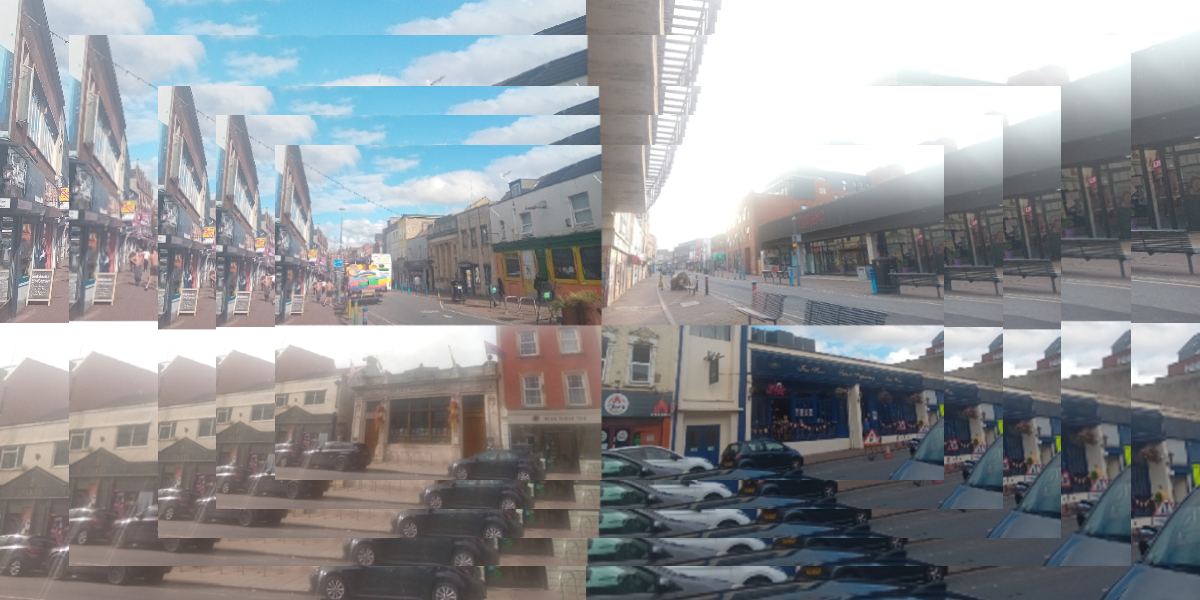
I’m a trans woman in my thirties, living in the cosmopolitan, creative English city of Bristol. Few other cities are held up as such great places in which to be queer. However, I’ve barely had time to get a handle on what’s on offer. I’ve been haunted by my past.
My friendship circles as a teen were within an environment of machismo, where kicks and slaps were meted out – apparently playfully – to those who were less likely to offer them back. The trade-off for an exciting friendship group was flinching at any possibility of contact, given that it would likely devolve into violence.
My early adulthood saw my confidence reduced to nothing. I’d spent my second and third years at university mostly alone. The subsequent return to living with my parents saw me, feeling ruined, go into multiple call centre jobs. They were just about the only job I felt that I could go for – and yet my decimated confidence, reflected in a constant throat-clenching anxiety, made their high-pressure nature a living nightmare.
I struggled with the results of my first tentative ‘coming out’ as bi. Experiences followed where I felt disembodied, disempowered, and was ultimately left traumatised. I have spent most of my wider life feeling alone and in a discomfiting skin.
From the ages 18 to 26, I basically considered myself already dead and unable to belong. Then, a friend encouraged me to move cities, and the subsequent luck of meeting the right people there, allowed the possibility of change.
While my feelings of loneliness didn’t dissipate entirely, I found friends who made life open up. As the pandemic’s restrictions started to lift, these friends introduced me to queer life.
Those friendships, the ones who started it all, revived my sense of self. I was revealed as an interesting creative, not the drunken, hopeless failure that I’d felt I’d become. It’s not that life instantly became something worthwhile – I still constantly question why I’m here – but it seemed that I was living. For better or worse, I was part of something.
Now at the age of 33, however, many of the old doubts have revived: a sense of being adrift, regardless of being surrounded by people. I know so many faces now, and can easily have conversations with a range of lovely individuals. But I also feel I could not see most of them for years and nothing would really change. Closer friendships sometimes go a week or two without real conversation; more distant ones sometimes feel just like connections with comrades.
People in my community have done wonderful things for me, helping me through the apparent implosion of my life.
Life has been exhausting and brutal over the past few years, as my will to self-destruction has finally borne fruit. Debt, friendship loss, isolation and homelessness have been among the many issues that have come to the fore. People have offered me sofas to sleep on, sent money without expectation of return, and shared their company again and again through mental health crises. I am tremendously lucky for this support.
Many of these connections are through informal community groups, which I’ve seen serve a vital purpose in giving friendship and support that people don’t find elsewhere. Life would feel far more isolating without their leaders attempting to build bridges.
But such community can’t do everything for you, depending on the baggage that you might carry. My baggage isn’t just previous community conflicts – it’s foundational childhood wounds, the losses that I’ve suffered in years since, and the new needs and desires which crop up constantly. A group of people who I might just see monthly can’t give me the love that I need, or fill the emptiness that nags at me through every day.
Community groups have a tendency to become rigid, too, given that they are microcosms of the wider world. A queer group, of course, is naturally positioned as being very different to mainstream society: more inclusive, caring and appropriately skeptical of norms. However, it’s still hard for them to avoid the falsehoods that thread through much of how we live.
Philosophy has important insight into the way that community operates, particularly the work of Guy Debord. His key theory is that of the “spectacle”, which suggests that people relate to each other through false – or spectacular – means. The truth becomes lost behind something that looks like reality, and is perhaps superficially more comforting.
The spectacular fiction of community is that it provides all its participants might need. For queer people, the hope for community can often be enormous. Wider society can ostracise, be cruel, and lack real compassion. It’s easy to appreciate someone’s plight, but more challenging to really understand the web of their intersections. Finding the right people, then, can seem to offer an answer to loneliness.
But how many people are hiding their realities? The realities of still feeling othered, dealing with debt, struggling with complex mental health issues?
How many people feel, on some level, that their needs are hidden beneath the mask of group cohesion?
Groups could do things differently for their members. They could provide joy, while asking what people need to express their own joy. They could provide joy while giving room for people to heal that which grieves them. Groups could change their goals or scope, and remind their members that no society – micro or macro – is forever and for all.
Perhaps, there’s a benefit in looking again at the emptiness that we try to fill in our lives.
Emptiness has, to me, always begged to be filled by one thing. A community I can rely on for every problem, or a friend who will always be present. But how can one thing satisfy when there’s a whole life to live after finding it? And if one thing can satisfy, then surely it has to remain in the impossible and, inevitably, boring position of never changing?
Perhaps we can all reject the idea of trying to fill emptiness, even though it’s a tempting way to understand our experiences. It has deep roots, and they go further than just discomfiting feelings. Emptiness is a key part of Western culture, and holds together some of psychology and philosophy’s most important ideas. These are things that I’ve turned to in my own lonely desperation.
Emptiness as a concept has had widespread influence as the result of Jacques Lacan, who sits alongside Freud at the foundation of psychoanalysis: a branch of psychology interested in symbols, analogy, and above all, desire. Lacan’s understanding of desire is rooted in the pains of loss and the unattainable.
Desire, according to Lacan, comes from a need to fill the “lack” that is at the core of each human being. This feels like it has emotional truth, but it puts pain at the heart of existence itself. The idea of the mind as a desperate battleground may seem plausible to any who have suffered pain. Turning such pain into an academic argument, however, feels less useful for those who need a better world.
Thankfully, such theories are not the final academic word on the drivers of human life. Others have challenged these institutional views, particularly thinkers from marginalised backgrounds, genders and sexualities.
Feminist philosopher Luce Irigaray’s response resists seeing the gap in ourselves as a void or a “lack”. She argues that at our core is something much more positive: a space for flux, the capacity for constant change. We do not lack, but live with potential. As she writes in This Sex Which Is Not One, “You are moving. You never stay still.” She celebrates the chaotic and unknown.
A similar argument is also put forward by queer theorist Lee Edelman. His most famous book, No Future: Queer Theory and the Death Drive, focuses on the need to seek at all. The book argues vehemently against the delaying of happiness until some perfect future result. It is grounded in rejecting what Edelman considers to be the false, endlessly deferred promise held by reproduction and heteronormative life paths.
There is an argument to be made that he rejects the future a little too strongly, the force of it risking his ideas being seen as nihilistic. It’s a risk that, in my opinion, is better than rejecting the excitement of the present.
My feelings about community have doubtlessly been influenced by my fear of being in the present. I’ve always been scared of the emptiness roiling around inside of me. I am still affected by the memory of an old friend – with whom I no longer speak – and my fearful rejection of their joy at what we had.
I balked then, as I always have, at the pressure of joy – already foreseeing how I was going to destroy everything. Back then, I wasn’t aware of the theories of Lacan, let alone the bold visions of those who countered him. What felt apparent was that emptiness always threatened to return. Faced with what I saw as an unceasing battle, I poured my energies into fighting the future rather than being present with a person I’ve now lost.
I didn’t recognise that change comes whether you’re longing for it or not. The only real meaning is in change, and my only failures – which have only ever been temporary – came from not embracing that.
I’ve now found the potential to forgive myself for my failures to connect with others, and my desperation to hold onto those who I feel I’ll be empty without. The dissatisfaction I’m left with speaks not of failure; it is a call to seek the possibility of more.
Ceridwen Millington (she / her) is a culture journalist based in England. She writes about video games, film, and literature, always aiming to highlight what they say about the ways in which we live. You can see some of her thoughts about culture and life on Instagram at @cerishorrorcupboard