


Leatherdykes in Scotland: Leather and its living, lesbian archives
By: Chelsea Daniel

Advertisement

Advertisement
In queer history, leatherdykes are often discussed within the context of pre-Stonewall butch-femme bar culture. But that’s only part of the story.
Since the 1950s, the leather queer subculture has existed in most cities around the world. Leather queers are represented across many communities and identities, from men who ride (and appreciate) motorbikes, to BDSM butches and more.
The Satyrs Motorcycle Club was formed in the 1950s, and to this day, remains one of the oldest continuously operating gay organisations in the USA. In so-called Australia, leather competitions, meet-ups and events are held regularly in Naarm. On Kaurna Country, Adelaide Leather and Fetish is still going strong a decade after its formation. The 2025 leather dom-com film Pillion starring Alexander Skårsgard was celebrated (albeit also criticised) by audiences across the globe.
Leather culture is one steeped in history – it is also a culture that continues to live, breathe and progress.
It’s for these reasons that Glasgow Leatherdykes aren’t just a social group, but a moving archive. This trans-led group exists as a social club: hosting events and workshops that carve out a lesbian-focused space to teach, practice and evolve leather culture.
Image: Courtesy of Glasglow Leatherdykes
When I first moved to Glasgow, I was hunting for dyke events that had variety, plus a connection to community organising. I was coming from Naarm, where I was a bit spoilt for choice. I also wanted to make friends in my new city.
When I arrived at my first Wednesday leatherdyke pub night, I found a community that was loud in its approach to sexuality, and rooted in a reverence for the subculture’s past.
After being in Glasgow for almost a year now, I’ve made many friends who are leatherdykes.
When asked how Glasglow Leatherdykes came about, Yvette, one of the group’s organisers, simply told me, “We were all friends anyway.”
Yvette spoke of her desire to start a leather night in Glasgow that was lesbian/sapphic-specific, inspired by groups like London Leatherdykes.
Yvette, along with the other people who make up the Glasgow Leatherdykes team, were not new to queer community organising in Scotland. However, they wanted a group that was intended to be social first.
Leather culture is one steeped in history – it is also a culture that continues to live, breathe and progress.
I met Yvette and another organiser, Rowan, at The Good Coffee Cartel in Glasgow’s Southside – a cafe plastered with posters for community organising and community-focused events. Southside, like most areas experiencing gentrification, is often joked about as the place where you find lesbians in Glasgow.
Despite Yvette and Rowan being part of Glasgow Leatherdykes’s organising team, the group is not hierarchical. They’re also not in competition with other groups to be the Glasgow queer night.
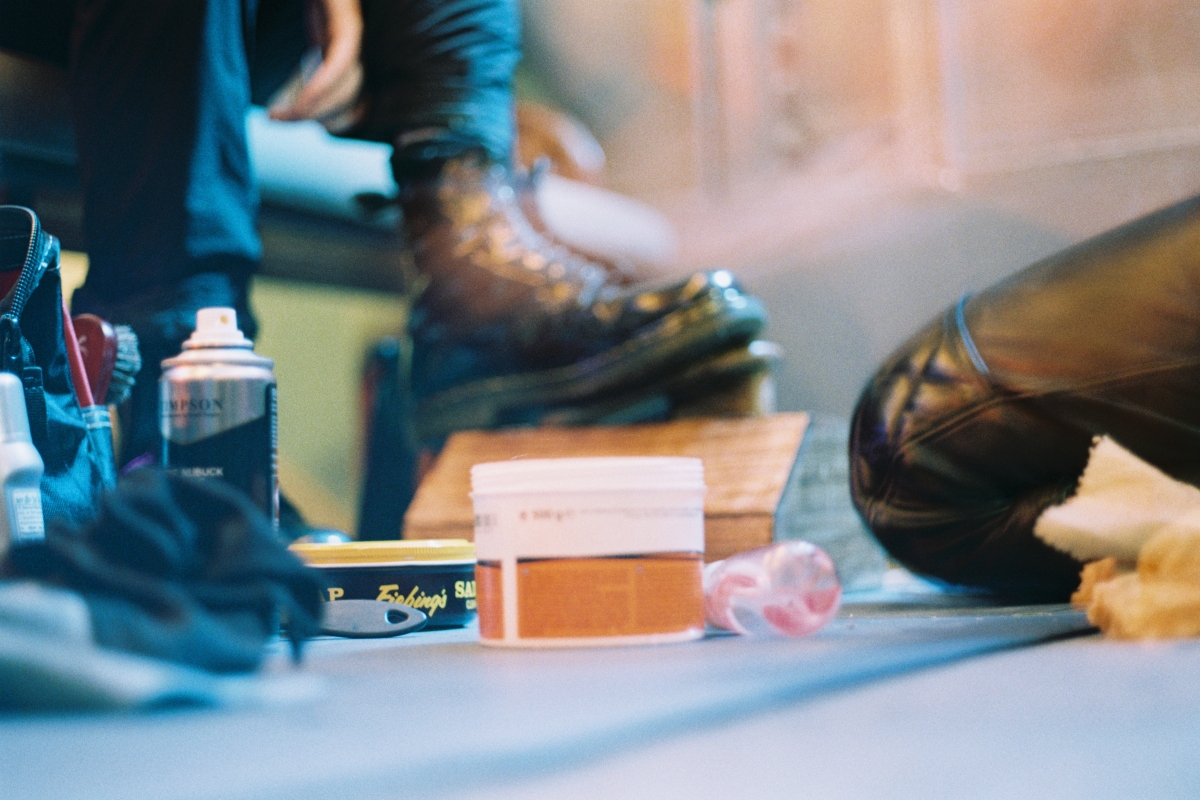
“If people want a different leather event, we’re happy to help. We’re not the catch-all,” Yvette tells me. Yvette works regularly with Leathermen Scotland, offering bootblacking to the Leathermen – or “the boys”, as Yvette refers to them.
There is a lot about Glasgow Leatherdykes that can inspire queer groups around the world – particularly their non-hierarchical, skill-sharing and low-cost approach to creating queer spaces. A lot of this is possible because of the nature of Glasgow itself.
The bar that hosts the social nights is in the centre of Glasgow, and was chosen because it was a bar the group of friends that initiated the Leatherdykes already went to. The bar, usually closed on Wednesdays, has begun opening on the first Wednesday of every month just for the Leatherdyke social.
“In London, you pay to breathe,” Yvette tells me.
“In Glasgow, you can afford to be a lot more chill about it,” Rowan adds.
Yvette lets me know that many bars, including queer bar Adrian’s, offer their spaces up in-kind for the Leatherdykes to host workshops. This means that their events can remain free for participants.
The team can publish and distribute zines because of Glaswegian small presses and the thriving zine culture, thanks to places like Good Press and Glasgow Zine Library. These places are super accessible via public transport, and are hard to miss even for people new to the city like I was.
But most of the group’s press is word of mouth, relying heavily on the diverse community that surrounds it.
“We’re not all from Glasgow, but that is also very Glasgow,” says Yvette.
View this post on Instagram
Rowan is the most involved with the Leatherdyke zines and essays. They see it as an important part of knowledge-sharing for younger people who want to explore this culture in a safe environment.
Rowan’s zine contributions started because they read Yvette’s first Leatherdyke manifesto, “hated it”, and wanted to respond. The two wanted to include zines in the group as a response to the gatekeeping of print and academic journals.
A lot of queer archiving is in conversation with zine culture.
“You can find [queer archiving] work on places like The Internet Archive, but the zine becomes a tool to have this conversation [in a way] that’s accessible,” says Rowan.
Image: Courtesy of Glasglow Leatherdykes
The group believes in constant discussion and disagreement, believing that this can only benefit the leatherdyke community.
“We have enough shared ground,” Yvette tells me.
This approach in particular drew me to the group. The skill-sharing and writing aspects of the community allow me to face and share criticism, knowing that everyone has each other’s best interest at heart.
“Leather[dyke] culture really came out of the sex wars, on the more positive side of sex work and kink exploration,” Rowan tells me while we discuss the history and misconceptions of leatherdyke culture.
They talk to me about Gayle S. Rubin, a groundbreaking queer academic, who was one of the first lesbians to judge a leather show in San Francisco. Rubin is a cultural anthropologist, who used a lesbian perspective to pioneer a pro-sex worker and butch approach to the 1970s sex wars. She was critical of the anti-pornography feminists during the heated debate.
In her 1984 essay ‘Thinking Sex: Notes for a Radical Theory of the Politics of Sexuality’, Rubins argues that when we make rules regarding sex, we can easily lean into right-wing ideology.
“The right wing opposes pornography and has already adopted elements of feminist anti-porn rhetoric. The anti-S/M discourse developed in the women’s movement could easily become a vehicle for a moral witch hunt,” Rubin writes.
When I ask Yvette and Rowan why they think this aspect of leatherdyke history isn’t as known in current queer discourse, the two share a look.
“It’s just what gets written, right?” Yvette says. “I think a lot of the [history] that happened gets subdued into other things, like kink scenes, rather than lesbian-specific scenes,” she adds.
“Yeah, like Susan Stryker right?” Rowan replies. Susan Stryker was an advisor for the 1995 film BloodSisters: Leather, Dykes and Sadomasochism, which is a great watch if you want to learn more about the San Francisco leatherdyke scene.
“Half of her essays are written in the leather San Francisco scene. But people only talk about how she [helped create and shape] trans studies. She got back into the academy after meeting Gayle Rubin at a leather social,” they add.
“You know their names, but you won’t go, ‘that’s a leatherdyke’. It is an erasure of this long history and culture that is behind all of the big names,” Rowan tells me.
Finishing our coffees, I ask Yvette and Rowan for their recommended readings on leatherdyke history.
Yvette recommends earlier articles from the leather and BDSM magazine Drummer, as well as the prominent text Coming to Power: Writings and Graphics on Lesbian S/M, published in 1981 by queer feminist BDSM organisation Samois.
Yvette apologises for how hard it is to find these texts, but tells me that “you can find them on the Internet Archive.”
Rowan also recommends the work of Jules Joanna Gleeson – specifically Transgender Marxism, co-edited with Elle O’Rourke – which they found crucial in shaping their approach to creating the bar nights.
“It is essential to create these sorts of spaces,” Rowan tells me, reflecting on the place leatherdykes have in queer and trans communities.
“We actually want to provide a space for gender that just works differently. We want to actually be radical.”



How do I get a full run of your magazines for the Carter/Johnson Library?