


Polybaiting in media: The fear of queer possibilities
By: Alecander Seiler

Advertisement
Advertisement

Advertisement
It always starts the same way: a look held just a little too long. You’re sitting on the couch watching a movie at 1am, wondering if these characters are actually about to kiss.
Instead, one of them ends up with a safe, heterosexual love interest, and you’re left with nothing but vibes and disappointment.
Look, I don’t need every movie to turn into a polyamorous group hug. But I do need creators to stop pretending like we’re not all seeing what we’re seeing. The bisexual and polyamorous possibilities are often right there! Yet, again and again, we’re expected to settle for something more… palatable. Safer. Straighter.
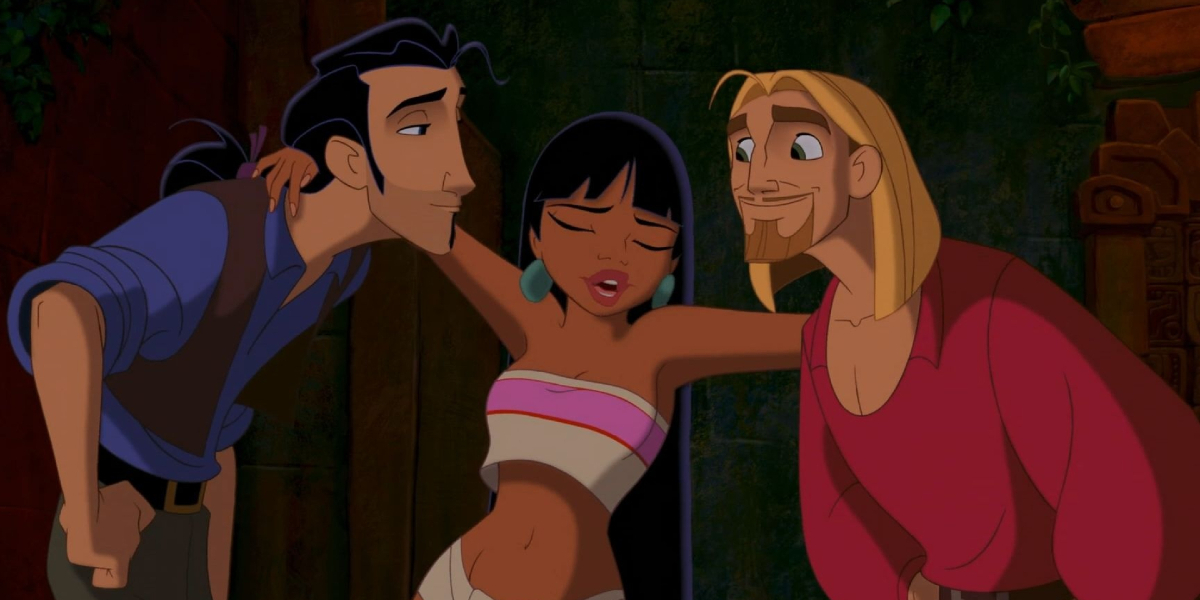
Image credit: The Road to El Dorado (2000), DreamWorks
The Road to El Dorado is a fever dream of sexual tension no one ever officially acknowledged (except the brave few online). Miguel and Tulio, the charismatic conmen at the heart of the film, are introduced mid-scam, fighting like an old married couple and finishing each other’s sentences with a rhythm that screams, we’ve been doing this for years. Together, they form a chaotic, codependent unit.
Enter a young woman named Chel, who is introduced with an attitude that immediately disrupts the boys’ flow. The chemistry is hot. But it’s also the first time the emotional rift between Miguel and Tulio becomes visible. Tulio wants to focus on the scam (and Chel). Miguel wants to explore the city with Tulio.
Then comes the ‘breakup’. Miguel and Tulio have a literal falling out, complete with passive-aggressive bickering, accusations of betrayal, and Miguel choosing to leave and stay in El Dorado while Tulio plans their escape with Chel.
At this point, the love triangle has fully formed, except the tension isn’t only between Miguel and Chel… it’s between Miguel and Tulio, too. And yet the narrative frames it all as friendship fallout, not romantic heartbreak.
In the film’s climax, Miguel changes his mind about leaving. He returns to help Tulio and Chel escape, and all three ride off together laughing and smiling like they didn’t just go through a messy emotional divorce.
If El Dorado teased us with a golden platter of queer-coded possibility, Scooby-Doo handed us an entire van full of it. It was about a color-coded found family solving mysteries and exuding decades of queer energy.
First, there’s the obvious Fred and Daphne setup: classic, All-American prom king and queen energy. But then you throw in Velma, who in some versions has crushingly obvious chemistry with Daphne. Add in the canon of Mystery Incorporated, where Velma and Shaggy briefly date. Oh, and Fred? He’s too busy obsessing over his “traps” to realise he’s simultaneously in a situationship with Daphne and emotionally codependent with Shaggy.
You start to see that the math isn’t mathing unless they’re all dating each other. Why not just admit that? They live, travel and share a dog together. They’ve been in a committed five-person relationship for 50 years. If there’s any group of characters that could believably fall into a queer, polyamorous mystery-solving household, it’s the damn Scooby gang.
It’s not about needing explicit representation; it’s about refusing to pretend the decades of tension don’t exist. It’s about calling out the absurdity of characters being written like they’re in love but never letting them be.
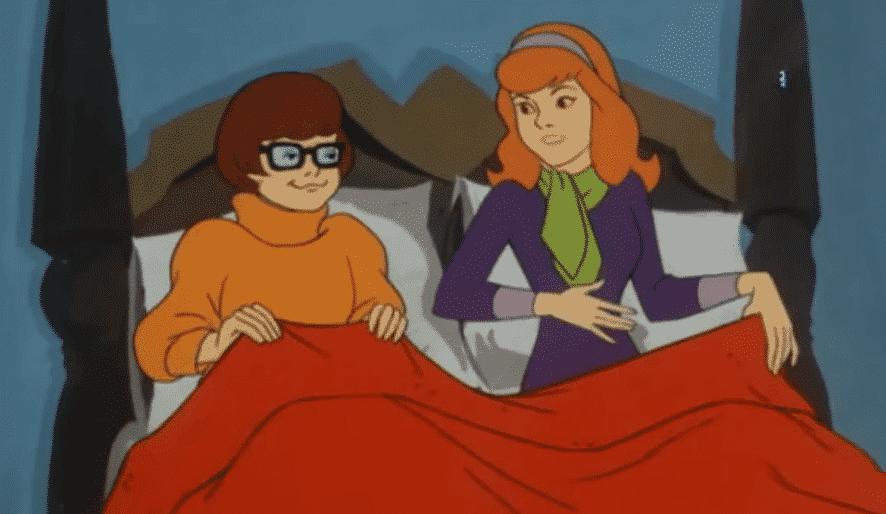
Image credit: Hanna-Barbera Cartoons, Inc. / Warner Bros. Animation, 1970
Cartoons of previous decades gave us playful innuendos. And now, in the 2020s, you’d think we’d finally get the story we’ve been waiting for.
Enter Challengers, a film that looked like it was about to break the mold, until it didn’t. The movie teased us with possibility, then backed off.
In Challengers, male tennis players Art and Patrick share electric tension from the start. Their dynamic goes beyond friendship, yet when Tashi enters, the story centres her, sidelining the possibility of queerness and polyamory. Tashi’s flirtations with Patrick, combined with her close, supportive bond with Art, sets up an intriguing dynamic between the three. It feels like the film could have explored the messy, complicated emotions that come with love triangles.
The ending feels like a betrayal, especially after the film’s many moments of teasing a polyamorous dynamic. Instead of allowing Art and Patrick to explore their feelings for each other, the movie prioritises a heteronormative love story between Art and Tashi, while Patrick’s emotions are left to hang in the air, unresolved.
The chemistry between Art and Patrick was never given the chance to be fully realised, and Tashi’s role in the narrative was reduced to that of a heterosexual love interest.
The opportunity to push boundaries – to explore what queer and polyamorous relationships could look like in mainstream media – was squandered.
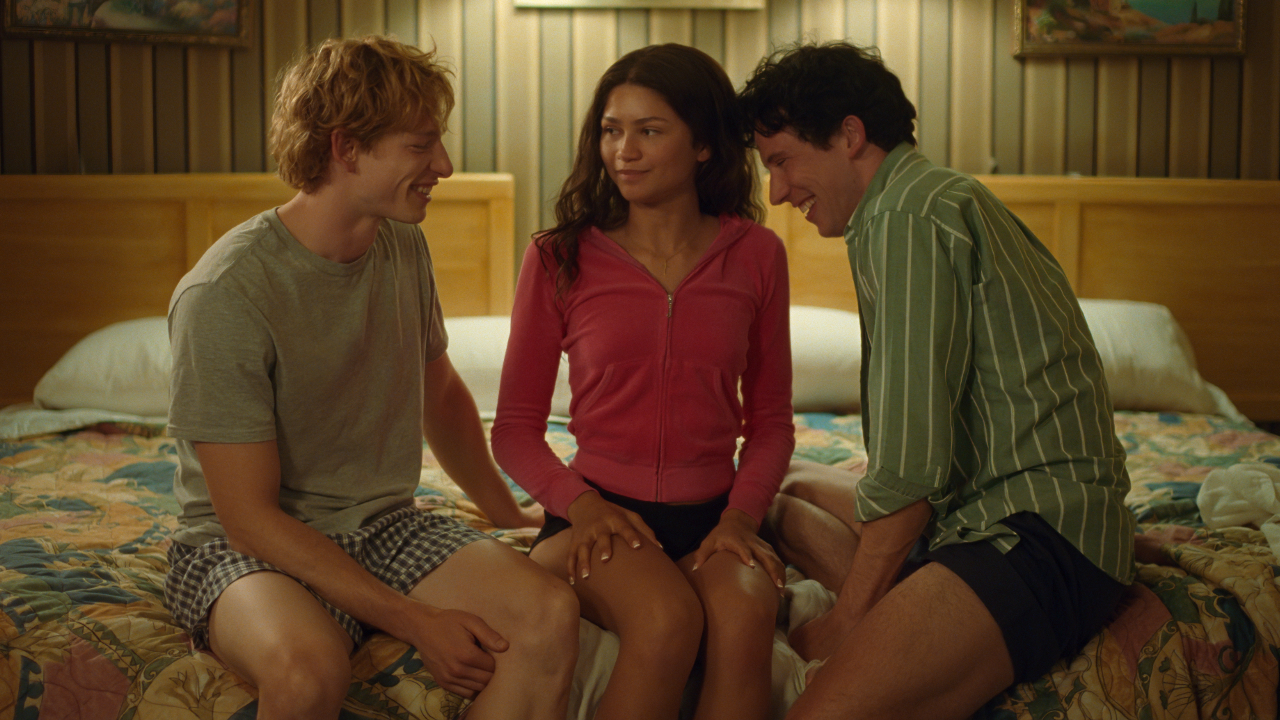
Image credit: Warner Bros. Pictures, 2024
So, here we are, once again, at the end of another round of queerbaiting and missed opportunities. It’s frustrating, isn’t it? These stories, which could easily explore the fullness of human desire and love in all its messy, complex forms, consistently choose to play it safe.
Why not just have both? It’s not even a radical ask, just a little honesty.
What’s worse, these clichéd tropes reinforce the same tired ideas: bisexuality is just a phase, polyamory is a joke, and queer people can’t have happy endings unless they conform to traditional expectations.
Imagine a world where Miguel and Tulio don’t have to choose between their bond and their friendship with Chel, where they’re all allowed to love and care for each other in whatever ways feel right.
And oh, Challengers… you could’ve been the perfect playground for a queer, polyamorous story. We could’ve been given the chance to see Art, Patrick and Tashi exploring each other’s desires, navigating the complexity of their feelings in a world that’s not afraid to let relationships be messy and non-conforming.
I want to see showrunners taking risks with representation and leaning into these new possibilities.
It’s just a question of trust! After all, we’ve been exploring these relationships ourselves, through fan fiction, fan art and online communities where the possibilities are endless – as well as in our own lives.
The truth is, we’re ready. We’ve always been ready.
What we need now is for creators to step up, embrace the messy beauty of queerness and polyamory, and give us stories that reflect the full spectrum of human connection! So let’s make space for relationships that aren’t confined by the norms of the past.









Add the animated film Sinbad: Legend of the Seven Seas to that list of polybaiting! 💖