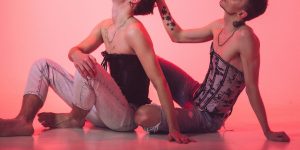


Archer Asks: Bangarra’s Daniel Mateo on Indigenous masculinities and the poetry of dance
By: Alex Creece

Advertisement
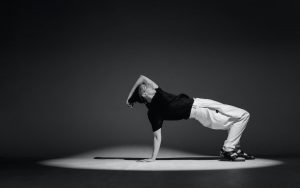
Daniel Mateo is a descendant of the Gomeroi people of north east NSW as well as the Tongan people from the Pacifika region. Daniel was born and raised in Orange (Wiradjuri Country) and later moved to Newcastle (Awabakal Land). Daniel started his dance studies at Catapult Dance in Newcastle before moving on to NAISDA Dance College in 2019. At NAISDA Daniel quickly demonstrated an impressive commitment to building both his technical and creative skills. Daniel completed his Diploma qualification at NAISDA in 2020, and in 2019 was part of Catapult Dance’s Propel program, where he created his first choreography, Boy, cries.
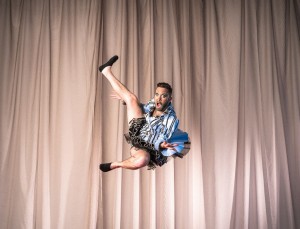
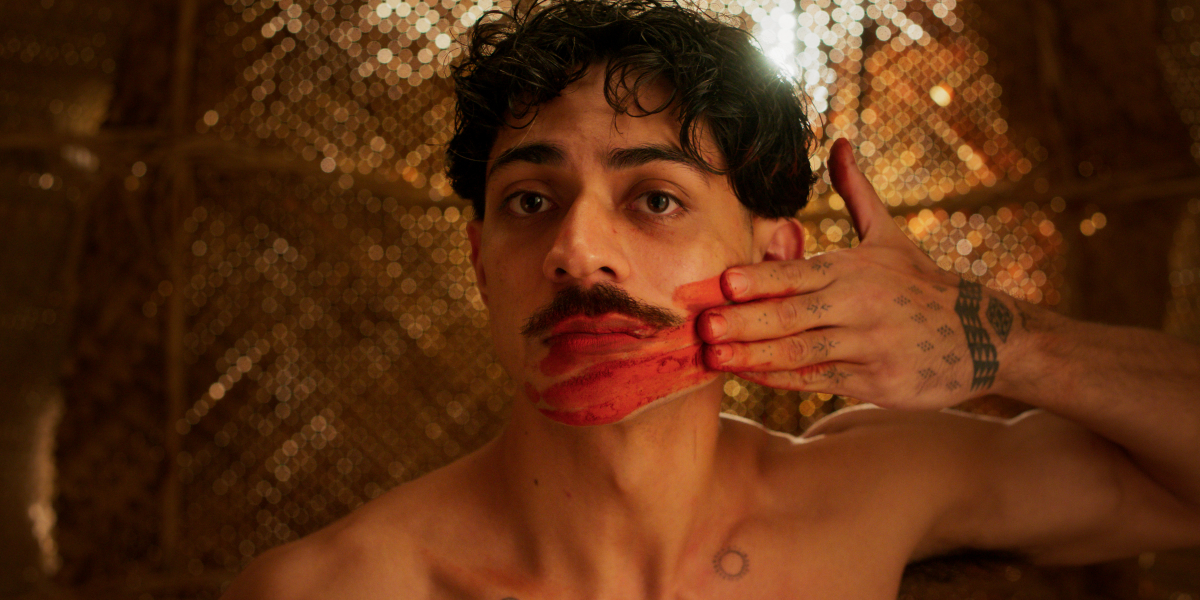
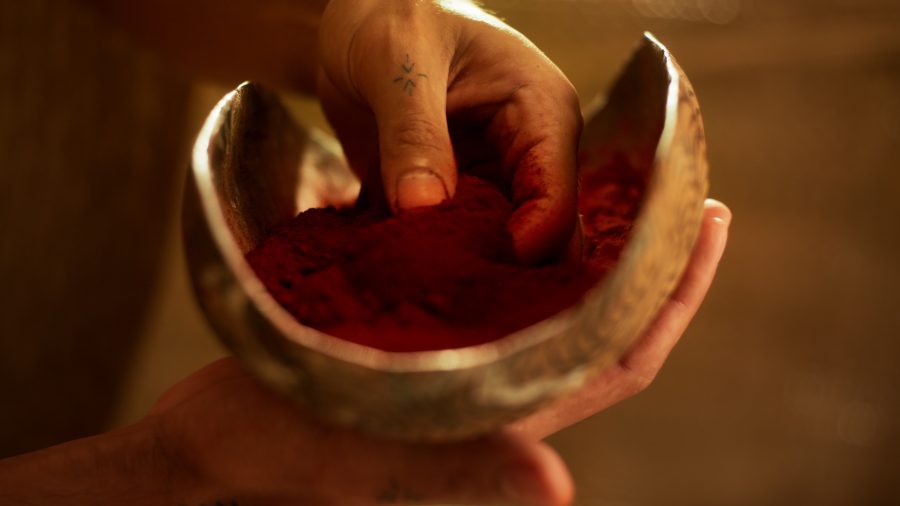
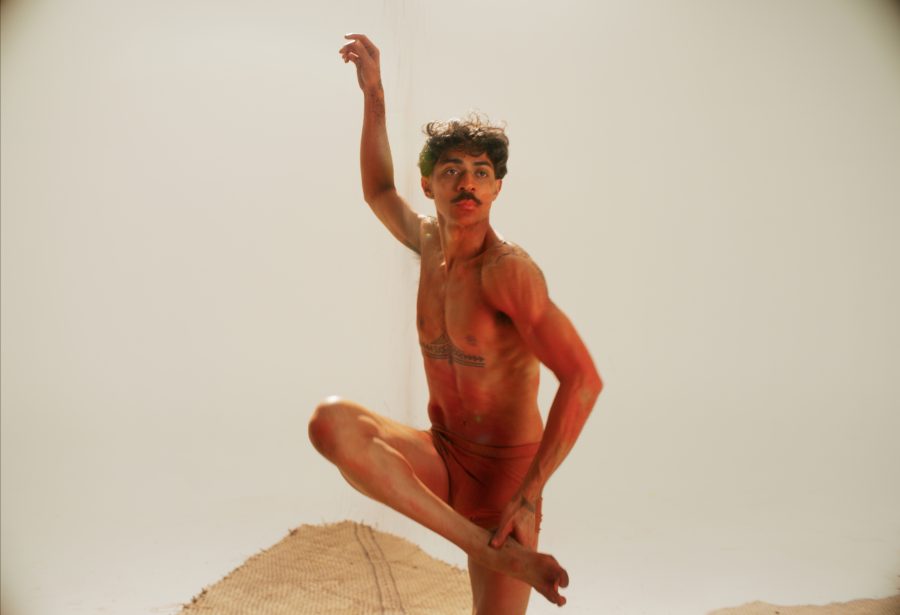
Brown Boys is a groundbreaking film directed by Daniel Mateo and Cass Mortimer Eipper. Visually poetic and deeply personal, it delves into the experiences of young Indigenous men, exploring identity, belonging, and cultural connection. Inspired by Mateo’s own poetry, the film intimately portrays his journey as a Gamilaroi and Tongan man – blending dance, narrative and cinematic artistry. This work was first presented in Dance Clan 2024.
In this interview, I chatted to Daniel Mateo about embodied storytelling, family and brotherhood.
All images courtesy of Bangarra Dance Theatre
Alex Creece: Hey, Daniel! Can you tell us about Brown Boys? What inspired this short film?
Daniel Mateo: Brown Boys was a work that I was offered to do for Dance Clan 2024. It’s different making a short film than a staged work. With a live performance, you go through a rehearsal period, and then you put the work on stage. With film, you work backwards, you work forwards, you work in and out of all these types of mediums.
For me, it was quite stressful to try and understand how to make a dance film. So, I fell back to one of my foundations, the thing that I love, which is writing. I’ve been writing since I was maybe 12 or 13, collecting poems.
I pulled some poems that draw on identity. I’m a sibling of nine, and I’ve got seven brothers. So, I kind of draw on my brothers’ experiences, my experiences of trying to understand where we fit in this world. That was the drive for me to kind of make this film: to make an offering for brown boys, really, to see something similar to themselves.

AC: Lovely. What a beautiful multidisciplinary practice. How does the relationship between poetry and athleticism take shape in the film?
DM: It’s interesting, as I’ve always wanted to combine these worlds. Brown Boys was the perfect opportunity to do so.
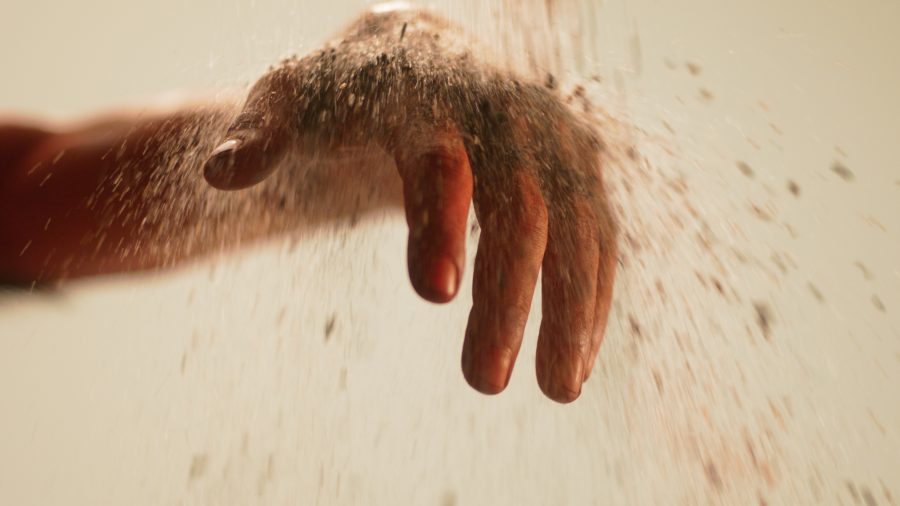
With dance, I almost feel like you can put yourself on stage and naturally be athletic and expressive. I can tap into that side of myself and just let it happen. But writing is a whole world. With writing, I’ve got to go into myself to get it out of me.
It was an interesting challenge because, yeah, being able to like put writing in among dancing, you don’t want to get too lyrical with how the words sit in the film, and you don’t want to separate them so that they’re two different things. You kind of want to make them one. So, we spent a lot of time working on the choreography and working on the way that the words fell to make it feel unique to itself.
AC: Hmm, that is interesting! Writing as an internal process and dance as a form of externalising those experiences. On a similar topic, can you shed some light on how you go about translating stories into choreography? What is your process of using dance to explore important topics related to Indigenous men, masculinity and brotherhood?
DM: A lot of the time, I’m sitting in the studio and going through cycles of exploring a particular idea – like brotherhood or the masculine energies that sit inside me – and I’ll sift through it each day. With the choreography that’s in Brown Boys, I kept it quite bare. I didn’t want it to be a ‘dance film’; I wanted it to be a film that had dance and poetry.
Even though the choreography is more minimal, I still struggled with how to be vocal using my body.
It was a lot of trial-and-error – making sure that I wasn’t being too literal, and that I was being authentic with how I felt.
If I’m expressing something like toxic masculinity, I might show how rigid that would sit in my body. Or if I wanted to lean more into my feminine energy, I might show a more open and willing side. Being expressive with your body is vulnerable, especially in a film or another format that can be captured and seen again and again. It’s a forever thing, not a live performance where you see it once and then it’s gone.
AC: Can you tell us a bit about harnessing femininity in telling stories for and about men and boys? What unique strengths does it hold?
DM: Of course. The women I’ve grown up around – my mother, my grandmother, my cousins, my sisters – have helped me understand what that energy looks like, and how it is shared and preserved. I grew up with a single mother, so she was my representation of both femininity and masculinity, and us kids took traits of each, back and forth.
We did have the typical expectations of masculinity – all my brothers played football, and construction jobs were pushed into their gaze of what they could see themselves being. But, there’s more than that, too. Even as a footy player or construction worker, you can carry ancestral energy with you, masculine and feminine, as a balance of self. I want Brown Boys to show that there’s so much more to us.
AC: Thank you. I’d also love to hear about the set design of the film. What materials did you use to bring the film to life?
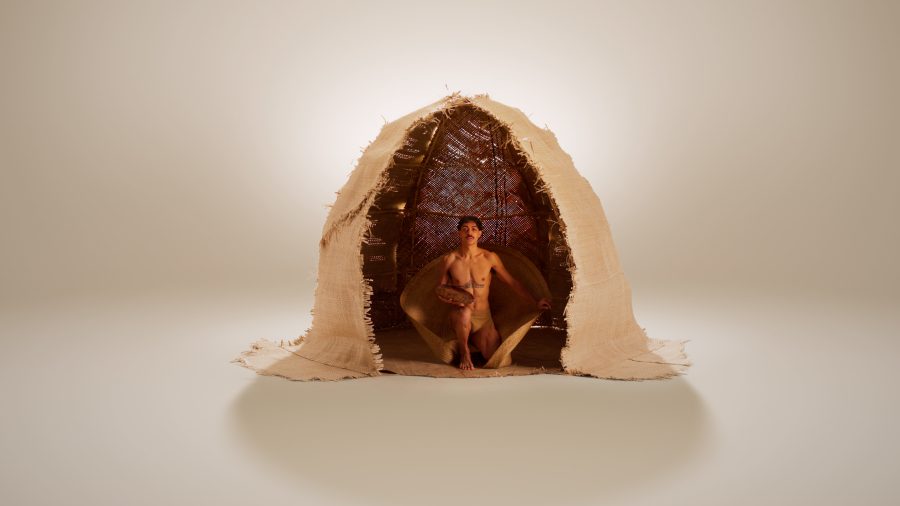
DM: In the film, there’s a structure called a fala, which means ‘house’ in Tongan. It’s made of mats woven from pandanus trees. There are villages in Tonga where they specifically make the mats, and there’s this whole process where the mats get hung up outside, basking in the sun for weeks.
This structure kind of symbolises the first poem that talks about the brown boy exposing himself to the sun and feeling open towards the sun. In Brown Boys, the fala is like an altar that we made ourselves to feel present, to feel here, to feel seen.
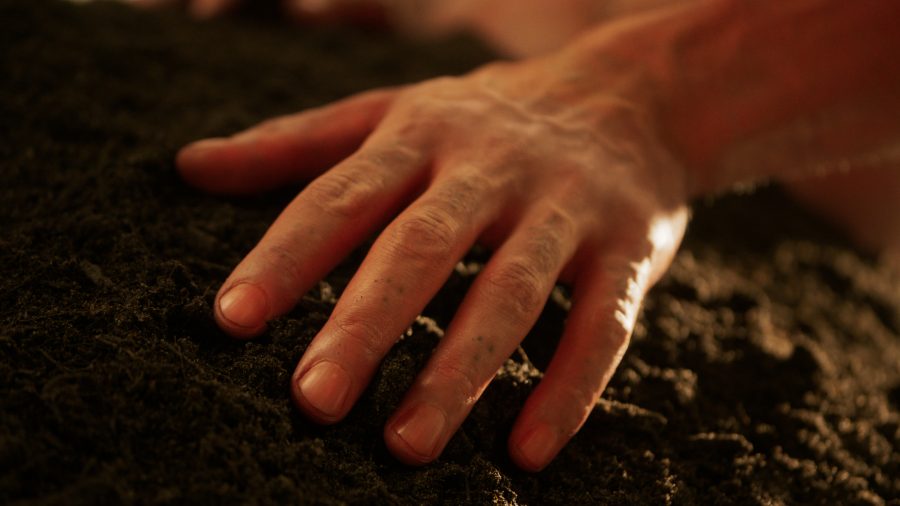
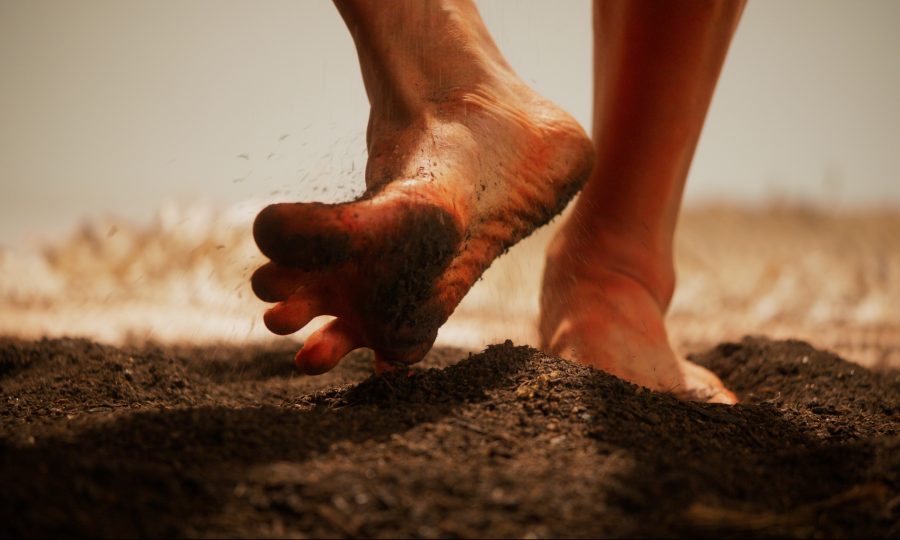
Growing up, the first places that I could run away anywhere would be to the sun, and that made me feel whole. We are of the land, and the land is of us, symbolising brown boys coming back to land as a way to find themselves.
AC: That’s beautiful. Lastly, what do you hope viewers and audiences get out of Brown Boys? How do you hope it speaks to people – particularly, to other brown boys?
DM: Making the film, I had this question in the back of my mind: What do I want to say? Ultimately, what I came to is that I wanted this film to be a gift. I wanted to give something to brown boys that they could pick and choose from. And if that creates questions of what it is to be a brown boy, and how to find yourself in the world, then my job is done!
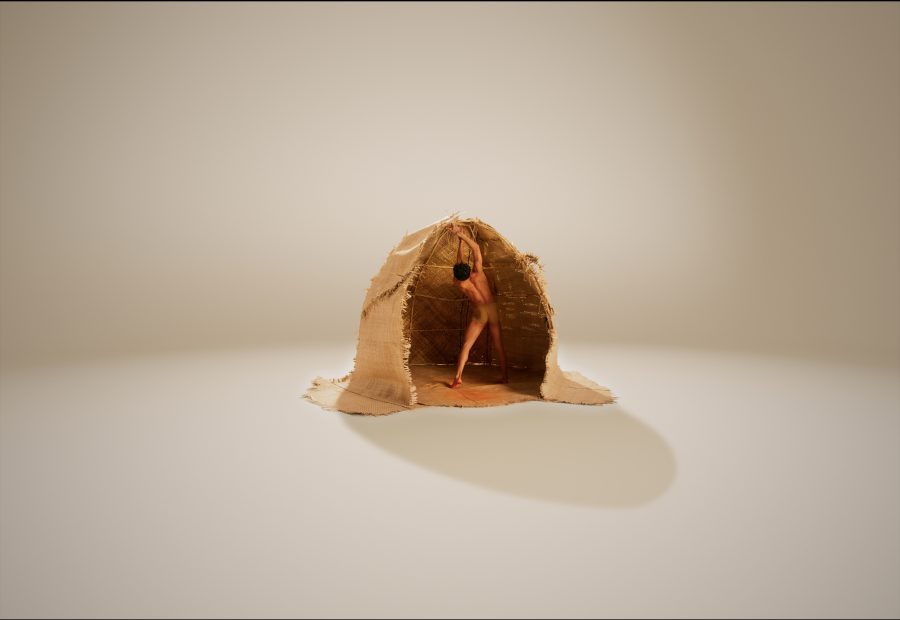
Daniel Mateo’s short film Brown Boys is part of Bangarra Dance Theatre’s bold triple bill, Sheltering, touring nationally from May – July 2026:
Canberra Theatre Centre, 23 – 27 May 2026
Joan Sutherland Theatre, Sydney Opera House, 3– 13 June 2026
Arts Centre Melbourne, 18 – 27 June 2026
Glasshouse Theatre, Queensland Performing Arts Centre, 9 – 18 July 2026