

Grief in the digital space: Death and virtual ghosts
By: Sonia Murr
Content warning: This article discusses death and murder.
Dead people haunt the digital realm.
They are everywhere: likes, shares, captions and comments attached to lost loved ones. Not to get all Sixth Sense about it… but we frequently see dead people on social media. Following the dead online can snag the breath in surreal suspended animation.
The appearance of an all-too-familiar handle, their lively hot takes from the past, or what felt like trivial ephemera, or a banal observation about the price of butter (I’m looking at you, Uncle Grae) can floor me in heavy-hearted disbelief.
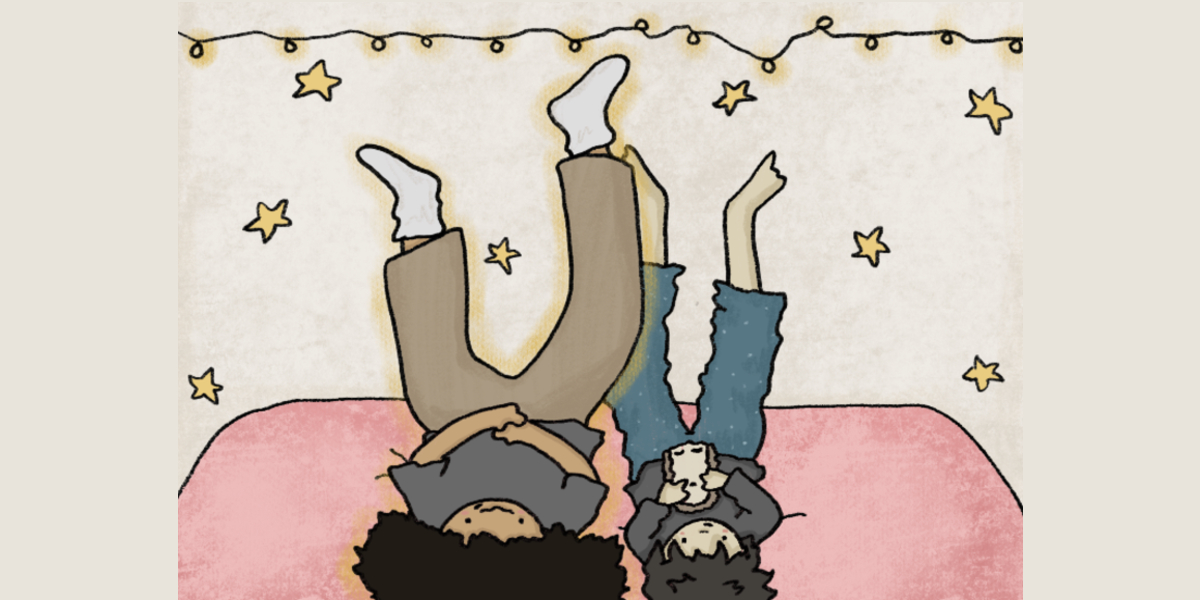
Image: ‘Cai and I’ by Gigi Dougas
In death, the social media profiles left behind become incidental moments of crossover: an often-unintentional memorialisation for friends, family and that kid you went to school with, who had a crush on you in Year 10.
There he is, you think. Dead, here’s a comment on a post from months ago. You never knew he was racist. He’s dead, but there he is, still racist. Was he always? On Facebook, now, he will be remembered like this perennially.
How many years before his likes and comments no longer cross my scrolling path?
Social media profiles give us a chance to stare square into memory, and – when it’s someone much loved – to connect and mourn in a way that is irreverently incidental.
Loved ones on social media, in this way, live on long after they have been farewelled. Mutual friends, followers and followings, interests and connections, give our relationships with the dead the kind of form and weight that did not exist before smart phones and algorithms.
Group chats that might consist entirely of in-jokes, and the wondrous phenomenon of ‘pebbling’ are the everyday receipts of cherished connections with the dead. Spirited interactions are revisited, breathing life into loss: banter souvenirs enshrined in iPhones and apps.
The outpouring of grief for queer poet Andrea Gibson – the untold number of poetry performance videos and musings through and about their words, their love and their generosity of spirit shared on social media since their passing in July 2025 – are a testament to this position of eternal presence, curated by a poet who acquainted themselves with death intimately and purposefully.
In their poem, ‘When Death Came to Visit’, Gibson writes about Death as a sad and lonely child who needs to be invited in, loved and parented:
…But when you’re ready,
I’ll be ready, I promise. I’ve committed
the rest of my days to learning how
to give you my blessing when it’s time
for you to follow your dreams.
I spent a full day lost to my grief when I heard the news of their passing, delivered via their Instagram account by their partner, Meg.
My grief wasn’t ‘about’ Andrea; I never had the privilege of meeting them. But their words got me thinking about my own grief for my loved ones, and also about how once those with a digital presence are ‘gone’, we continue to reach for and speak with them, to love them, to look at them, and even to bump into them unexpectedly online.
Whether or not someone is a celebrity poet, social media has a way of depicting lives in perpetual ‘following’. The dead still follow, and we still follow the dead. This ‘following’ can sting with the reality of absence, but can also become a site of habitual balm to grief, too.
Once someone is lost to the physical world, there is a love connection that will forever live on in the minds and memories of those who adored them. But memory is tricky, and sometimes gets away from even the most committed lover, friend, sibling or parent.
Faces become blurred over time and morph into slippery and enigmatic outlines, hard to flesh out when the responsibility of remembering is left entirely to imagination. Like holding water in a hand. Our phones have the power to seal the cracks and smooth out the creases of our imagination. Photos of the dead are obviously cherished, and pored over, for that very reason.
In February 2025, my friend Crystal Beale was murdered. Crystal’s family and friends were mostly interstate from me, so I found myself monitoring Facebook… for something to make sense of things. When Crystal’s daughter Charlie started a memorial page, her friends and family shared endless photos and memories. It was a place to go to feel just a little bit connected when nothing was making sense.
As the funeral came and went, the murder investigation was launched. There were unbearable updates that made her death more real than her life, and another page was launched – it was called ‘Justice for Crystal’. The engagement here became treacherous. Lots of people were understandably grieving and desperate for information and answers, but outpourings of love turned to anger. Speculation fuelled bitter rivalries, with a few amateur true crime sleuths chiming in with theories and questions that sent those closest to her reeling.
Crystal didn’t have the time or privilege to give death her blessing, and her loved ones were left reaching for anything that would help them make sense of her final moments.
February of 2026 marked a year since her body was found in the Brisbane River. I still check her memorial page every day for new photos. I’m convinced that social media accounts become an eternal offering to loved ones: something to grip onto, especially, of course, when a person dies before their time.
These digital ghosts can prompt tears in the supermarket carpark. On the train, on the way to dinner.
A daily reminder of their absence as you engage in the wake-up scroll you know is no good for you. You do it anyway – click on their profile again. Scroll through their photos. Reread the comments. Not just the “fly high, beautifuls” and the “miss yous” that came with finding out the news of their passing, but the rainbow love hearts and the “GOATs” and cry-laughter – now frozen and timeline-innocent of the “RIPs”, soon to come. There is a process of remembering the future when you scroll through old social media accounts of people who die unexpectedly.
There, but not here; the ‘nowness’ of it all bites hard, in a way that is difficult to pin down, to avoid, or to embrace.
For those us who are grieving and occupying digital spaces, coming across a ghostly loved one’s ‘like’, can catch us completely unaware as we go about our business, scrolling through a livestreamed genocide, wedged between an ad for new hair and a viral meme about Heated Rivalry.
Crystal loved videos of people doing silly things with tiny hands. She laughed endlessly at a Facebook account called ‘Rate My Plate’, and loved sending me pictures of horrific pedicures. These hauntings often come with an initial chuckle, followed by a present tense sting.
My dead friend, in the comments. Being fucking hilarious.
Like Andrea Gibson, I want to think of death as opening its “petals for the moon”, but not all moments of departure unfurl in the same way.
Gibson was afforded the time and support to make art that explored their relationship to imminent death. Their poetry in the last couple of years held our hands through what was coming. They developed an intimate relationship with death, and modelled a gentle acceptance for their loved ones and fans. I’m sure that the intimacy of knowing they were going to die – which they shared so willingly in the lead-up – wasn’t easy, but the grace of knowing must help to negate some regret, both for the dead and the grieving.
A couple of weeks after Gibson passed, I was driving my 19-year-old to the family home of their dearest friend and creative collaborator, Cai Schauble (aka Big Chocolate). It had been exactly one year since Cai had passed, and their friends were visiting their childhood home to pay their respects to Cai’s mum.
Like Andrea Gibson, Cai was clever and hilarious: a big-hearted, multi-spirited lyricist and artist with boundless creative talent and energy; a performer who was adored by their (albeit much smaller) audience. Unlike Andrea’s friends and family, many of Cai’s loved ones were blindsided by their death.
While I don’t want to speculate too much on the days, thoughts and feelings that led to Cai’s last moments, what I do know is that the world was stacked against them and their way of being. I also know that this place has been left a little more impoverished because of their passing.
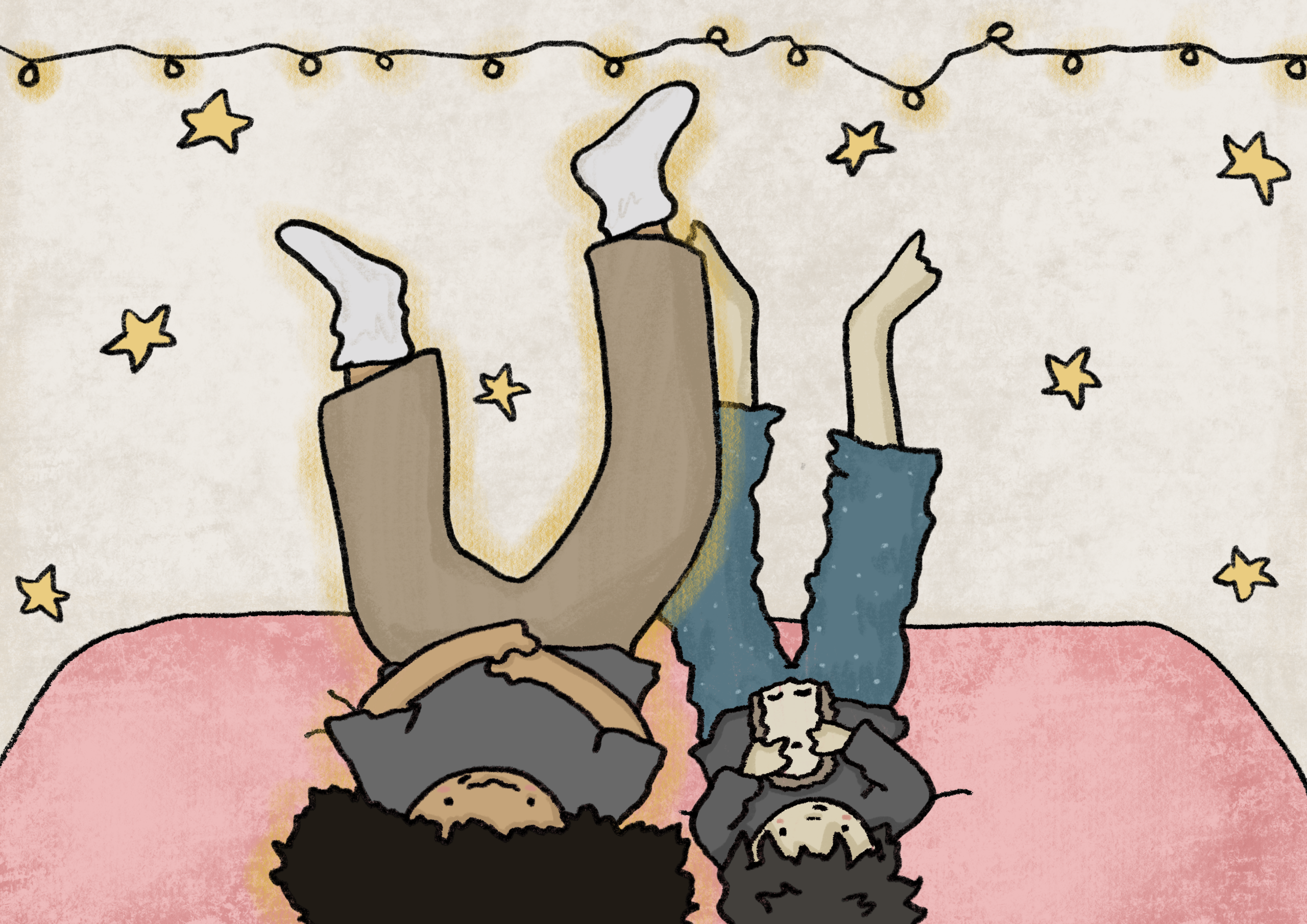
Image: ‘Cai and I’ by Gigi Dougas. Gigi can be contacted for art commissions via @gigamations on Instagram.
Devastatingly, Cai was on the cusp of a big life of enormous success – I’m so sure of it. Last year, when I would catch their Instagram handles and their comments and likes, it was like little blessed droplets of their wackiness – their eclectic taste in music and film, their politics and their aesthetic – all landing in the dead sea of small-mindedness that has the potential to make social media spaces so fraught, especially for trans and non-binary folks, and for the people who love them.
The legacy of Cai’s music is strong, with their band Melbourne Trap Orchestra playing some gigs at The Night Cat in 2025. Their friends and collaborators regularly take to the stage and celebrate them through their much-loved music. And of course, their presence on streaming services means that their music will live on.
Cai’s untimely death is an unquestionable tragedy. I know they were held by their community in many online spaces, and I wonder how being present online must have been hard for them, too. Whether or not the bigots and haters got their claws into Cai, I’ll never know.
What I do know is that Cai spent a lot of time at our family table, and we loved having them. The conversations would leap from films they’d seen, to politics, to people they knew who were doing cool stuff. The chats would sparkle and shine – their wit and their brilliance and their love of whatever we were cooking made our family dinners exciting, rich and funny. Always funny.
I love how much they made themselves at home in our home. Every time I flick on ABC iView on our smart TV in the loungeroom, there they are: holding the only viewing account next to a singular avatar of a bright pink galah. Who is watching? Cai as ‘Clappyshorttoes’, of course.
Yet another digital reminder, yes, but with this one, every time, there is an at-homeness. In their place on my couch, at our dinner table, in our hearts, and of course, on my feed. In their song ‘Ghosts’ they vow to “never take [their] eyes off [us], for the rest of our time”. I hope that’s true.
I’m still following Andrea and I’m grateful to their partner Meg for how committed she is to honouring their memory and their talent. If you haven’t seen their documentary Come See Me in the Good Light, definitely do it, but take a jumbo box of tissues.
And to Crystal and Cai – I will always see you both “in the good light”.
If this story has brought up any issues that you want to talk about, please reach out for support:
- QLife is the national LGBTIQ peer-support telephone service for people wanting to talk about issues including sexuality, identity, gender, bodies, feelings or relationships.
- Say It Out Loud has a list of the LGBTIQ community-controlled services for each Australian state/territory. The organisation encourages LGBTIQ+ communities to have healthy relationships, get help for unhealthy relationships, and support their friends.
- If you or someone you know is in crisis, call Lifeline on 13 11 14.
You are never alone.