

Archer Asks: Gay icon Ülo Klemmer on cruising, beats and public sex
By: Laura Castagnini

Advertisement
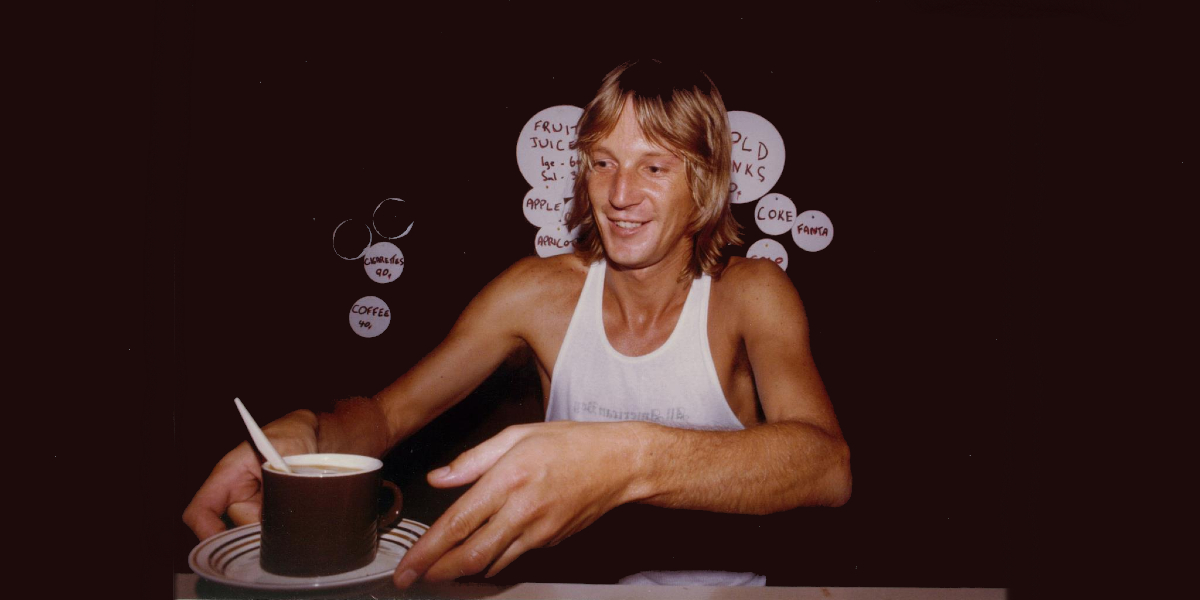
I was introduced to gay community icon Ülo Klemmer through his vast collection at the Australian Queer Archives (AQuA). Digging through old files, I was intrigued by stories of the popular blonde boy who worked in gay saunas when homosexuality was illegal, and later became a Beats Outreach Officer at ACON (formerly the AIDS Council of NSW) in the late 1980s.
In this interview, I chatted with Ülo about his experiences with cruising and the unique role that Australian sex-on-premises venues played in gay men’s sexual health.
Header image by: William Yang (courtesy of AQuA), cropped to size by Archer Magazine
Laura Castagnini: I’d love to start with a question about what it was like for you growing up gay in the 1960s. Can you tell us about your sexual awakening and early involvement in public sex?
Ülo Klemmer: I grew up in the 1960s when homosexual acts were illegal by law. Yet, I had regular masturbation sessions with ‘straight’ friends all the time during high school. Once I went down to the creek and came across two handsome alpha males naked and masturbating with each other. So, to me, male-to-male sex was normal.
During school, we were required to line up in alphabetical order for assembly. I remember one day the lad in front of me asked: “Do you like boys too?” I knew instantly that we would become friends as my answer was “yes.” He told me he had been “pulled off” by another guy in the public toilet in the area, and suggested I go there, too, if I would like that to happen. I had a high sex drive by then, and went out of curiosity. That was my first visit to a beat.
Beats are places not necessarily toilets; many beats are parks, beaches or bushland areas where men can meet other men for mostly anonymous sexual relief. They have existed for centuries worldwide as meeting places for men of all sexualities to gratify their sexual needs, and social needs for some also, due to the fact that homosexuality was illegal.
Beats were – and still are – convenient for men who had no other desire or opportunity to mix with other men sexually, or were married for whatever reason. Young folk discovered a world where they could achieve sexual relief instantly and anonymously.
LC: Speaking of anonymous sexual relief, I understand you worked at some of Sydney’s most iconic gay saunas. How did that come about?
ÜK: My social life among camp men (what we called gay men at the time) grew in the ’70s. I was at home one day with a broken leg in plaster and the phone rang. The caller identified herself as “Dawnie” (Dawn O’Donnell), a legendary lesbian who owned bars and clubs for camp folk in the inner city of Sydney.
Dawnie said she had heard that I was very bored at home and asked if I would like to work on weekends on the door of her sauna in Bondi Junction – Australia’s very first gay sauna. I couldn’t say no to that offer!
I was instrumental in helping Dawnie improve the venue to a higher standard. One evening while closing the tubs, someone I did not know – but was a friend of some friends – rang the sauna and asked if I would like to come over to his home and have a cup of tea and an acid trip. I never to this day have had the promised tea!
The aim of his call actually was to poach me to work at Ken’s Karate Klub which was owned by Ken (Kandy) Johnson. He had been hired to manage the sauna as it was new and not doing so well, and it needed a boost. We were the very boost the Klub needed – we knew what men of the time wanted and how they wanted it, and we gave it to them in spades.
We created what is now known as the “legendary” Ken’s or KKK. I worked there for five steaming, hot, exciting years.
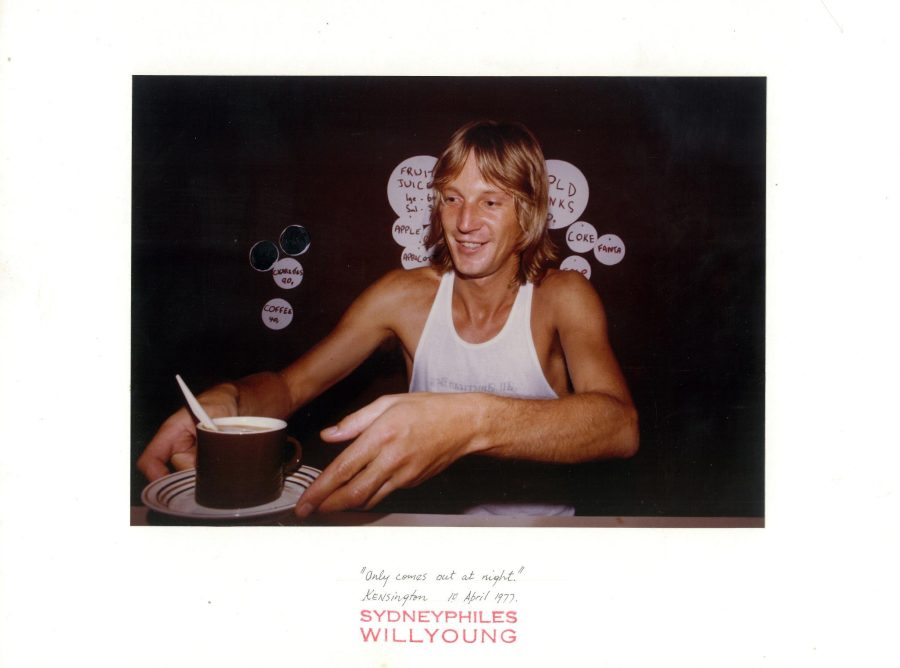
Image by: William Yang (courtesy of AQuA)
LC: Oooh, you must tell us more! What was it that the men wanted?
ÜK: We had our own innate knowledge of what men would want and enjoy from a sex-on-premises venue. We made the Klub homely by not concentrating on the sex alone: we created a large comfortable lounge with big screen TV, and we added various inflatables to the pool so folk could relax or play.
Occasionally, when appropriate, we would show American gay porn around the pool. At times Kandy would call in unannounced and perform a few numbers from her shows in drag. We regularly changed things around so there was something new and of interest to captivate. I created a cafe at the Klub, and my mother would bake us cheesecake from her Estonian secret recipe – she had trouble keeping up with demand, it was such a hit!
We were conscious of the sexual health of our visiting friends. On Thursday evenings, a doctor would come to Ken’s from what was then called the Blue Light Sexual Health Clinic in Circular Quay, and do STD checks (as they were known then – now called STI checks). This was a free service that was helpful and very convenient for everybody, especially folk who were not comfortable discussing sexual health with their own GPs.
LC: That’s so incredible! Of course, the sexual health of gay men became a devastating community crisis when the HIV/AIDS epidemic hit Australian shores in 1982. Can you tell us about your role spreading safe sex information as ACON’s Beats Outreach Officer?
ÜK: The ’80s ushered in the distressing pandemic GRID – gay-related immune deficiency, later to become known as HIV/AIDS.
Due to my past history, I was employed by ACON as the world’s first Beats Outreach Officer, paid with funding from the NSW Health Department. The aim of our work was to visit the many and various beats in the western Sydney area to educate and support men who had sex with men. Research was showing that many of these men were not connected to the gay community, and were getting either wrong and very scary information about safe sex, or no information at all.
We worked in pairs and were supplied with a car and a mobile phone – which was a very new thing at the time, and probably 10 times the size of current mobiles! – to ensure that we could alert police and ambulance if there was an emergency. It also meant we could immediately and anonymously put people in touch with support groups that would be of help to them – for testing, for example, or youth groups, mature-aged gay groups, and more.
Beats traditionally are not places where one goes to have a chat, so this was an extremely difficult job. T get to the first base of having a chat with someone who was there for a quicky was a minefield.
I remember one of the new Beats Officers was super keen on his first day. He even brought a new pair of shiny, sturdy Dr Martens. He had established his first conversation at a urinal with someone who definitely had sex on his mind, so during the conversation the beat user began masturbating while the Beats Officer continued giving information. Unfortunately, the person came onto his brand-new Dr Martens! I was so proud of the new employee – he came back to the car, got a tissue, cleaned his shoes and then took back some written information to the guy.
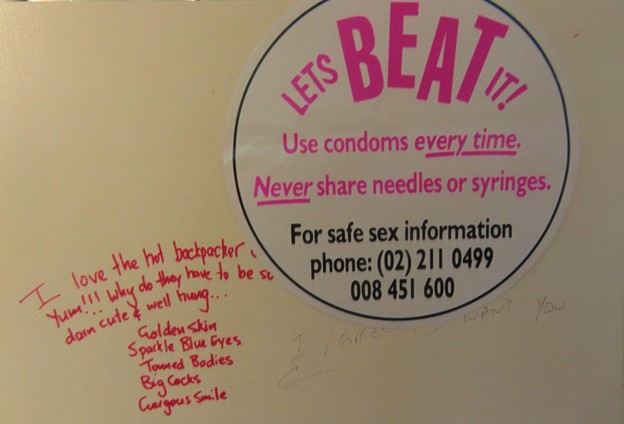
“We created this sticker to put up in most beats in the western Sydney area, as we could not cover the whole area sufficiently with the minimal number of workers available, so we decided to at least give folk a contact from where they could seek help/advice anonymously.” – Ülo Klemmer
LC: Wow, what a story! Thanks so much for sharing all these juicy details about your life and work. Is there anything you want to end on as a piece of advice for younger queers who want to cruise and explore public sex?
ÜK: From the vantage point of a now nearly 76-year-old, I look back and see that we as gay men had very little social ability to connect. Our lives, both social and sexual, were dictated by isolation. Homosexuality was considered a psychiatric illness. Our government created laws to make us illegal, and there was constant hate, harassment, bashings and murders.
With that in mind, we as a group of queer people began the journey to where we are now – homosexuality is legal, we have marriage equality and a plethora of ways to connect, socialise, be heard, make friends and seek sex. My suggestion to the younger generation would be to take advantage of the rights we have won and to forge a fabulous path for themselves and for future queer people. There’s a current surge of hate from governments and misguided folk to us queers and our dear trans friends – watch your backs and don’t stand for this fuckery. xxx