

Mad Pride: Resistance against sanism and psychiatric oppression
By: Matthew Jackman
Advertisement
Content note: This article discusses suicide, mental health, trauma, abuse, assault, family violence, psychiatric hospitalisation, sanism and queerphobia.
I was born in 1990 into a family with a long history of emotional distress.
In 1996, at the age of six, I was removed from my mother’s care due to her deteriorating mental health following my parents’ divorce. This separation marked the beginning of a tumultuous journey through foster care, poverty and emotional neglect.
In 1999, at age nine, I lost my mother to suicide. I vividly remember the day I was informed by my foster carers. The last time I saw my mother was in a psychiatric hospital, where she expressed her love and said goodbye. That moment remains etched in my memory: a poignant reminder of the profound impact of mental illness and loss.
Header image: © Superbass / CC-BY-SA-4.0 (via Wikimedia Commons)
From childhood onwards, I’ve interacted with statutory child welfare, out-of-home care, foster care systems, maternal child health services and the mental health ‘psychiatric’ system.
As a survivor, I’ve also experienced intersecting forms of discrimination: ranging from queerphobia, classism and femmephobia to sanism.
If you haven’t heard of it before, sanism refers to the oppression of individuals perceived to have a ‘mental disorder’.
Under existing psychiatric frameworks, I questioned why my distress was always considered my own fault.
After my mother’s suicide, I experienced ongoing abuse and neglect from adults who were supposed to protect and nurture my traumatised, displaced, abandoned and grieving soul. I assumed the role of caregiver for my younger siblings, navigating life in a family that struggled with financial instability.
Years later, re-reading my child protection case notes revealed that I was considered an over-parentified child, resentful of my mother’s absence. This hyper-vigilance to trauma honed my leadership skills, which I used to protect myself and my younger siblings from adversity.
Throughout early childhood and adolescence, my circumstances were compounded by bullying, transience, social isolation, lack of access to mental health support, violence, homophobia and poverty.
At age 15, my father told me that gay people were diseased, which is a legacy of psychiatry. At my school, queer people were physically assaulted and were often subject to derogatory slurs to shame them. Homophobia led me to overwhelming distress, despair and anguish.
Nearing the age of 20, I attempted suicide. I realised I had no other choice but to either die, or come out of the decades of shame I had boxed myself into.
Despite my very real experiences of distress, trauma and oppression, my suicide attempt was heavily medicalised.
I was met with a medical diagnosis, requiring treatment with sertraline, lithium and quetiapine. I was admitted to hospital, with limited acknowledgment of the social and structural causes of my distress.
But there is no medication for social injustice.
No peers – community members with lived experience – were involved in my health care. I felt like the staff responded with the wrong tools, language, attitudes and aftercare options. There was no consultation with me to guide my journey of recovery.
The psychiatric system didn’t seem to understand the connection between suicidality and factors like severe debt, unemployment, legal issues and the distress from poverty. The Australian welfare system seeks to punish people for receiving welfare to survive – Centrelink payments for Jobseeker, for example, are well below the poverty line.
Of course I’m distressed and depressed when one per cent of the world controls almost 70 per cent of the wealth.
My diagnostic journey began with a diagnosis of clinical depressive disorder, with many more diagnoses to follow, such as attention deficit and hyperactivity disorder (ADHD), bipolar affective disorder and complex post-traumatic stress disorder (CPTSD).
I endured psychiatric hospitalisations, medication side effects, and the stigma, discrimination and sanism associated with the psychiatric paradigm.
In these interactions with the psychiatric system, I felt blamed by healthcare providers for my distress and responses to trauma. I also felt that my personal strengths and survival skills were diminished – the creativity, purpose, meaning and spiritual enlightenment they understood as ‘bipolar disorder’.
My diagnoses and treatments were stigmatising, and they didn’t address the structural causes of both my distress and my responses to interpersonal, family and community trauma, including homophobia and sanism.
Following my diagnosis of bipolar disorder, I noticed that people often pathologised my positive attributes – whether in performance, attitude and post-traumatic progress – as ‘mania’.
When I’m in heightened moods, or passionately devoted to a project or campaign, people have exercised sanist attitudes towards me. My responses to being abused, neglected and exploited in the workforce have also been pathologised.
On two occasions, I’ve found myself on WorkCover receiving compensation for psychological injuries. In these situations, it is my ‘bipolar’ diagnosis and relapses into a ‘mania’ that take the blame – and not the injustices, discrimination or unsafe conditions in the workplace.
Why are these events my fault? Why do I have the ‘disorder’? Why isn’t my employer given a ‘disorder’ diagnosis for their harmful conduct?
My experiences with psychiatry fuelled a determination to advocate for systemic change and support for folks with lived experiences of Madness.
Madness encompasses things like emotional distress, trauma, grief and loss, spiritual and existential awakenings/crises, and neurodivergence. These responses are human – they are not an illness, as framed under the bio-psychiatric framework known as the Diagnostic Statistical Manual (DSM).
The DSM gives power to institutions, enabling psychiatrists to label people with mental health ‘disorders’ based on behavioural assessments. Additionally, several psychiatrists have vested and conflicts of interest with the psychopharmacology industry.
Instead of ‘mental illness’, I frame these experiences as distress, trauma and neurodivergence that conflict with capitalist, patriarchal, colonial and cis-hetero-normative societies.
I philosophise Madness as a human diversity – a part of the human spectrum of experience. It is natural, human and deeply spiritual to weave through periods of Madness throughout our lifetimes.
Many philosophers, artists, academics and activists have proposed their own theories about Madness. I hold that there are multiple truths, and a plurality of realities in this world we exist in.
We need to hold space for intellectual humility and sit with multiple perspectives, frameworks and philosophies – which may include illness and impairment, but may also include identifying with the term Mad and having an expansive awareness of our lives.
The Mad Pride movement seeks to challenge the mainstream psychiatric system with a focus on understanding Madness from cultural, spiritual and structural perspectives. It advocates for the rights and dignity of people with lived experiences of emotional distress, and promotes alternatives to traditional mental health care.
Many within the Mad movement call for psychiatric abolition and anarchy. Many queer, gender diverse and trans folk are part of this intersectional movement due to the direct harm that psychiatry continues to perpetrate in the medicalisation of our identities, lived experiences and queerness.
Our issues are often framed individually and pathologically within psychiatry, and not responded to as oppression, injustice, isolation and societal shame.
We only need to look to the most recent examples of queer book bans in libraries, attacks on drag storytelling time, and ongoing medicalisation and gatekeeping of gender identity. Psychiatry, after all, is deemed the legal authority to ‘approve’ someone’s transition.
Therefore, many folks in our community are proud of their Madness, their insights and survival, and ways of thriving in an oppressive society that psychiatry has deemed to be a disorder of our own.
I came out as non-binary during a hypomanic episode. I fell asleep after a party in a dress, and woke up feeling that this was a revelation, and it felt so right.
From then on, I’ve identified as non-binary and used they/them pronouns to honour my mother’s spirit in me. My mother Samantha and I are now one global Mad Pride force together, as we shake the psychiatric industrial complex and capitalist corruption in this space.
I identify as having dangerous gifts that require harnessing. These dangerous gifts are a spiritual blessing, but they can be impairing when I am not in control of their superpowers.
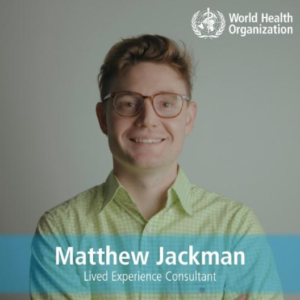
These assets have taken me to all parts of the world as an artist, activist and academic. They have driven me into a career with the World Health Organization, and to being awarded the National Mental Health Advocate of the Year in 2020 by the Mental Health Foundation of Australia. I now identify as a Mad activist-academic, while continuing to dabble in psychiatric survivor art through comedy, theatre, painting, creative writing, music and film.
Mad people often have great strengths in the arts – we tend to be abstract and unconstrained by the social norms and boxes demanded of us by a capitalist and white supremacist world.
As a result of my career in Mad activism, I decided to enter social entrepreneurship and impact work in the start-up space.
I wanted to be an outside activist and consultant, rather than working within an institution and butting heads with psychiatrists, nurses and bureaucrats.
When employed by existing government and healthcare systems, we are often co-opted and lose our movement’s message and political aims. There are larger commercial and private political actors that benefit from the psychiatric model, too. These forces are often propelled by capitalism and colonialism.
We see this with the way personal recovery movements are co-opted into clinical recovery, and how peer workers are asked to encourage their peers to comply with medications or other clinical treatments.
To truly put Mad Pride at the front and centre, I founded my own organisation: The Australian Centre for Lived Experience (TACFLE).
TACFLE is a global Mad Pride think-tank and lived experience-driven organisation. We deliver Mad-affirming consultancy to organisations and individuals, and provide education on Mad studies, Mad Pride, and Mad-affirming practice.
We aim to celebrate resilience and creativity in those with lived experience of emotional distress, and to support the Australian Mad Pride movement.
My journey from childhood adversity to global mental health advocacy highlights the transformative potential of lived experience. By amplifying the voices of those often unheard, we can create a future where mental health care honours the dignity, agency and strengths of every individual.
I have gone on to complete my Master of Advanced Social Work and Post Graduate Certificate in Mad studies, and am now undertaking a PhD in Mad studies at the University of Sydney.
Through my work, I have learned that healing and growth are possible even in the face of profound loss and trauma.
Lived experience is my superpower, and I have found transformative wisdom in my states of Madness. Mad Pride!
If this story has brought up any issues that you want to talk about, please reach out for support:
- QLife is the national LGBTIQ peer-support telephone service for people wanting to talk about issues including sexuality, identity, gender, bodies, feelings or relationships.
- Say It Out Loud has a list of the LGBTIQ community-controlled services for each Australian state/territory. The organisation encourages LGBTIQ+ communities to have healthy relationships, get help for unhealthy relationships, and support their friends.
- If you or someone you know is in crisis, call Lifeline on 13 11 14.
You are never alone.