

Mortality, ageing and accepting death
By: Margaret Merrilees
Advertisement
The following is an extract from Scared Angry Laughing by Margaret Merrilees.
Scared Angry Laughing is a joyously unruly collection of essays about civil dissent, saving the planet and losing your hearing. Always generous, never holier than thou, only occasionally despairing – Merrilees is the lesbian great auntie you wish you’d had, here to explain the fight so far, and what we can all do next. This is a book for imperfect protesters and eternal optimists, young and old.
Scared Angry Laughing is published by Pink Shorts Press and can be bought from their website or from any good bookshop.
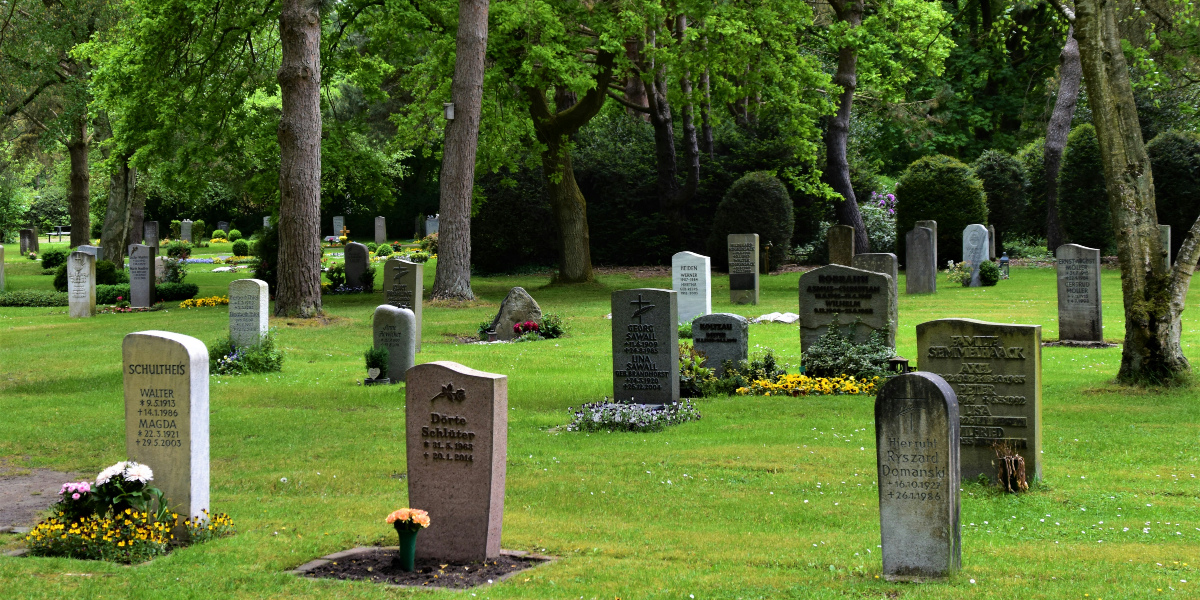
Header image by: Waldemar Brandt
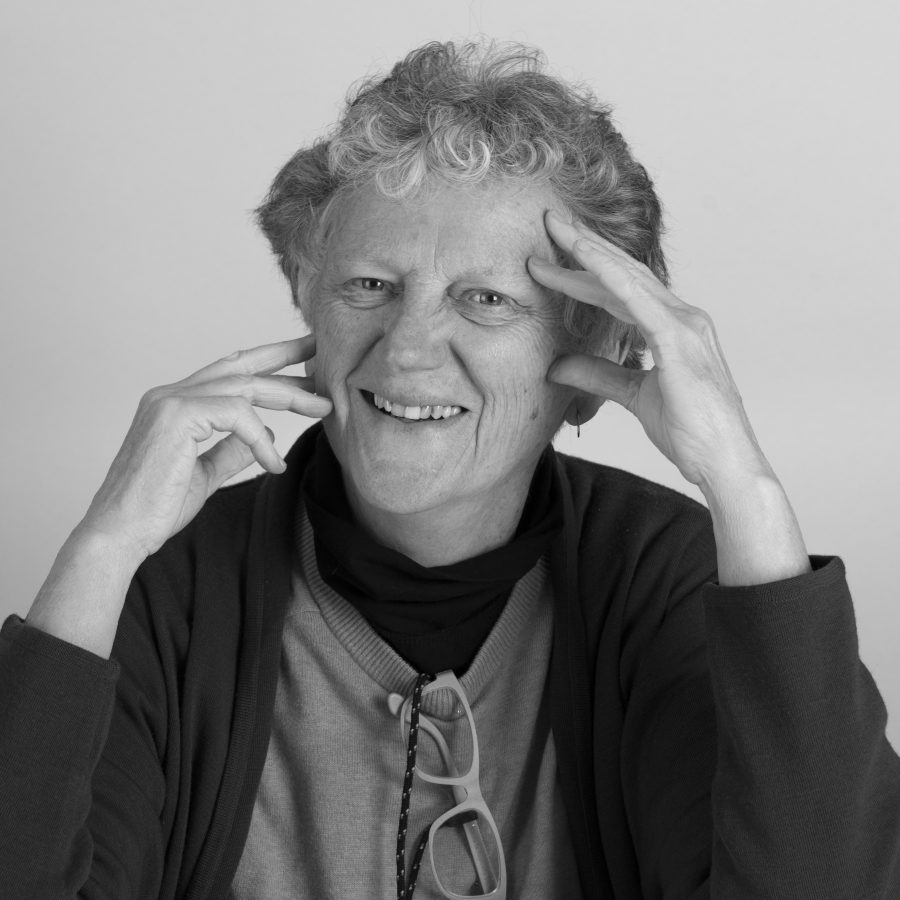
Image by: Peter Barnes.
I was fifty-five before I saw someone die.
And before that I had only seen a dead body once. People I knew died, but it was always out of my sight.
In many parts of the world that would be so unusual as to be inconceivable. Even in my privileged well-fed corner it’s a historical anomaly. I doubt if my great-grandparents could have reached fifty-five without witnessing death up close.
In those days death happened regularly, in your family and in your home. Siblings died in epidemics, mothers died in childbirth, everyone died in wars.
The modern way is different and happens out of view.
My mother died in hospital, and I wasn’t there. But for the first time I understood a truth. We die. Her departure was so absolute that I couldn’t argue with it.
Death, it turns out, isn’t just carelessness or accident or random bad luck. It will happen to all of us, and that includes me. In fact, with my mother gone, I am closer to the head of the queue.
But it was another couple of years before I was actually present at a deathbed.
I listened to the laboured breathing and witnessed a strange phenomenon: the final absence of any more breaths, a moment you can only identify when it has passed. Over the next half hour we watched while those familiar features relaxed into death, every muscle giving up its eighty-nine-year vigil.
We are facing the possible destruction of our whole world.
To stay sane, we avoid thinking about it. But it is there, playing a part in the mood of the times, the mental health of the community.
Has the possibility of complete annihilation made us any more comfortable with our individual mortality? It doesn’t seem so. Most of us in wealthy countries are squeamish about death to the point of denial. The majority of us lack the help of any spiritual framework, or any real belief that we are headed for a better place.
I have trouble imagining an afterlife. I can’t get past the maths of all the humans who have already died. Billions. It sounds like the worst sort of party. How would you ever find your friends?
But I know that not everyone takes such a literal view. It would be a fine thing to sense the ancestors walking beside you every day, to feel their presence in the rocks and trees of your country. If we whites had that, we might develop a clearer sense of perspective, a more realistic understanding of our true small place in the world. It might give us a healthier set of priorities.
In 2003 the Australian Museum in Sydney provided a reality check.
If a dead piglet is placed on bare earth, depending on the weather and the nature of the soil, it will take approximately fifty days for the flesh to decay and disappear, leaving a flat piglet-shaped pile of bones and hair.
In this case a time-lapse camera recorded each stage of the slow process. Flies, maggots, beetles and microorganisms did their work. The photos and films of the piglets were so graphic that my nostrils filled with the hideous smell of decaying flesh. I had a surreptitious look around for piped gases, but I think the smell was imaginary.
The photos were part of a remarkable exhibition on every aspect of death, from the decay of the body to the rituals of the survivors. The coffins were a relief, funny even. Who would want to be buried in a large fibreglass shallot? The overall effect was remarkably refreshing, piglets and all. Death brought out of the shadows and back into our everyday lives.
That experience was equalled for me the first time I listened to Dr Philip Nitschke from Exit International. Exit advocates that ‘every adult of sound mind should be able to plan for the end of their life in a way that is reliable, peaceful and at a time of their choosing’. It’s a do-it-yourself model, independent of the medical system.
Dr Nitschke talked for an hour, with dry humour, about achieving your own death, not only how to do it, physically, but how to keep it legally safe for those around you, who to tell and not tell. There is a lingering stigma about suicide, which complicates an already complicated business.
Like the exhibition it was an exhilarating, liberating experience, a taste of the glorious freedom to live that might come from knowing how to die. Somewhere along the way our culture has lost that knowledge, and we are the poorer.
At a societal level, decisions about lives and deaths have to be made. When should we prolong life? At the beginning? At the end? In the middle?
This is not an easy conversation. No-one wants to say we won’t treat this or we won’t treat that. The spectre of Nazi ‘medicine’ still hangs over us, and all the other hideous ‘treatments’ inflicted in different places and times on people thought not to measure up.
But in refusing to have the conversation we perpetuate another injustice. In global terms your life span depends on your race, class, income and location. So how do we wealthy people feel about the fact that our lives are valued more highly?
When my mother was in her late sixties her GP said that she should have heart surgery. She asked him how much it would cost.
Nothing, he assured her. As a pensioner she would be completely covered. She drew herself up and told him that he had misunderstood her question. She was asking about the cost to the public purse. He was taken aback but fumbled around and came up with a figure of $10,000, (about $40,000 in today’s terms – an underestimate, I would say, having worked in hospital finance).
In that case, my mother said, she would not go ahead. The money should be used for someone younger.
When I’ve told this story the most common reaction has been that my mother was suffering from depression, or elder oppression, or lack of self-esteem. Any of that might be true, but the more I think about it, the more I see her as unusually heroic, even to ask the question. I’m proud of her.
We have something that we call a health system, though it’s more like an industry. Behind the people doing the hard work lurk the companies that produce the pharmaceuticals, the equipment and everything else.
If we could step aside from our longing to have ourselves and our loved ones fixed, cured, made immortal, then we might be able to see this health industry more clearly.
Firstly, it makes no sense economically. Australia is a wealthy country but increasingly we can’t afford this health system. What’s more, primary health and preventative activities are often the first to face budget cuts, while big pharma and specialties make a fortune. No sense at all.
Secondly, the amount we spend on prolonging our lives is an embarrassment. We do not have health equity and justice within Australia, let alone globally.
Thirdly, hospitals are environmentally unsustainable at every level. Day-to-day functioning generates major problems, think toxic and radioactive waste disposal for a start. And so much of it is about keeping people alive longer than nature intended and longer than Earth can support.
Another paradox. The system is deeply determined to prevent us from taking our own lives, however rational a decision that might be. Attempted suicide is no longer illegal, but the authorities are working hard to block off any easy access to death. It isn’t just theoretical opposition either. There are police ‘welfare checks’, house searches, confiscations of non-illegal items, charges.
Voluntary assisted dying is now an option in Australia, but it remains very firmly in the hands of the doctors. And currently it is only available if you can cope with the medical gatekeeping and are nearly dead already.
We are so determined to protect the elderly and infirm that we are in danger of battening down every hatch and barring every exit. So how are we to die?
There used to be a dreaded but time-honoured phrase. I’m sorry, there’s nothing more we can do. But it has been replaced by the universal we can fix that.
We all say it. I could get that fixed. Or even I should get that fixed. Everything from crooked teeth to cancer. The serious decisions are hard, the surgeries and interventions. We pick our way through bewildering alternatives, thickets of advice, advertising, pain and fear.
We juggle issues of comfort and conscience and affordability. What can we live with? What is unbearable?
A few years ago a friend faced a dilemma. If she did nothing it would mean almost certain illness and death.
If she had a surgical procedure her compromised immune system would be exposed to antibiotic-resistant bugs. She chose the surgery, caught a bug and was hospitalised for six months, extremely ill.
Teams of doctors worked over her, trying cocktails of mind-bogglingly expensive drugs. Very few of the medical people talked about the fact that she was dying. They seemed barely able to talk at all, across highly specialised disciplines.
None of the rest of us had the courage to suggest to our friend that her time might be up. Finally, a pragmatic GP told her she should stop taking the drugs and let herself die.
Tests of another elderly friend showed that her heart had stopped briefly during the night.
The doctors wanted to insert a pacemaker. She declined, arguing that simply to have your heart stop while you’re asleep is surely the best way to go, infinitely preferable to cancer, dementia or stroke. It’s a weighing-up. On the one hand you might wake up damaged. But on the other hand, the perfect death.
When I turned sixty my GP offered me a pneumonia vaccine.
‘Oh, okay,’ I said. I’d been having flu vaccinations and thought it was more of the same. She looked at me closely.
‘Are you sure?’ she asked. ‘It will be effective forever.’
She is the very best sort of doctor and was probably remembering previous conversations. I pulled myself together. Pneumonia, the old person’s friend. I declined the vaccination.
Could we stop seeing death as a failure?
Meditating in my yoga class I have a vision of my own head. The flesh of one cheek has receded, exposing the bone of the jaw and one or two teeth. Clearly, I am dead. My head looks like the green tomato I picked the day before. Rats had eaten some of the skin and outer layer, leaving the central globe intact, exposed like a brain with part of the skull cut away.
This vision should be horrifying, but it’s not. I feel nothing but gentle compassion.
My death will happen. Like the piglet’s, my dead body will disintegrate. For me it was a rare moment of acceptance.
In her old age my mother told me not to worry about her.
It was just a dwindling, she said. Everything was wearing out; the aim was to have it all wear out at once. That seems like a fine idea.
So, here are three hopes. Let us not delay too long. Let us go quickly and without pain. Above all, let us hope that our lives and deaths don’t cost the Earth.

Scared Angry Laughing is published by Pink Shorts Press and can be bought from their website or from any good bookshop.