

Butch language, lineage and expansiveness: What is a butch?
By: Esther Godoy
Advertisement
This piece has been written by the editor of Butch Is Not A Dirty Word (BINADW), Esther Godoy. BINADW are currently raising money to keep their incredible platform alive, and to keep recording and platforming butch stories.
Please see more about their vital fundraiser here.
Try to answer the question, What is a butch lesbian, and the ground immediately starts to slide.
Not because the identity is vague, but because our cultural vocabulary has never been built to hold it with any accuracy.
Say the word butch and most people picture symbols – leather jackets, flannel, a swagger so legible it borders on costume. A shorthand. A trope. A Halloween-ready silhouette of a ‘masculine woman’. But that shorthand has always been a bad translation of a much more complex lived reality.
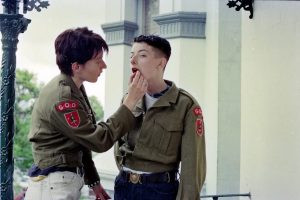
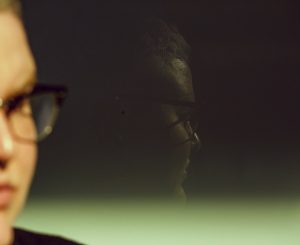
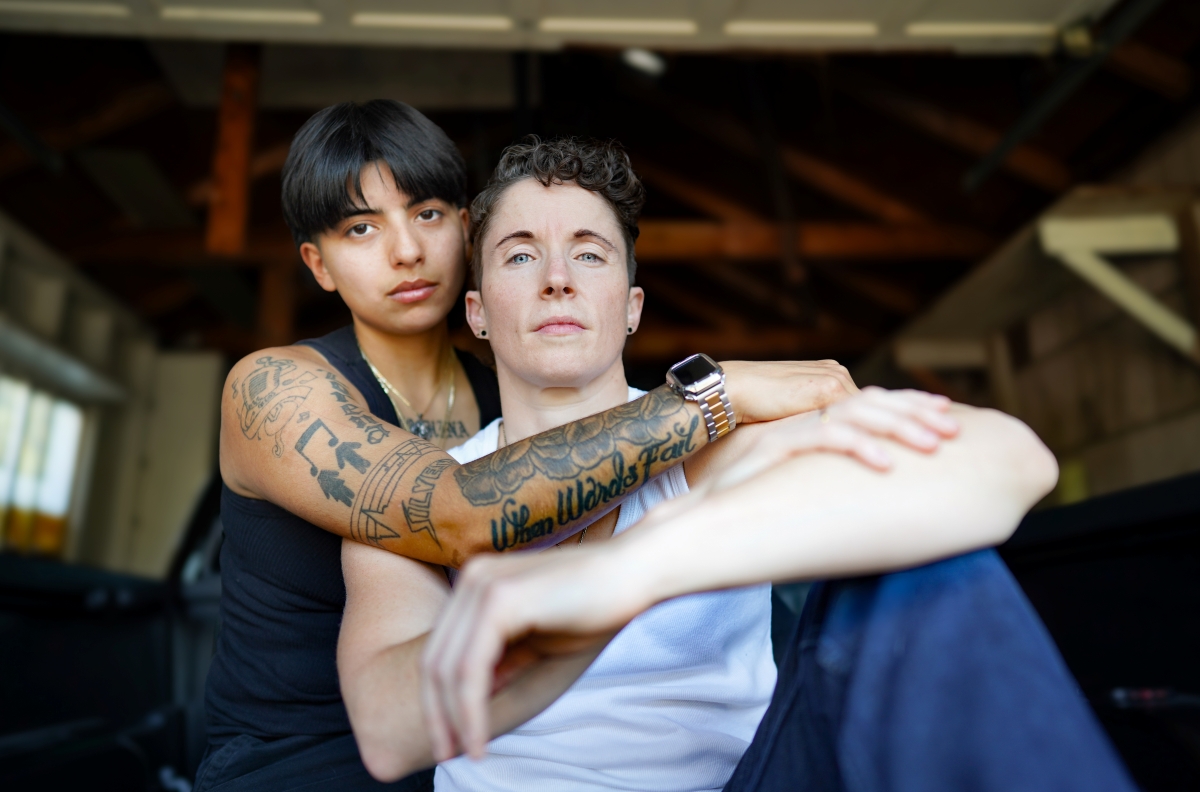
All images: Esther Godoy
When I began Butch Is Not A Dirty Word (BINADW) a decade ago, the broader conversation around gender was expanding in a major way.
There was new language for non-binary identities. An expanded understanding of transness. New frameworks to talk about gender dysphoria, euphoria, embodiment, social transition and all the ways gender can move through a life.
But amid that expansion, something was missing: a space for gender non-conforming people who weren’t neatly served by this language.
There were questions that felt unanswered:
Is all gender non-conformity automatically “non-binary”?
At what point does gender non-conforming masculinity shift from cis to trans? Can it be both, neither, or something else entirely?
Where do masculine-of-centre queer women who don’t identify as trans or non-binary fit into the cultural landscape? Do they fit anywhere at all?
What about masculine-of-centre cis women who aren’t queer? Do we even want borders this rigid in the first place?
Even asking these questions feels like stepping onto a very slippery slope.
They’re attempts to make something inherently fluid behave like a binary. The moment you say them out loud, you can feel the complexity rising – the nuance, the contradictions, the sweat on your upper lip.
But these questions weren’t abstract to me; they were deeply personal. I couldn’t answer them for myself. And when I needed to reach for something that felt true, steady and rooted, I landed in the butch identity.
Not because that identity was simple, but because it never pretended to be.
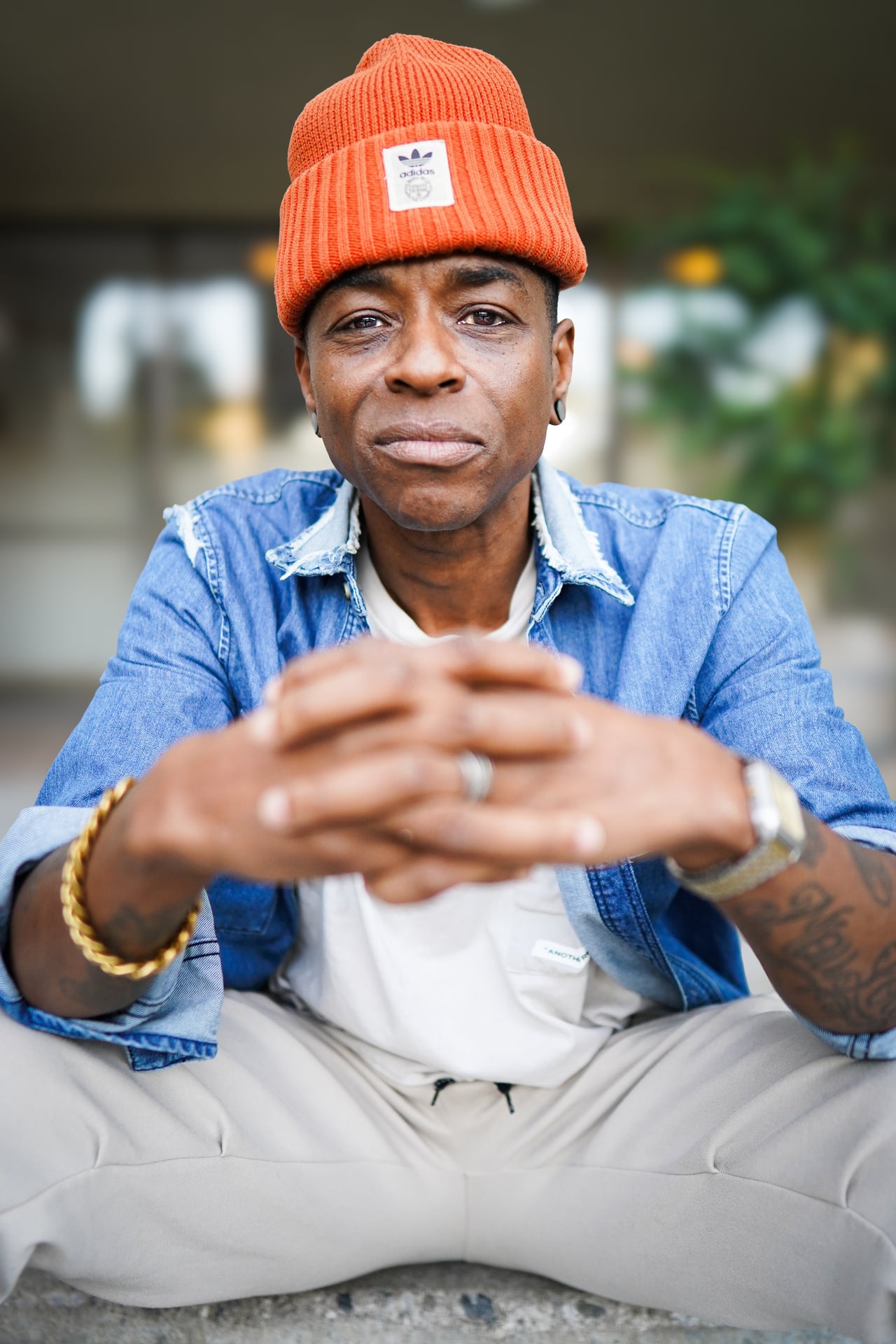
Many people think of butch as an identity reserved for queer cis masculine women, and they cite history as ‘proof’ – warning that expanding the terminology is ‘butch erasure’ or ‘lesbian erasure’.
But if you actually dig into that history, a different picture emerges. Even decades ago, butch wasn’t a monolith. Some people used it as a gender identity in its own right – both as an adjective and a noun.
Deep, deep layers of gender variation have always lived under this word, whether the community wanted to acknowledge it or not.
The truth is, you can’t ask, What makes someone butch? without also asking what makes someone cis, trans or non-binary. The borders blur. The categories leak. The word reveals the limitations of language itself.
What I’ve always loved about butch is its capacity. It holds nuance, and cannot be policed. It makes room for cisgender non-conforming women, for non-binary and trans people, for transmasculine people, for masculine-of-centre everyone whose masculinity doesn’t align neatly within conventional frameworks.
Butch lets us meet each other through shared experience rather than competing identity labels.

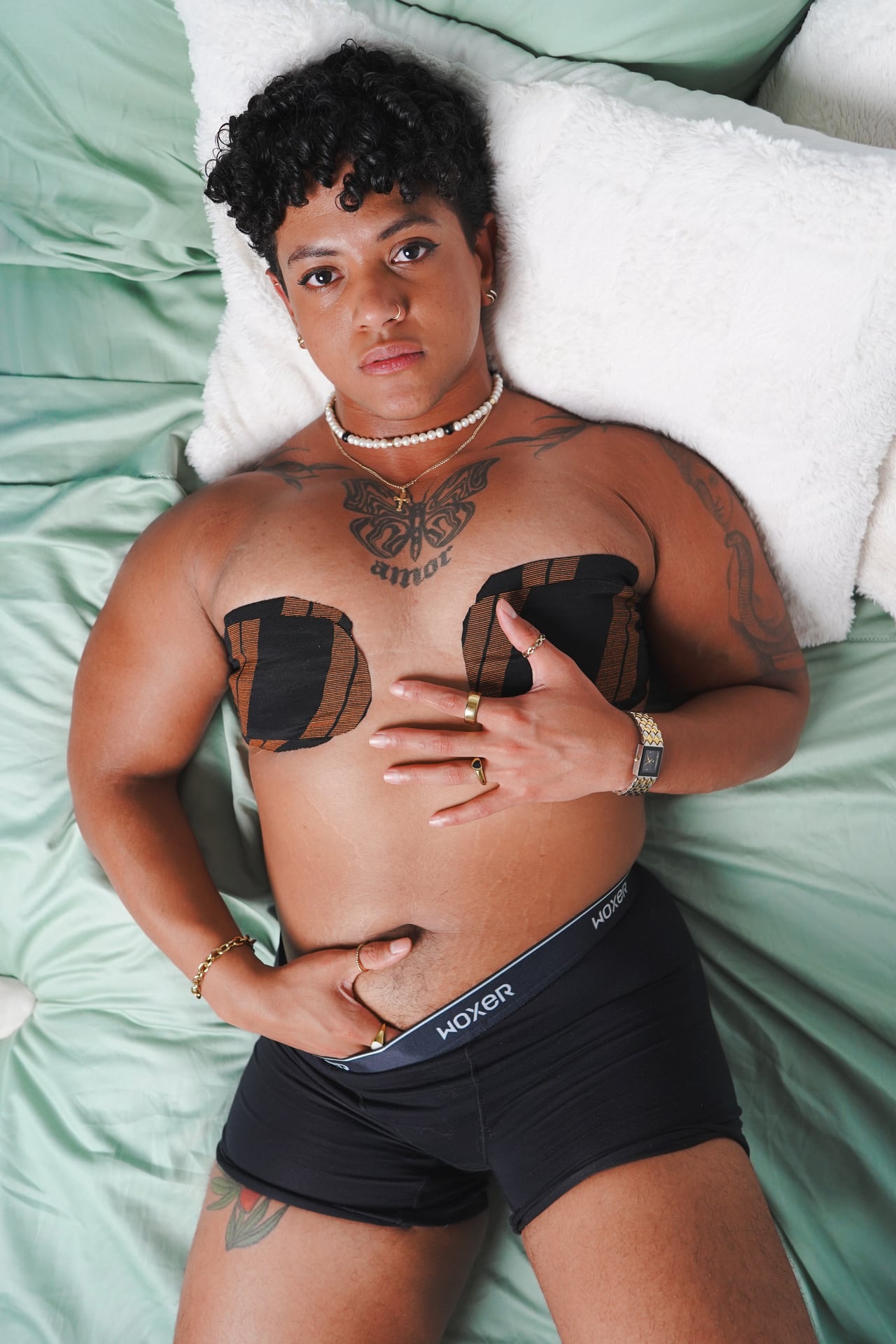
For the last 10 years, Butch Is Not A Dirty Word has been quietly recording this complexity – through portraits, essays and personal testimonies captured during one of the most significant cultural shifts in contemporary gender history.
The archive of BINADW holds the confusion, the clarity, the contradictions, the joy, the eroticism, the grief and the deep community intelligence of butch life across a decade of seismic change.
As BINADW’s visibility has grown, social media platforms have increasingly punished it. Posts are removed for “sexual content” without being sexual at all. Portraits are blurred. Accounts are shadowbanned, conversations are vanishing.
The butch identity is flattened once again – we’re erased or fetishised, but rarely allowed the dignity of being seen as human, cultural and historical.
I have begun to notice that the way we document butch history is changing based on Big Tech dictation. This is a scary place to be: when queer history is being rewritten by the people who want to erase it all together.
That’s why this next phase of BINADW matters. We need a place where this history can live without being distorted or deleted.
We need somewhere stable and intentional. We need somewhere accessible to researchers, students, queer kids, and anyone trying to understand themselves, or how gender has evolved over the last 10 years.
If you know BINADW, you know we’re not just here to preserve history. We’re here to shape the visual language around butch life.

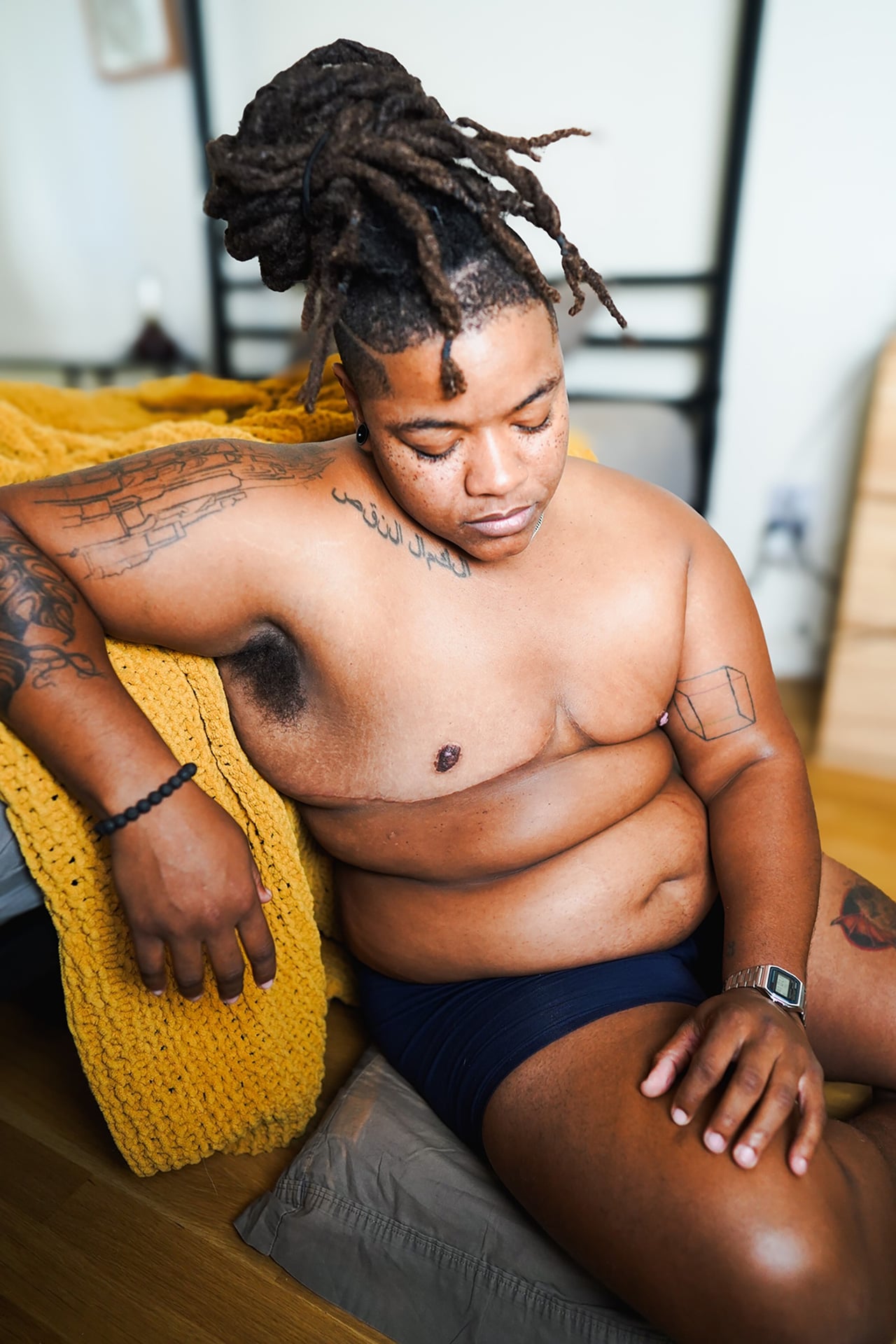
Butch has always been one of the least commodifiable identities. Like most forms of gender non-conformity, you can’t ‘sell’ it. And historically, anything that doesn’t sell has rarely been afforded beauty, dignity or professional artmaking.
Representation of butchness has usually either been ridiculed or pathologised. It’s almost never given the aesthetic treatment reserved for identities deemed ‘marketable’. And so, as a culture, butchness is seen as less worthy.
Butch Is Not A Dirty Word changed that.
We put butches in front of professional lenses. We gave them art direction, design, lighting and editorial care. We said, You deserve to be seen as art. You deserve to be documented with the same depth and style as any other cultural subject.
The digital archive of BINADW will carry that vision forward.
We’re not cutting corners. We’re not shrinking the ambition. We’re building something worthy of the identity itself: beautiful, nuanced, scholarly, erotic, messy, powerful.
Our Kickstarter so far has been a raging success. With the digital archive piece now fully funded, we’re fundraising toward the final chapter: the first-ever BINADW book!
It’ll be a decade of portraits, essays, language and interviews. A decade of butches defining themselves in their own words. A decade of cultural history finally held in print – serious, gorgeous, academically valuable and unmistakably ours.
Because What is a butch? isn’t a question with a single answer.
It’s a living archive. It’s a lineage. It’s a conversation decades deep and nowhere near finished.
Butch Is Not A Dirty Word exists so that evidence of our existence – and of our survival – never disappears.
Support independent queer media. Donate to the Butch Is Not A Dirty Word fundraiser, sign up to their eNews or follow along on Instagram.