

Archer Asks: Artist Kwinana on art and activism for People With Albinism in South Africa
By: Nolan Stevens

Advertisement
Content warning: This article mentions extreme violence against People With Albinism.
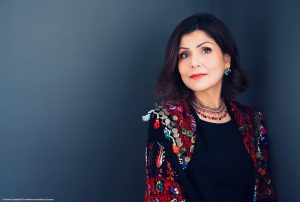
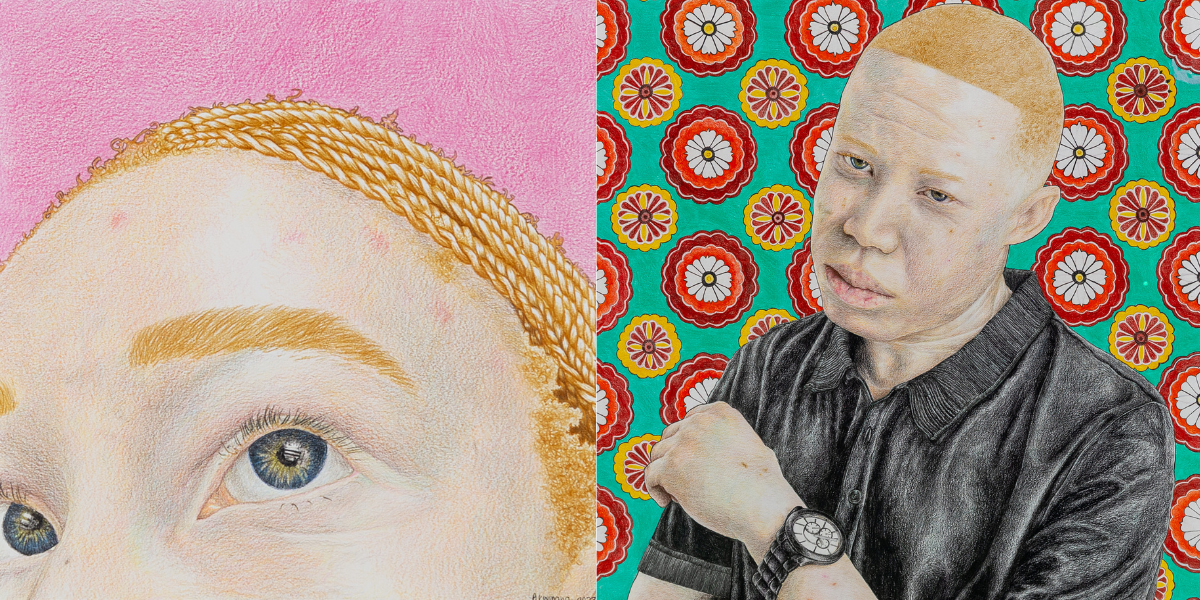
Kwinana is a visual art activist based in Johannesburg, South Africa. As an individual living with Albinism, her drawing and printmaking work primarily focuses on exploring the representation of People With Albinism (PWA) in South Africa.
She obtained her National Diploma in Fine Art from Walter Sisulu University in 2017, followed by a Bachelor of Technology in Fine Arts in 2018. And in 2022, she completed her Masters in Fine Arts at the University of Johannesburg. That same year, she held her first solo exhibition, ‘REIMAGINING ALBUS’, at Number Four in Constitution Hill (a creative space which was once a political prison in the apartheid regime). She has received the Cultures Resistance Award, participated in several group exhibitions at Berman Contemporary, and exhibited at the 1-54 Contemporary African Art Fair in London.
She continues her practice as a full-time visual artist and activist, with her second solo exhibition, ‘Ndijongile’, curated by Candice Berman at Berman Contemporary, Johannesburg. Her artistic practice confronts the systemic violence and discrimination faced by PWA in South Africa. Drawing on theoretical frameworks such as postcolonial theories and intersectionality, Kwinana investigates the complexities of representing PWA in contemporary visual art.
Kwinana spoke to artist and arts writer Nolan Stevens about ‘Ndijongile’ and disability activism through art.
All artwork by Kwinana. Courtesy of Berman Contemporary.
Nolan Stevens: Hi Kwinana, thank you for speaking to me. To start off, can you tell me how your current solo exhibition ‘Ndijongile’ came about?
Kwinana: The inspiration for ‘Ndijongile’ arose during my Masters’ studies from an article about a 13-year-old girl with albinism killed for muti (magic or traditional medicine) reasons.
This case resonated deeply with me, as I too grew up in a household with my mother and grandmother, and lived and walked the streets of Witbank, Mpumalanga [where the crime occured]. After presenting my desire to highlight this case to my gallery, Berman Contemporary, we initially faced challenges in creating the exhibition due to the gallery’s relocation.
During this period, I sought to enhance my artistic practice and applied for residencies – notably one in Havana, Cuba. This residency led me to explore how I could strengthen my use of portraiture as a form of activism. I observed how Cuban communities collectively grieve and challenge societal ills, prompting me to consider how to reflect that in my work.
The new artworks I created depict individuals with Albinism from diverse backgrounds, aiming to broaden the conversation around Albinism awareness beyond the black female experience. ‘Ndijongile’ pays tribute to victims of muti killings like Gabisile Shabane, while challenging stereotypes and driving cultural change through immersive visual storytelling.
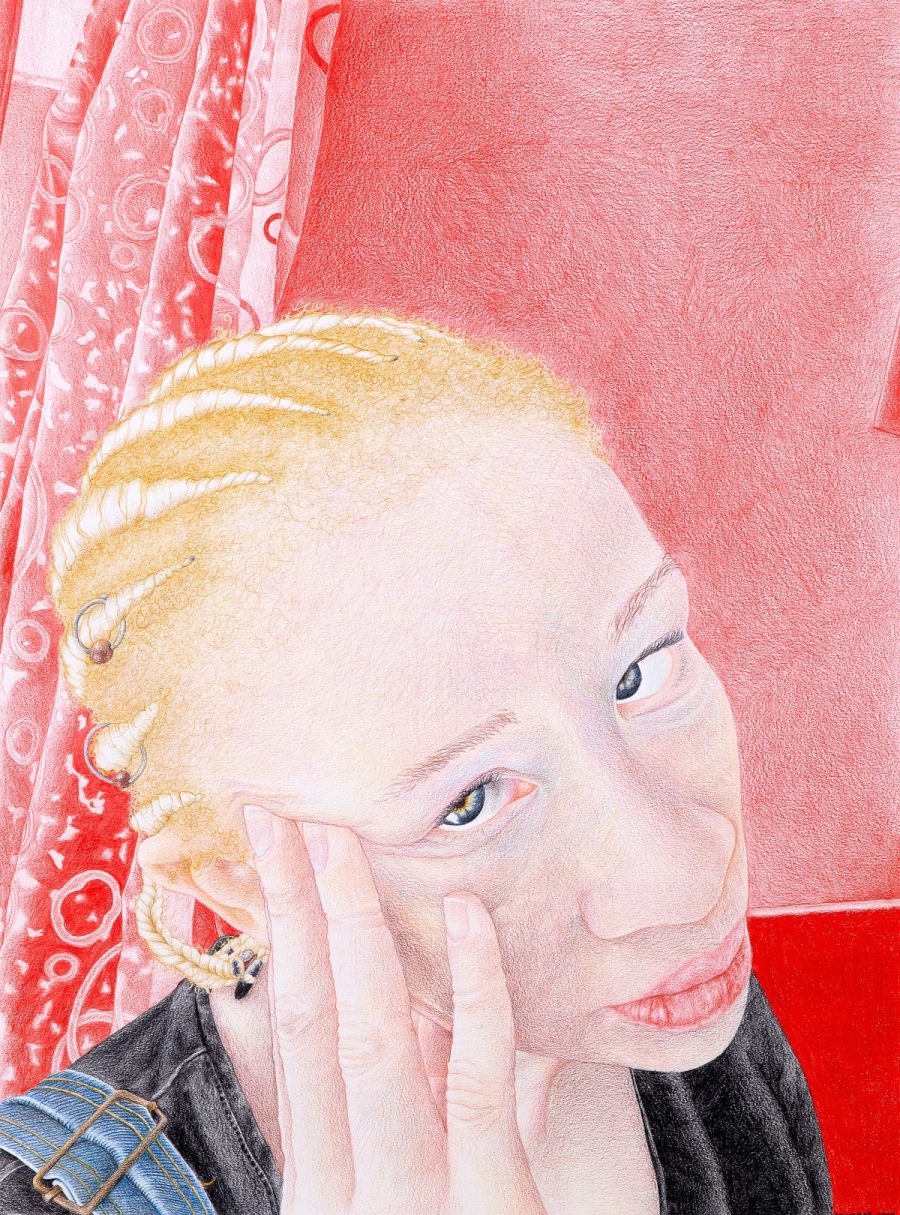
Image: Scarlet by Kwinana. Colour pencil on Fabriano, 2023. Courtesy of Berman Contemporary.
NS: The exhibition prominently features portraiture. Why is this a crucial element of your practice?
K: Portraiture is central to my artistic practice for multiple reasons. It allows me to convey personal and collective experiences of individuals with Albinism – each portrait telling a unique story that highlights struggles and triumphs. Through an autoethnographic approach, I weave my narrative with those of my subjects, fostering connection and empathy.
Additionally, portraiture humanises those often dehumanised in society, countering harmful stereotypes. My experiences in Cuba, particularly with revolutionary portraiture, further shaped my understanding of the power of imagery to mobilise social change.
By capturing the unique features, expressions and emotions of PWA, I aim to celebrate the beauty and resilience of PWA while inspiring collective action against systemic injustices.
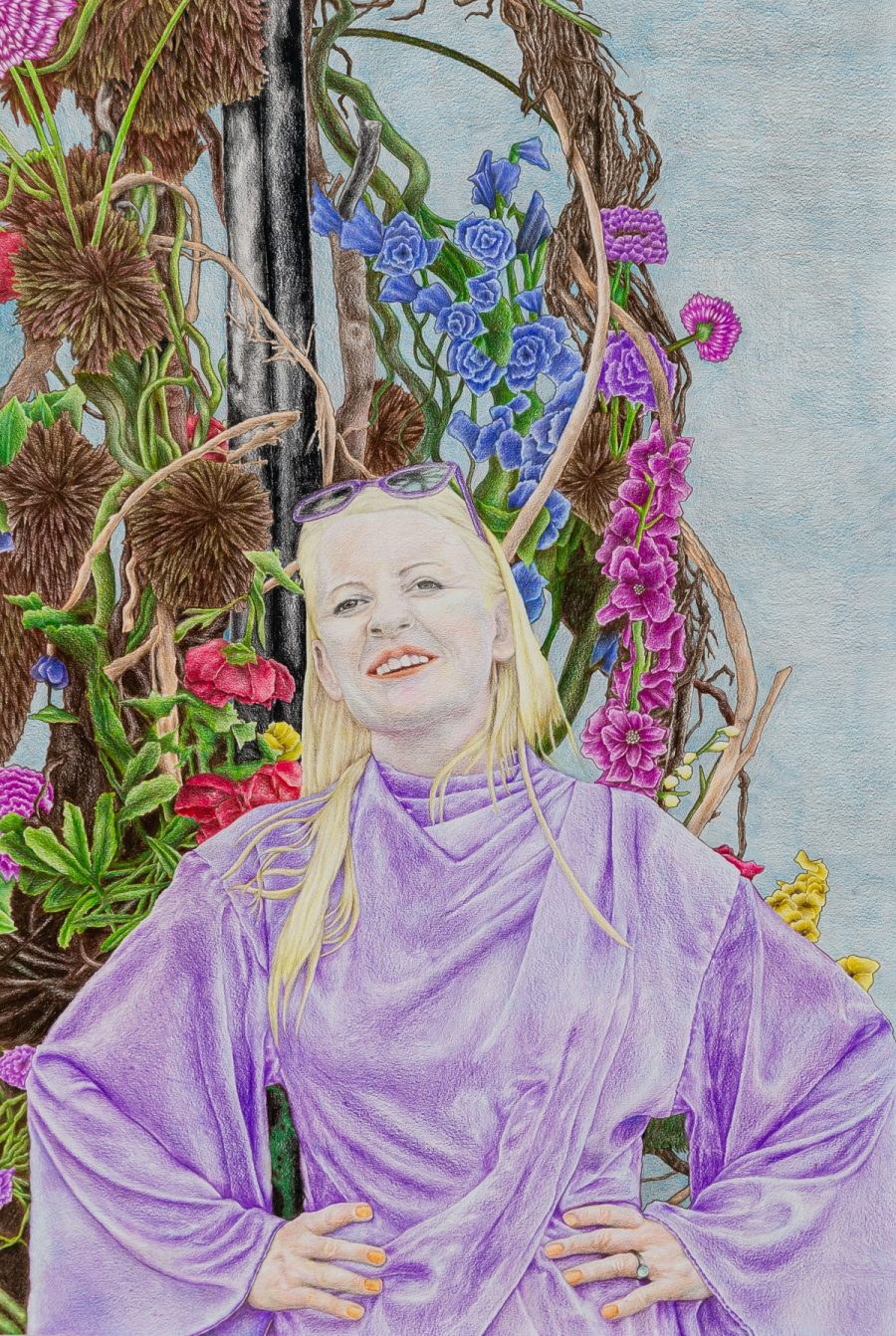
Image: HSW’24 by Kwinana. Colour pencil on Fabriano, 2023. Courtesy of Berman Contemporary.
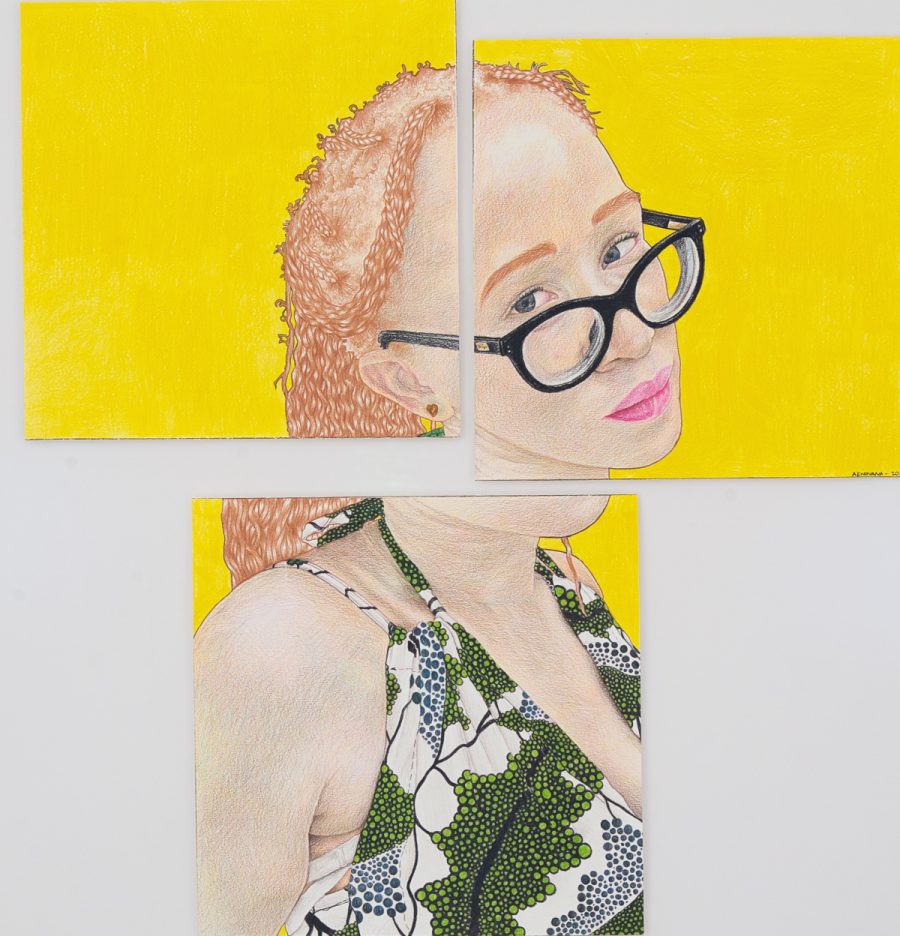
Image: Sequence 010 by Kwinana. Colour pencil on Fabriano, 2023. Courtesy of Berman Contemporary.
NS: In South Africa’s current climate of racial and identity politics, why is PWA representation so important?
K: In today’s South Africa, where racial and identity politics dominate discourse, the representation of Persons with Albinism is crucial. PWA often occupy multiple marginalised identities, facing unique challenges that are frequently overlooked. By highlighting their experiences, I aim to shed light on the complexities of living with Albinism within a racially and culturally charged context.
The systemic violence and discrimination against PWA, including derogatory labels and harmful beliefs, are exacerbated by prevailing prejudices. Representation serves as advocacy; showcasing the stories of PWA can shift narratives towards greater acceptance and equity.
NS: Have there been challenges in preparing for an exhibition like this, especially given its divergence from popular trends in the South African art world?
K: A significant hurdle has been addressing the audience’s potential unfamiliarity with the subject matter. Many may not fully grasp the experiences of PWA, [therefore] I’ve worked to present these themes accessibly and compellingly. Balancing artistic expression with advocacy has also been challenging: I strive to create visually compelling work that conveys the emotional weight of the subject matter. Navigating a market that favours commercially viable works has [also] required perseverance, especially in securing support for social issues.
Finally, addressing such sensitive subject matter takes an emotional toll, as it forces me to confront painful realities. However, I view these challenges as opportunities for growth and meaningful dialogue about representation and inclusivity.
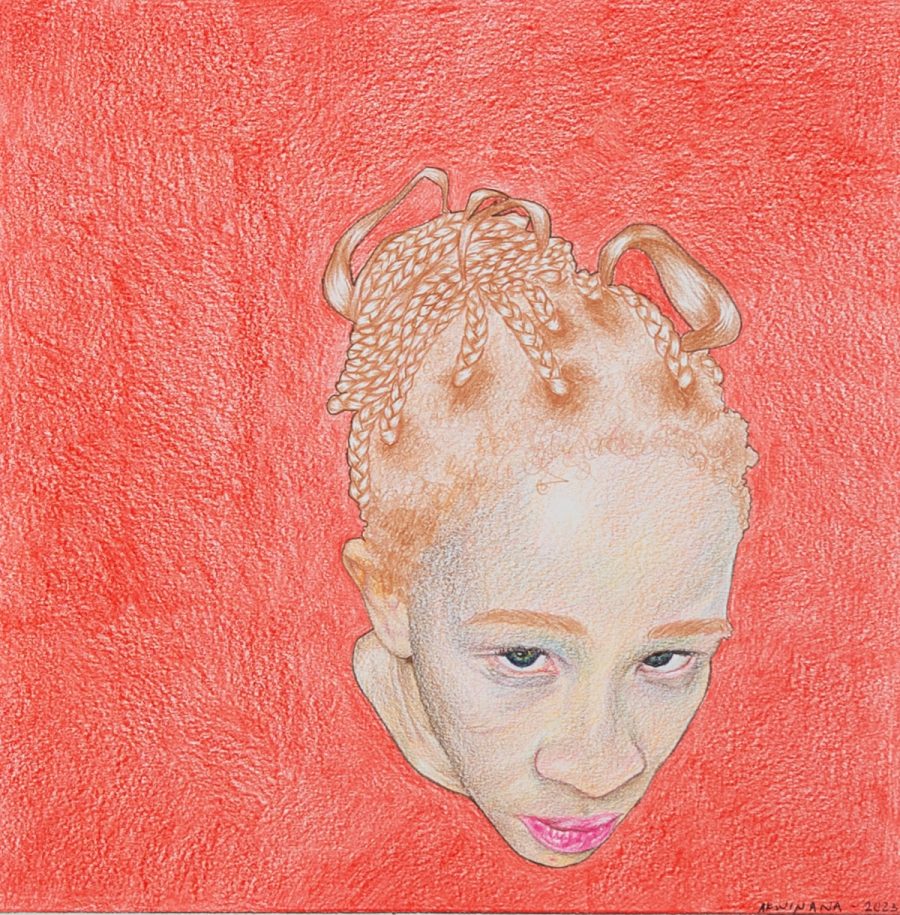
Image: Sequence 008 by Kwinana. Colour pencil on Fabriano, 2023. Courtesy of Berman Contemporary.
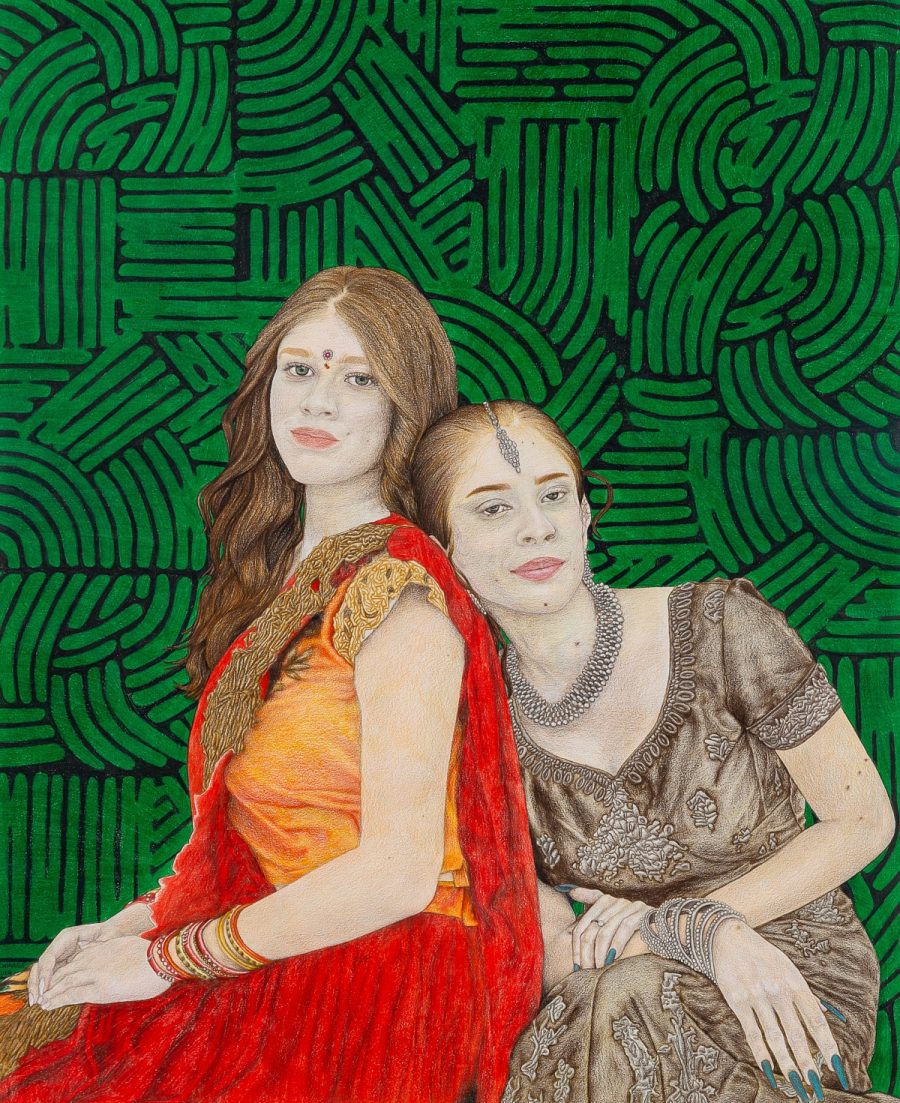
Image: M/TA’24 by Kwinana. Colour pencil on Fabriano, 2024. Courtesy of Berman Contemporary.
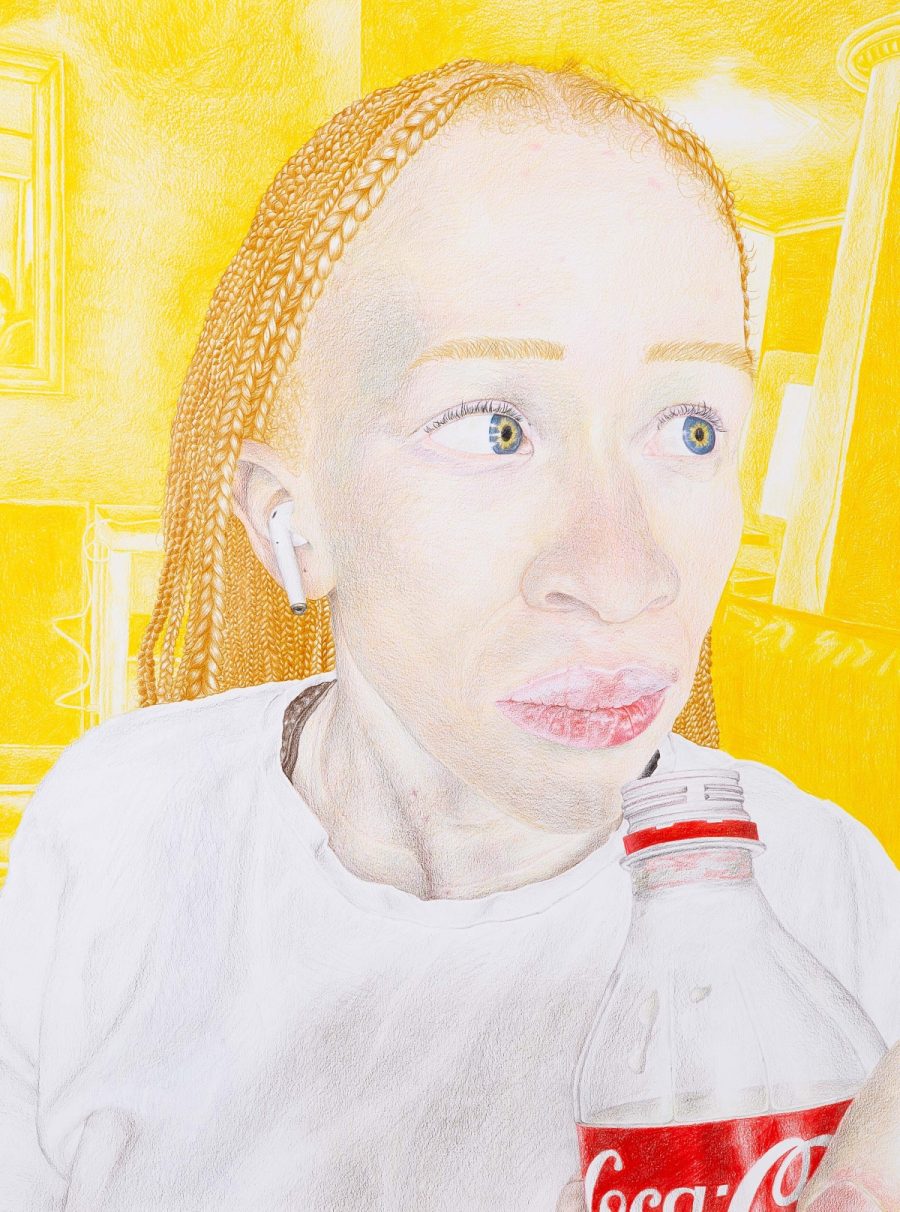
Image: Geolwe by Kwinana. Colour pencil on Fabriano, 2023. Courtesy of Berman Contemporary.
NS: There’s a timeline in the exhibition detailing the representation of PWA over the past two decades. Can you elaborate on the thought process behind this section?
K: The timeline captures significant events and changes related to PWA from 2004 to 2024, highlighting key occurrences in literature, representation and policy.
It serves to document the progress made in understanding and addressing the experiences of PWA, while also illustrating what remains to be done. By noting events such as the declaration of International Albinism Awareness Day on June 13 [since 2015], and featuring South African activist and model Thando Hopa’s appearance in Vogue Portugal [in 2019], the timeline explores societal perceptions of PWA and emphasises the need for ongoing dialogue and improvement.
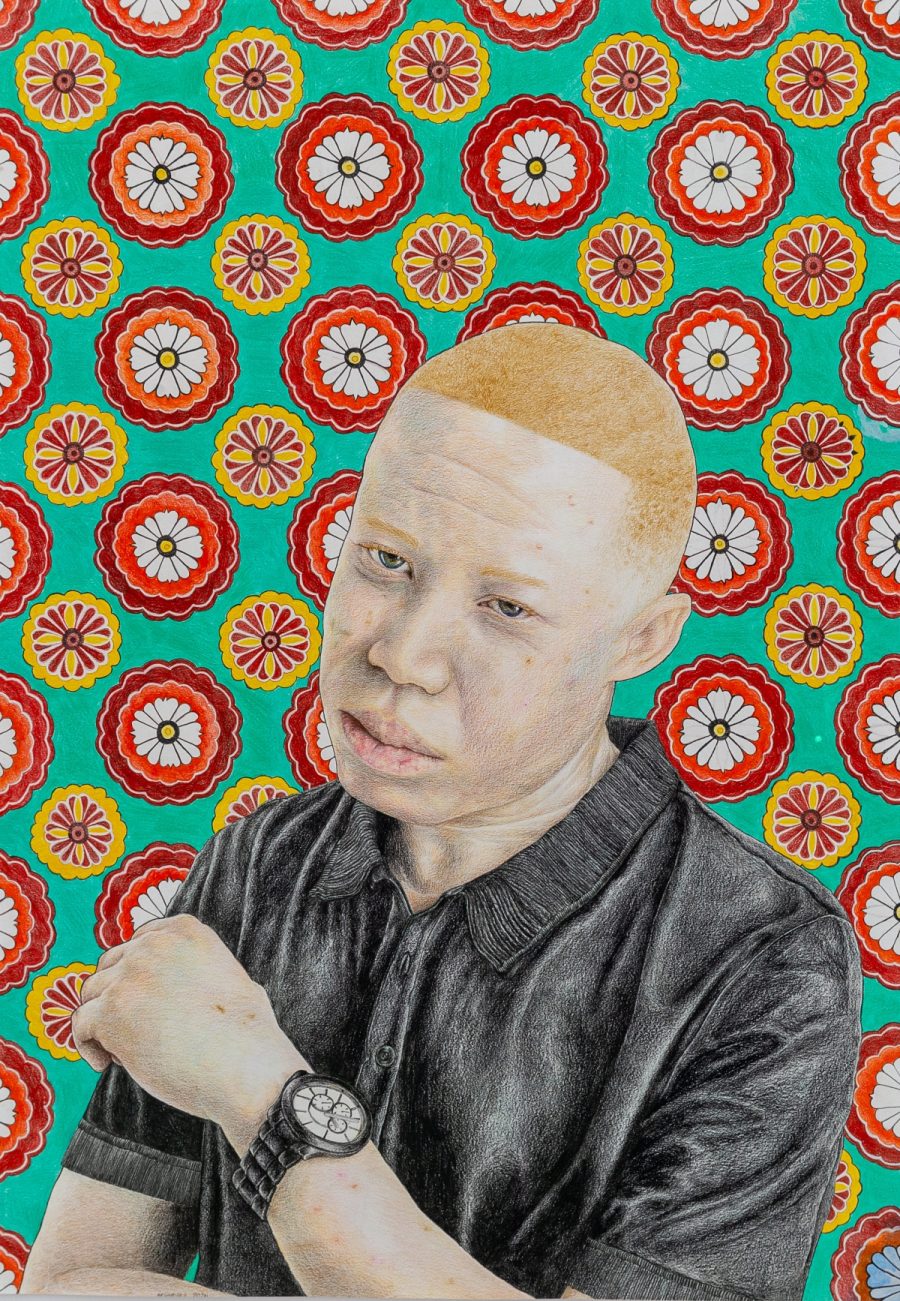
Image: TM’24 by Kwinana. Colour pencil on Fabriano, 2024. Courtesy of Berman Contemporary.
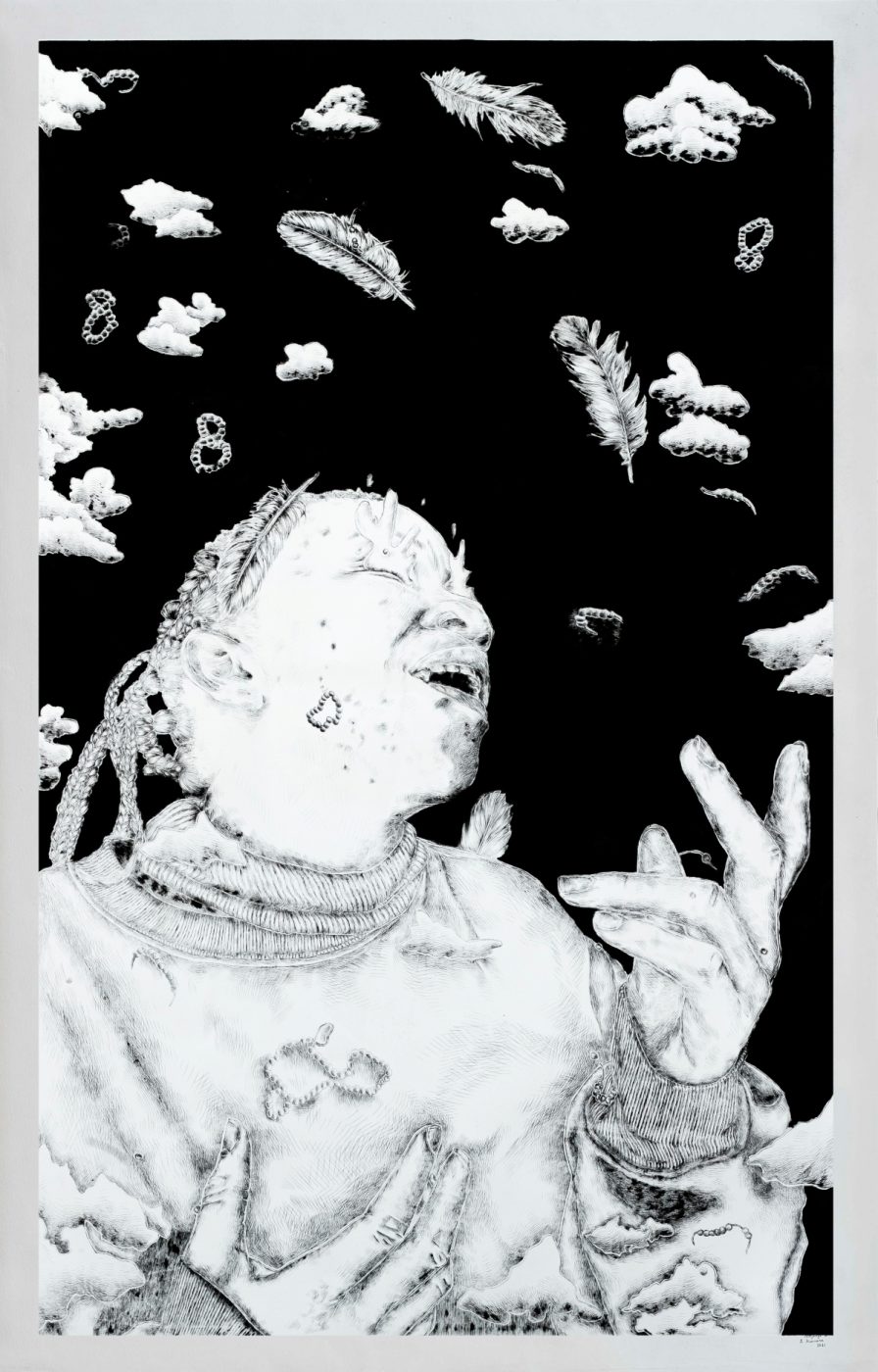
Image: Rejoice by Kwinana. Drypoint and Screen-printing on Hahnemuhle Paper, 2021 Courtesy of Berman Contemporary.
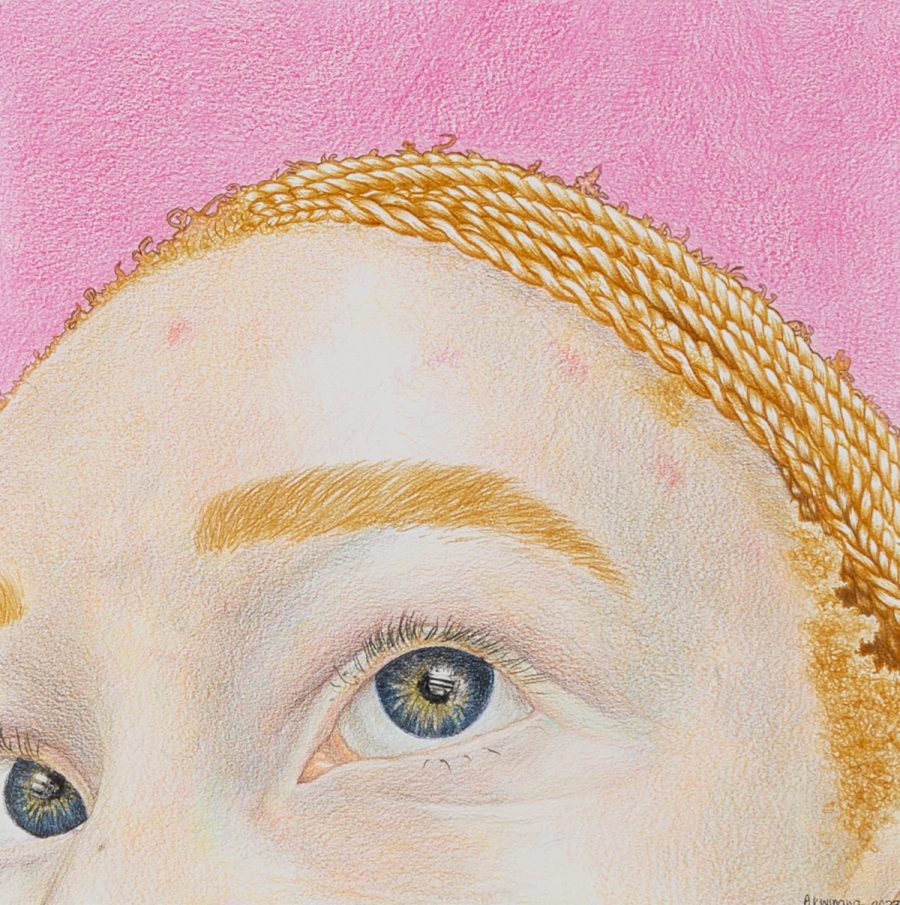
Image: Sequence 002 by Kwinana. Colour pencil on Fabriano, 2023. Courtesy of Berman Contemporary.
NS: What have you personally gained from putting together this exhibition, and what do you hope visitors take away with them after seeing it?
K: Organising this exhibition has been a profound journey of growth and discovery for me. The extensive research required has broadened my community of colleagues and facilitated interactions with various groups, not just individuals with Albinism.
Many conversations revealed a common sentiment: while people recognised that individuals with Albinism face discrimination, they were often unaware of the severity of violence.
[Additionally], for too long, the perception has been that Albinism is limited to black bodies. I am grateful to have contributed to raising awareness and expanding the discourse on Albinism, which is a central aim of this exhibition.
I hope visitors leave with a deeper understanding of how to confront discrimination and how to support individuals with Albinism and other marginalised groups. It is vital for people with Albinism to feel seen, heard and valued. Ultimately, I aspire for this exhibition to serve as a visual archive and a platform for dialogue, aiding future researchers and activists in challenging prevailing perceptions of Albinism in South Africa.