

Archer Asks: Poet Maria van Neerven on Blak history, family and language
By: Alex Creece

Advertisement
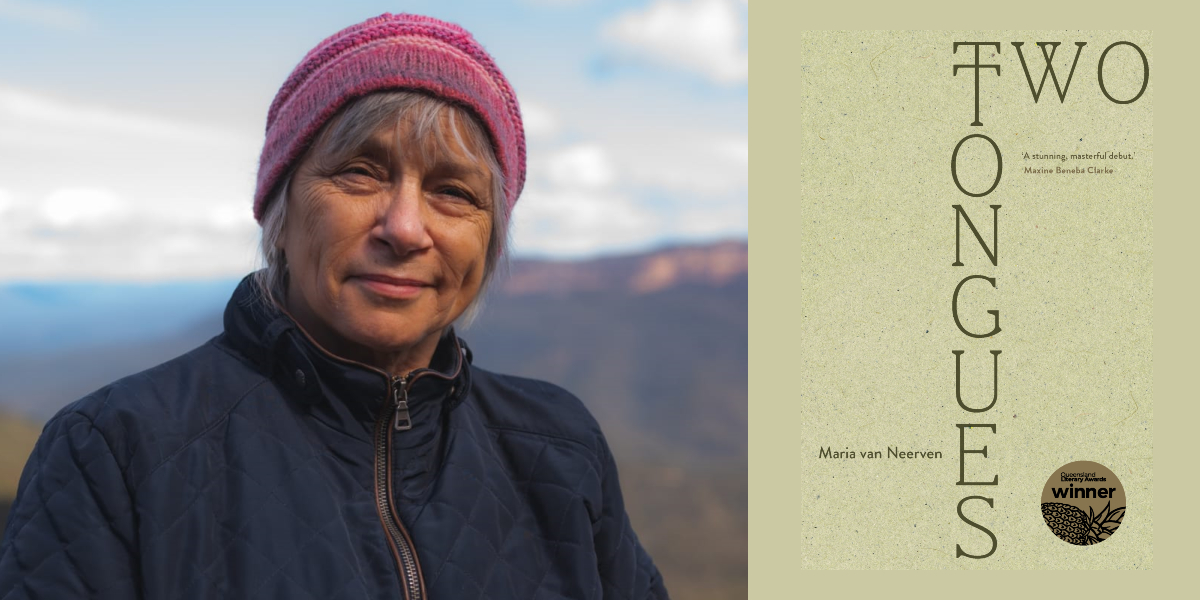
Maria van Neerven is a Mununjali poet from the Yugambeh nation living in Meanjin. Maria was the winner of the David Unaipon Award in 2023 and was a Next Chapter Fellow in 2024. Two Tongues is her first poetry collection.
Two Tongues is available to buy online or at your favourite independent bookstore.
In this interview, I chatted to Maria van Neerven about culture, family and Blak truth-telling.
Note: The spelling in this interview reflects the author’s voice and intention. Aboriginal and Torres Strait Islander people should be aware that this interview contains the name and quoted poetry of a deceased person.
Author image by Ben van Neerven
Alex Creece: Can you tell us a bit about what inspired your gorgeous poetry collection, Two Tongues?
Maria van Neerven: Two cultures live within me; my Indigenous blood of which I am very proud of. This was not always so. Growing up I wasn’t so proud – being ostracised, bullied.
My family had to deal with the discrimination and racism daily. Whit Australia then, and even now, shame was taught by colonisers, used as a weapon to make you feel worthless.
My whit forced culture was marred by its genocidal history, which still pains me. Two Tongues speaks of acknowledging my heritage.
AC: Family is a huge theme in this book, drawing the reader into your childhood experiences and beyond – including experiences of racism and discrimination from an early age. How did you go about capturing time, place, context and lived/living experience in such a palpable way?
MvN: Revisiting my childhood was very difficult. I remember we were a normal family inside our fenced yard: poor but loved. That is one part of the story.
Outside our home, it was not always safe. Violence, racism was part of life. You should feel safe in your own country, neighbourhood. The rippling effects of the invasion, the injustice brought upon my family and many First Nations people bring feelings of rage. But also, strong love of culture and family.
AC: Speaking of family, your adult child Ellen is also a legendary poet. Within your comfort level, how do you conduct your creative relationship as two poets, while also being parent and child? For example, do you offer feedback on each other’s drafts? Do you collaborate?
MvN: I made a conscious decision to keep my writing separate from Ellen. It was important for me to listen and develop my own poetic voice, and Ellen understood this. They have had a huge influence on me and are very supportive of my writing, as I am of theirs.
Watching and listening to them present their work at festivals and other events makes me very proud. As would be my mum if she was still with us.
Ellen has a large collection of books; they could build a house is what I always say!
I am very grateful I can borrow their precious gems sometimes. We share our thoughts about what we have read, go to writers’ festivals, book launches. It is very special to share that with them.
AC: Many poets don’t realise that they’re writing a book until they’ve got a backlog of bookish-looking poems. Did you know from the beginning you were writing a book, or did it come together more organically?
MvN: I won the David Unaipon Award in 2023, with not many poems. Shortly after, I also won a Next Chapter Fellowship in 2024. Ellen and their publisher encouraged me to apply for both.
It was a complete surprise to me; I received publishing rights with University of Queensland Press.
With the encouragement of my awesome mentors and support from my family, I gained confidence to grow and write organically.
My poems were always in my heart, but I didn’t think I had the writing skill to put them to paper. I went to Varuna, The National Writers’ House, for the first time armed with a new laptop I had never used before. I always wrote with pen and paper. Ellen came with me to pick out the laptop. It was a little scary at first, but I got it eventually.
It has been a wonderful journey, with the spirit of my mum beside me.
AC: How does language (particularly Yugambeh language), and emotions/tensions around language, factor into your poetic process?
MvN: I was brought up with Aboriginal/English. Since the invasion of our Country by the British, language and culture were forbidden. My parents were not allowed to learn or speak their language, or learn from their parents, grandparents. It has been a great loss for all First Nations people. This should be acknowledged as part of Australia’s shameful Blak history.
Every time I speak English, I feel a great loss of my Mununjali language, which was my mother language – a dialect of Yugambeh.
I feel sadness for my children and other Indigenous Australians, robbed of this human right.
It is an honour to use our language in my poems; my ancestors voices can be heard in-between the pages.
AC: What is the role of rage and love in your poetry? Specifically, how do you evoke rage and love in service of Blak truth-telling and decolonisation?
MvN: Too many times, whit voices have written and spoken for Indigenous people. There are now many deadly Blak voices.
Yamaji woman, writer and poet Charmaine Papertalk Green, who passed away in 2025, wrote these strong words:
No more whitewashing.
Let Truth be told.
(‘Data Sovereignty Words’ in ART, 2022)
Two Tongues are my Blak words; they come from witnessing bigotry and hatred. It is also written from a strong place of Country, culture and family.
Our matriarch was our mum. She was our home, a place to feel safe. She was strong and resilient. She didn’t shout or speak much, but always knew how to hush the anger outside our door. Saying “they can never take who you are” made us feel strong.
AC: Thank you for sharing about your mum, and for the words of Charmaine Papertalk Green. On a similar note, how do your ancestors and ancestral knowledges contribute to your poetic voice?
MvN: How can I ignore my Blak history? It is in my DNA.
My awesome ancestors survived Australia’s harsh environment for thousands of years. They went through the invasion, the forced genocide, and the removal of our stolen children and Country. Their persistence is what I drew strength from. How could I not be inspired and proud?
AC: What do you hope this book offers to readers? Are there takeaways that you’d like to invoke, both in First Nations readers and non-First Nations readers?
MvN: I would like to invoke all Australians to research this country’s Blak history. To acknowledge the atrocities suffered by First Nations People. To gather information from state libraries, national archives, missions and reserves, the National Library of Australia, Trove, AIATSIS.
Source the Yugambeh archives, or other languages and museum resources. The Aboriginal protectors were known for record-keeping.
Speaking with Elders and reading information can be very confronting, but very important.
I hope Two Tongues create a conversation to recognise the true Blak history of this country, so we can all heal and close the gap.
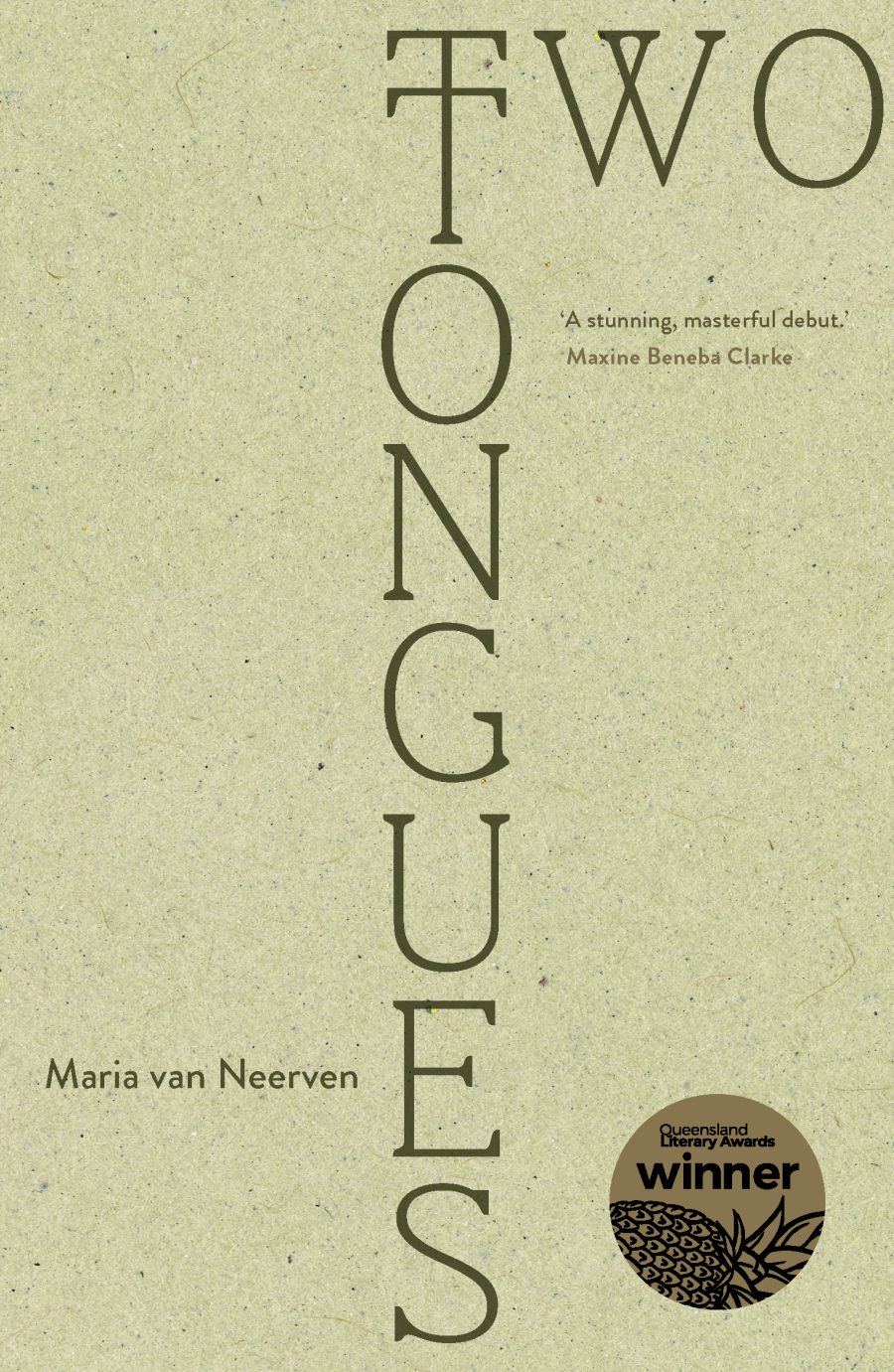
Two Tongues is available to buy online or at your favourite independent bookstore.